

14 Scandinavian Dishes You Need To Try At Least Once
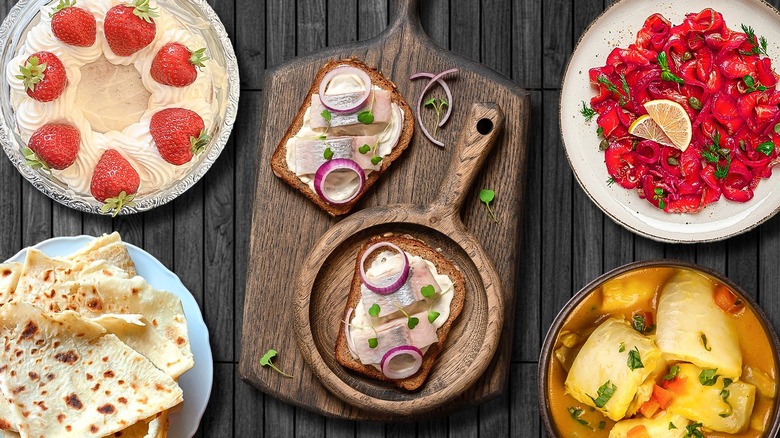
When people picture Scandinavian food, they tend to picture cloudy jars of pickled marine mammals, mystery meats, and plates made entirely of brown foods. Many are unaware of the truth. The whole-and-fermented-foods-filled New Nordic Diet was born in Scandinavia, and for thousands of years, foraging has been the backbone of the region's foodway. Yes, Vikings ate red meat. But they relied more on grains, vegetables, fruits, nuts, dairy, and fish — you know, the rest of the food groups. Rather than depicting the Norsemen engorging on giant boars on spits, it would be more accurate and truer to their common meals to show them foraging for mushrooms and berries, growing turnips and leeks, smoking fish, fermenting dairy for yogurts, and making rye bread. So, while the New Nordic Diet is, as the name suggests, new, it's an extension of Scandinavia's traditional reliance on seasonal eating.
There are plenty of fantastic, fresh, and colorful foods that Scandinavians enjoy today. Think berry-studded cakes, decked-out platters of fish, and unctuous open-faced sandwiches. As someone with Danish and Norwegian heritage, I grew up eating traditional æbleskiver (more on those later), I have regular hankerings for cardamom and licorice, and I prefer my sandwiches open-faced. Needless to say, I'm a big fan of my ancestors' food traditions and regularly eat modern Scandinavian dishes as well. Though there is plenty to obsess over, here are 15 Scandinavian dishes that you need to try at least once.
Jordgubbstårta
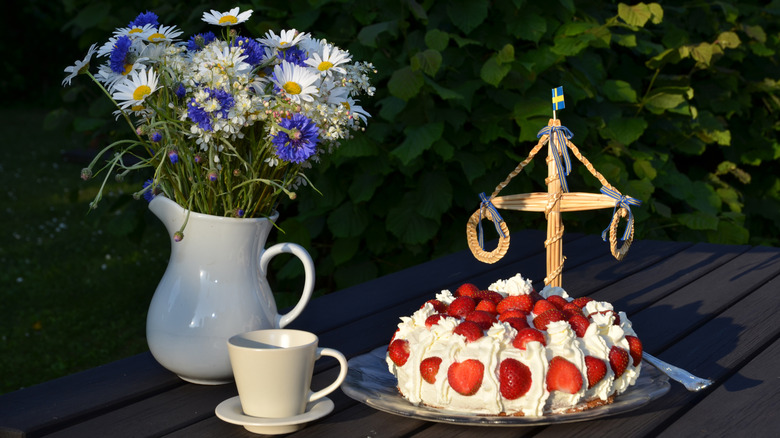
Many people think of Prinsesstårta, a marzipan-covered layer cake when they picture Scandinavian cakes. Maybe it's because I'm not a huge marzipan or fondant fan, but my favorite is definitely Jordgubbstårta. Made with strawberries, vanilla cream, and sponge cake, it's light, sweet, tangy, and usually completely decked out in edible garnishes. People often adorn theirs with little vanilla meringues, flowers, chopped almonds, extra strawberries, and powdered sugar. It's just a beautiful dessert, and it's often a fixture at Midsommar feasts and summer picnics.
Jordgubbstårta celebrates the strawberry, a leading crop in Sweden. Though this is specific to "The Elongated Land" ("Det avlånga landet" in Swedish), strawberry cakes are a big deal throughout Scandinavia. Jordgubbstårta reminds me a lot of Denmark's Jordbærkage and Norwegian strawberry cakes, but I love how beautiful and light Jordgubbstårta is. If you even remotely like strawberries, you'll fall in love with this Scandinavian dessert.
Æbleskiver
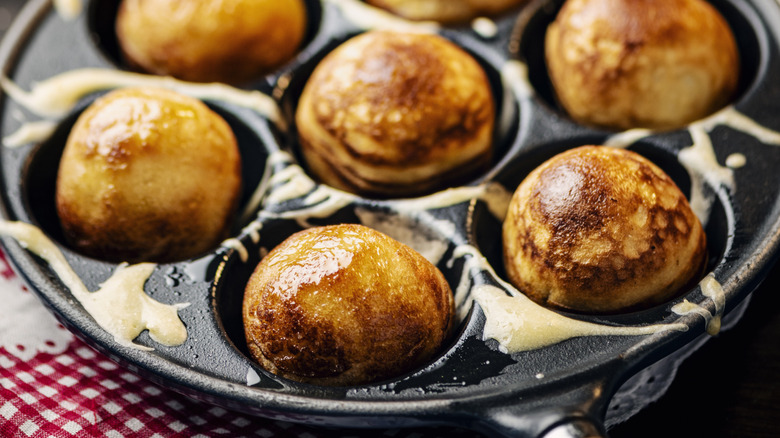
When I think of the holidays, I think of æbleskiver. I also requested these little Danish pancake balls every year for my birthday in October because I loved them so much, but they're a yuletide tradition. Though today they're often studded with berries (my family loved using cranberries), dusted in powdered sugar, and served with syrup or jam, they were, according to legend, made by the Vikings with æble, or apples, using the indentations in their shields. They would have offered dense calories for the active group, but most people seem to think this is just a story.
Unless you happen to have a dented Viking shield, you need a special pan with spherical molds to make this. I inherited my family's and still use it to make these nostalgic treats. They're so good plain, but I recommend trying them with cranberry batter, dusting them in orange zest, and dipping them in maple syrup. They're perfect with coffee, so consider inviting friends over for a "fika" break and serving these with your espresso. Perhaps read Hans Christian Andersen's "Krøblingen," a tale that involves the treat for the ultimate æbleskiver-themed gathering.
Agurksalat
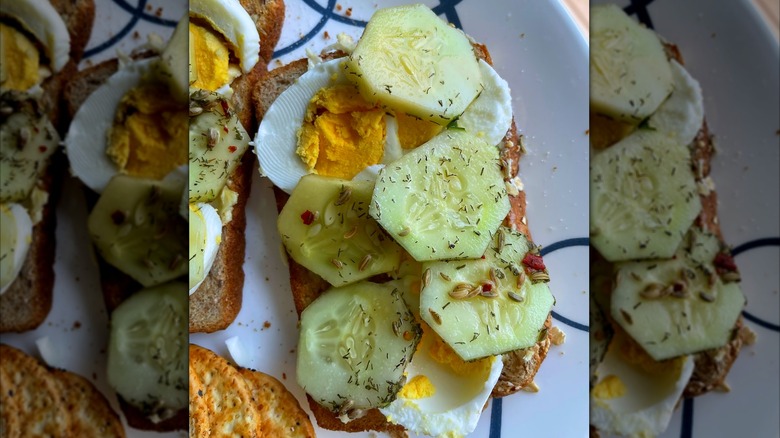
I always say that if someone has over three kinds of pickles in their fridge, they probably have Scandinavian heritage. Whether it's because it offers a great flavor profile that goes with everything or because our ancestors famously pickled as a preservation method to get through the dark, long winters, it's a tradition I plan to always uphold.
Agurksalat, or cucumber salad, was always a staple in my home. Made from thinly sliced cucumbers, tons of dill, white vinegar, sugar, peppercorns, and salt, this goes with salmon, hot dogs, meatballs, potatoes, and so much more, thanks to its well-balanced flavors. Sometimes, people throw in onions, radishes, or other popular Scandinavian add-ins — my favorite thing is incorporating sustainably harvested flaky salt from Saltverk or other Scandi purveyors. It's a super authentic way to season anything, but I love the way their lava salt adds color to this already vibrant cucumber dish.
Smørrebrød
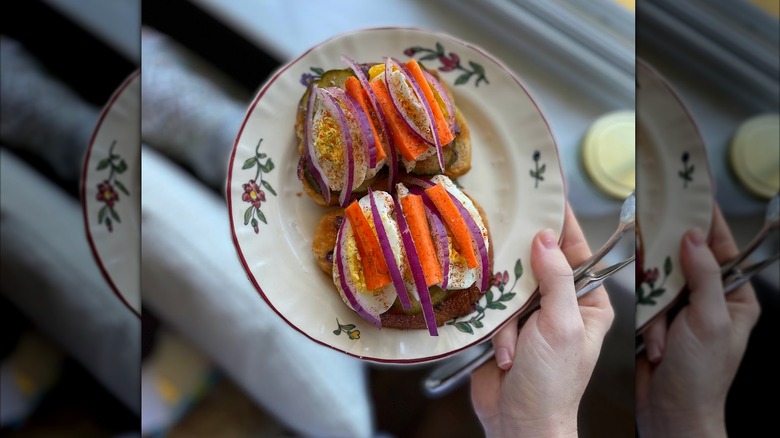
Look, bread is great. I regularly obsess over a perfect baguette, warm rye, or extra chunky multigrain masterpiece. However, I don't need two whole slices when it comes to a sandwich. That top piece tends to cut your mouth if it's too crispy, obscure the precious fillings if it's too fluffy, and fall apart if it's too thin. Except in very few scenarios, I will always opt for open-faced, which just so happens to be an art form across Scandinavia, but particularly in Denmark, home to the famed smørrebrød.
Meaning "buttered bread" in Danish, this open-faced sandwich used to just be rye bread smothered in butter. In fact, there's a slang word for how much should be used: "tandsmør" or "tooth butter." In other words, there should be enough to leave tooth marks when you bite into it. Though since the 1800s, other ingredients besides butter now regularly dazzle atop smørrebrød, each still features a thick base of butter. This keeps the many toppings and sauces from soaking into the rugbrød (dark, traditional rye bread) and making it soggy.
As for the exact combinations of "pålæg," or toppings, there are endless rules (believe me, I did an entire report on them in college). For example, fish versions of smørrebrød are served before meat renditions and potato concoctions come last. But many modern Danes believe in liberating the smørrebrød — you shouldn't have to be an expert to enjoy this dish. My favorite version is the tuber-topped Kartoffelmad.
Cardamom buns
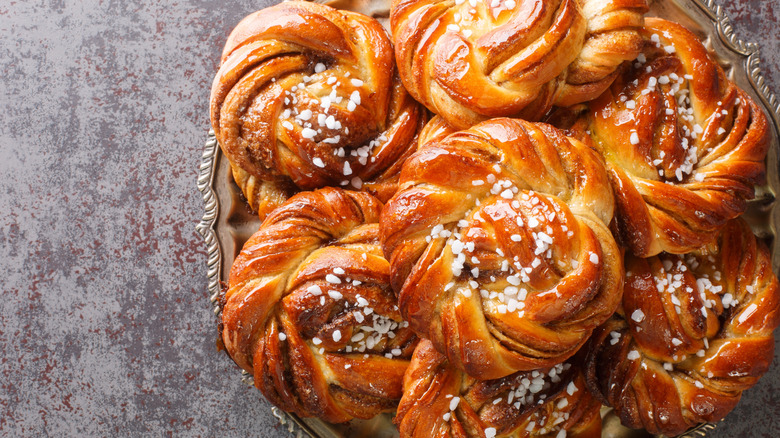
Thanks to a pretty healthy trading network and the fact that the Vikings were very well-traveled, things like curry and cardamom are extremely common in Scandinavia. The latter specifically has been beloved in the region for hundreds of years. Cardamom is in nearly every dessert, and many, including myself, love it in their coffee. It's spicy and warm like cloves but has an earthy sweetness like cinnamon.
Cardamom buns are a super popular way that Scandinavians enjoy this distinct spice. They're served as breakfast pastries or as a fika treat across the Scandinavian countries. However, kardemummabullar from Sweden, with their twisted dough, is especially beautiful. They're really good when cranberry or blueberry jam is worked into them as well, but even just plain cardamom varieties are perfect. If cardamom isn't your thing but you want a similar pastry, try kanelbullar. These are the best cinnamon buns you'll ever have, and they're taking over TikTok, according to the latest studies from bloggers like Coffeeness.
Meatball dinner
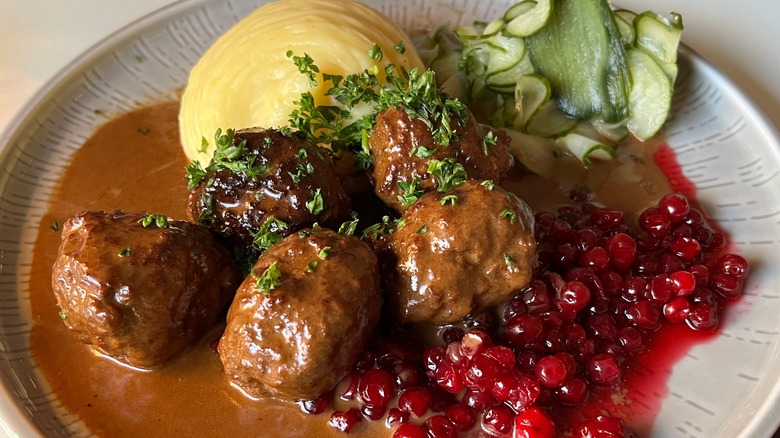
Is there anything more recognizably Scandinavian than a meatball dinner? There are slight variations between countries, but a typical meatball dinner consists of meatballs with gravy, mashed or boiled potatoes, pickled cucumber salad, and lingonberries. If you're in Norway, expect mushy peas on the side, and if you're in Denmark, expect "frikadeller," or the biggest, not-round meatballs you've ever seen.
There are a few things to keep in mind if you're trying Scandinavian meatballs for the first time. Many foreigners incorrectly think they'll be like Italian meatballs. Scandinavian versions won't have that flavor or clean-cut shape, and it definitely won't come with spaghetti. True to Viking crops and trading routes, Scandinavian meatballs tend to have things like onions, nutmeg, oats, and allspice mixed into them. They'll also be juicier due to the increased use of pork in the meatballs the further south you go — for example, Norway's is usually beef, Sweden's is a mix of beef and pork, and Denmark's is fully pork.
As a pescatarian, I appreciate that fiskefrikadeller from Denmark and fiskeboller from Norway, or fish meatballs, are a great alternative that tends to include the same spices; you can serve them with the same sides, such as Scandinavian potatoes. But whether you try the red meat, seafood, or veggie variations of meatballs, they're all an iconic piece of the Scandinavian foodway.
Gravlax
If you learn one thing about Scandinavian food here, I hope it's this: mastering preservation is how Scandinavians survived and now thrive in the North. If they didn't pickle, smoke, bury, dry, can, or ferment their fresh foods, they didn't eat; the winter would come and gobble up their resources. My ancestors would have had to leave the region if they couldn't figure out this culinary art form. So, for this reason, many of the most iconic Scandinavian foods have undergone some form of preservation.
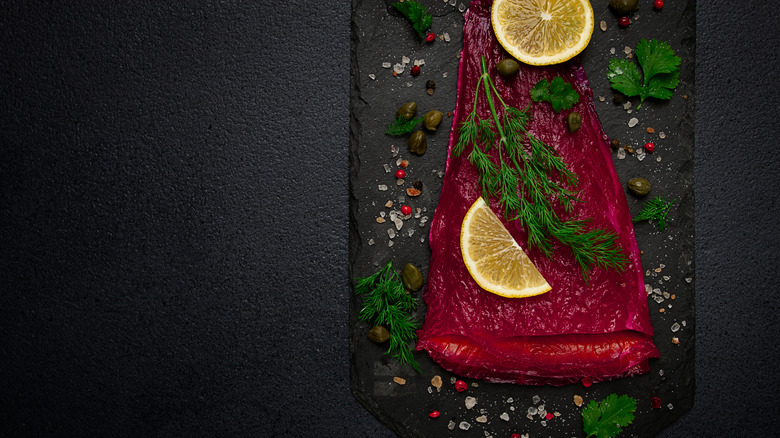
Gravlax is among the most striking of these dishes. Any lox fan will love this "buried salmon" dish made marinated in tons of dill and salt. This bright red seafood is a very traditional Arctic food, as, during pre-refrigeration, locals would cover their many salmon catches in preservation spices and bury them so they'd keep them for months. However, today, most people just marinate it and stick it in the fridge for a few days before scraping away the seasoning. Despite the added convenience, it still has the signature fermented flavor of the burial method that goes so well with fatty sauces, dark breads, eggs, potato pancakes, and berries. You can serve it like you would lox on a bagel, but I recommend trying it plain first so you can really appreciate the complex flavors.
Lefse
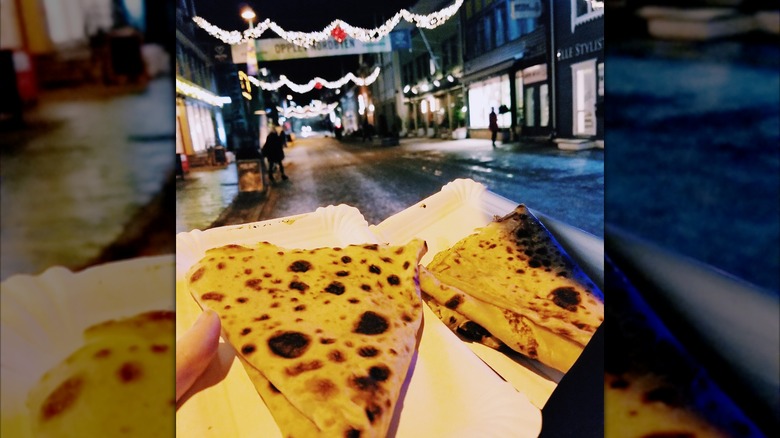
Somewhere between a crepe and a tortilla, this Norwegian classic is made with leftover mashed potatoes and traditional pancake ingredients. It's cooked on a lefse stone or skillet today, but flatbreads were made by Scandinavians on hot rocks or simple pans over open flames. Eaten either sweet with Scandinavian berries and powdered sugar or savory with smoked salmon and other delicacies, every region has its own take. I love mine simple with just lots of butter and blueberry jam like Iceland's pönnukökur.
One of my favorite memories of eating lefse involves having them under the Polar Night sky at the very top of Norway. My partner and I bought them from French immigrants who moved there to try something new, and they decided to sell lefse for a living — apparently, they reminded them of the crepes back home. Despite not being Scandinavian, they nailed lefse, serving them with some sort of citrus spread. Best of all, they sang to us and danced as we inhaled the perfect treats. This bizarre but perfect meal captures lefse perfectly: it's fun, and it's for everyone.
Pølse
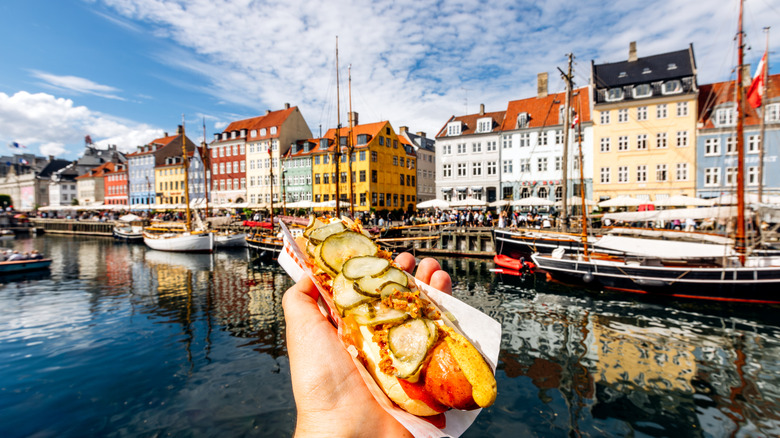
Many non-Scandinavians don't realize this, but hot dogs are one of the most popular street foods in Scandinavia. Maybe it's because of the convenience of processed meats or because they're served at almost every gas station in the region, or maybe people just like to grill quick-cooking snacks. But hot dogs are a staple. Like Icelandic hot dogs (often include lamb), most Scandinavian hot dogs come with both raw and crispy onions, remoulade, and pickled cucumbers. Norway and Sweden serve theirs on lefse-like breads, while Danish people stick to a bun.
If you're trying Scandinavian hot dogs for the first time, I recommend trying Danish hot dogs. They're lower maintenance since they utilize a bun rather than lefse, and they've been all the rage in Denmark for over 100 years, so they've mastered the dish. I love mine with a fish sausage, tons of pickled cucumbers (or just a massive pile of agurksalat), remoulade flavored with curry powder, pickled red onions, crispy onions, thinly sliced raw onions, and a handful of dill. If you like seafood and want a modern twist on the traditional red sausage hot dogs, try it out!
Rødkål
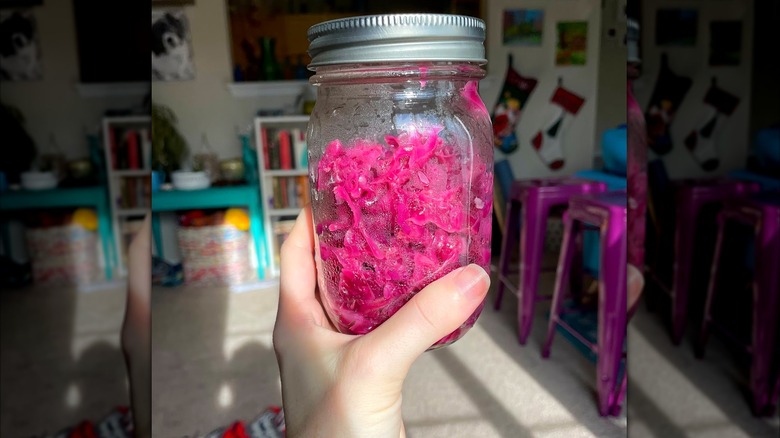
When I think of foods I ate with my grandparents, I think of rødkål, a red-braised cabbage served during the holidays. It's a little sweet, really sour, and fantastic on top of mashed potatoes, on the side of meat, or piled into a sandwich. I grew up with the Danish version, which was introduced as a yuletide recipe sometime in the 1800s before my ancestors immigrated to the United States. Apparently, this was a period of fierce patriotism in Denmark, so people would eat this with peeled and boiled mashed potatoes — when plated, the red and white meal resembled the Danish flag.
Sweden and Norway likewise have cabbage dishes that are almost identical to this one, and it makes sense. Cabbage and pickling are both long-time fixtures in the Scandinavian diet. Cabbage is a rare crop that can survive the wet and temperamental weather of the north. It has fed Danish people for many centuries, being planted in Viking gardens and serving as the national dish until the 20th century. There are plenty of great cabbage recipes to try from Scandinavia to understand this history, but rødkål is special. It's festive, bright, and nostalgic for many Danes. I make this every year during the holidays, often working in homemade cranberry sauce, lingonberry jam, or red onions for an extra little something.
Trollkrem
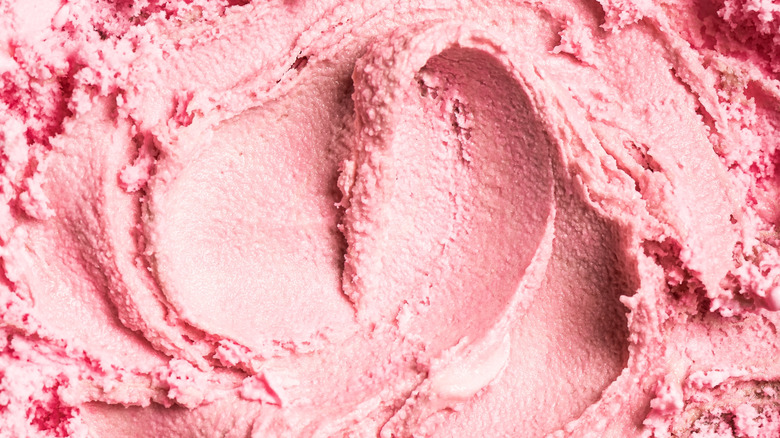
Meaning "troll cream" in Norwegian, this magenta treat consists of lingonberries, sugar, vanilla, and whipped egg whites. Sweet, tart, and fluffy, it's one of the best foods you'll ever eat. I love lingonberries in any form, and so do most Scandinavians. There are fun recipes across the regions that incorporate this special berry. Even just made into simple dishes, it's divine — on a trip to Norway, my partner and I stayed with this woman named Hilde who, every morning, made us the best breakfast in the world: homemade lingonberry jam made from her backyard berries, homemade crispbread, and fresh Norwegian butter. Served with licorice-flavored tea, it is still one of the best things I've ever eaten. I know it sounds so simple, but that's the magic of Scandinavian produce. It's so good that it doesn't need much to get dressed up and impress.
So why trollkrem? It's not exactly casual. I'm recommending this treat because not only is it tasty, but it's a fun way to engage with Scandinavian folklore. Trolls are a big deal in this part of the world and have been a key part of Nordic mythology for thousands of years. Today, from Sweden to Norway, this bit of folklore is preserved through pop culture, tourism sites, and the holidays. Oh, and desserts.
Brunede Kartofler
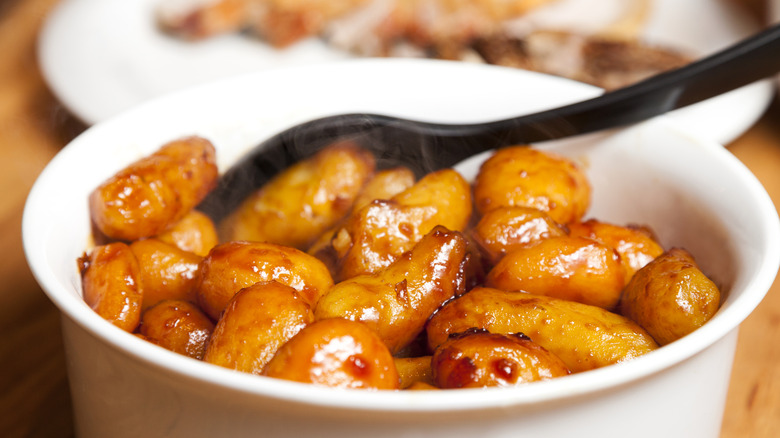
Yet another holidaydish, caramelized potatoes are a classic Danish creation. Made during the Middle Ages when chestnuts were believed to be too pricey for many, Brunede Kartofler was a way of making festive nut dishes with what was available. They're sweet, a little chewy, and extremely buttery. Brunede Kartofler reminds me a ton of Brúnaðar Kartöflur, an identical dish from Iceland. As Denmark used to rule this now-independent nation, the similarities between their cuisines are unsurprising but still worth noting.
After peeling and boiling, cooled potatoes are then transferred to a pan to be sautéed in sugar and butter to gooey perfection. It sounds strange, but they're the perfect accompaniment to creamy mashed potatoes (yes, more tubers), tangy pickled vegetables, and something umami, like smoked salmon or roasted mushrooms. Even critics and picky eaters seem to enjoy this unique potato specialty — I once brought this to a yule potluck in Appalachia, and I was the one person who didn't have to take home leftovers. Believe me, this is an iconic Scandinavian dish worth trying.
Fiskesuppe
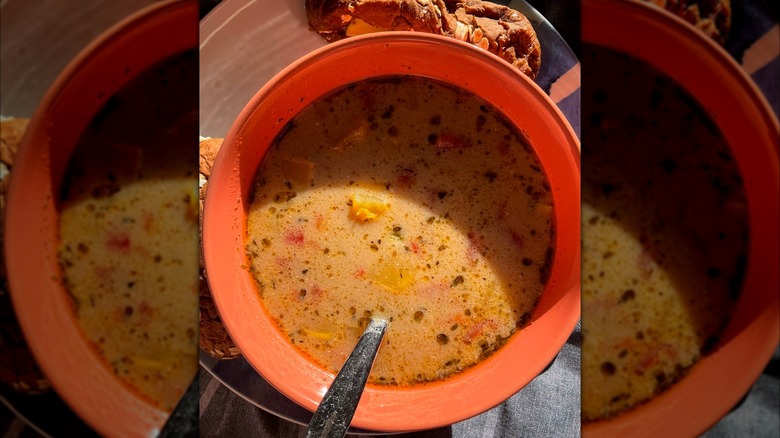
Each Scandinavian country has a fish chowder, but Norway's is usually what the world thinks of when they picture soup from the region. There are many variations of this, but most contain two kinds of fish (white and salmon, usually), shellfish (usually shrimp), onions, root vegetables, cream, and lots of herbs. This soup is what I love to make when I'm wanting to feel like I'm back in Scandinavia, as it's heartwarming, flavorful, and accessible to make if you live by the sea like me. Make sure you serve it with crusty sourdough to sop up every morsel of goodness.
If you're vegan but still want to try this famous Scandinavian specialty, never fear. When I was plant-based, I used to enjoy this by substituting all dairy for plant-based dairy and fish for mushrooms, tofu, or extra vegetables. To keep it on a Scandinavian theme, I recommend replacing the fish with Nordic mushrooms like chanterelles or lobster mushrooms for a fishy taste.
Risengrød
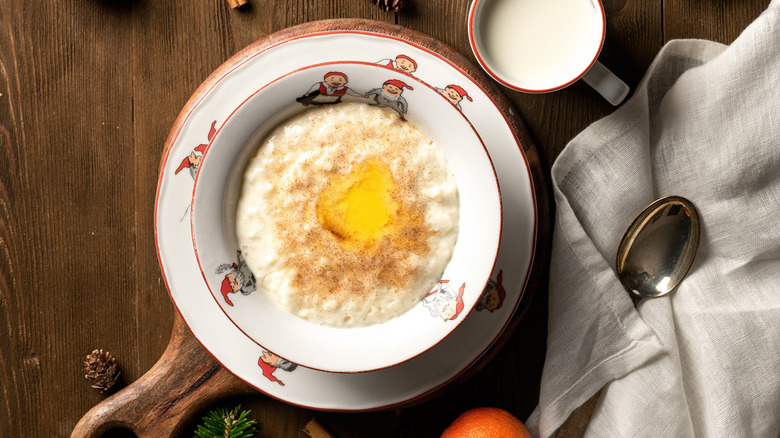
I love a good rice pudding, and this Danish one is superior. Though it's often served during the holidays, it's simple and versatile enough to make all year. It's topped with butter, plenty of cinnamon, sugar, and milk. You just can't go wrong, and it's flexible so that if you want something more dressed up, you can add lingonberry jam, stone fruit, or as a side for eggs and toast. My favorite way to serve this is for breakfast on cold mornings since it's both filling and bright.
All Scandinavian countries have versions of rice puddings, from Norway's riskrem to Sweden's risgrynsgröt. However, if you're trying it for the first time, I think risengrød is the true crowd-pleaser since it's not as thick as Sweden's nor as rich as Norway's, which often includes heavy cream or whole milk. It can be made with whole milk, but most recipes suggest mixing it with water or using a lighter dairy since the butter is more than satisfying. It's by far the most versatile, and I think anyone who's fond of cinnamon, tapioca, or porridge would enjoy this immensely.