

The Absolute Best Sushi Rice Hinges On This Simple Vinegar Tip
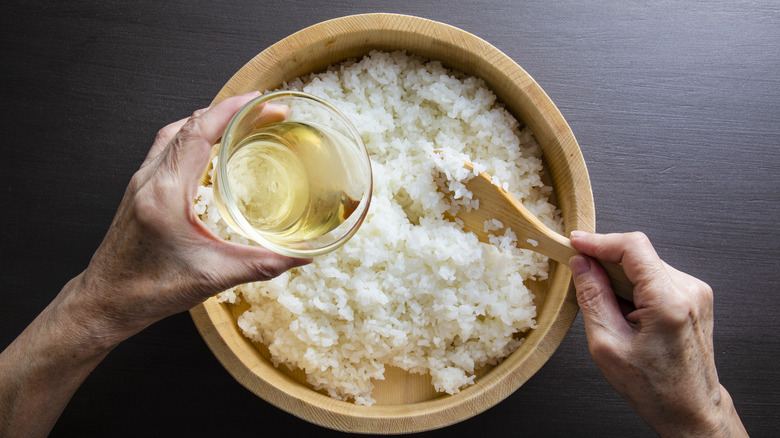
Sushi rice is something of a modern delicacy, though it's really not all that modern at all. People in Japan have been preparing it intentionally for thousands of years, pre-mixing a vinegar solution (sometimes days in advance) to achieve the sticky, subtly sweet, and moldable rice ideal for traditional sushi making. But in this day and age, is pre-mixing the vinegar mixture actually necessary? Nana Darkwah, the executive chef at Ocean Hai at Wyndham Grand Clearwater Beach, says absolutely.
"Pre-mixing ensures the sugar and salt fully dissolve, creating an even seasoning," Darkwah explains. "You can make it several days in advance and store it in an airtight container in the fridge; just be sure to bring it to room temperature before using it on hot rice." Additionally, you'll also need to add the proper ingredients in the right ratio. According to Darkwah, those should be "rice vinegar, sugar, salt, and mirin or sake," with an "optional addition of kombu [dried kelp] simmered briefly in the vinegar mixture" for a more traditional flavor.
Again, it's not just enough to premix your vinegar solution; you also need the correct ratio of ingredients. To ensure the flavors are all balanced, follow the ingredient measurements for the absolute best sushi rice. Then, when it does come time to combine it with your rice, it's also important to follow the correct vinegar mix to rice ratio, which is usually about 1/2 cup to 1 cup for every 3 cups of rice.
Prepping your vinegar mix calls for prepping your rice too

If you're going to put in the effort to prep your vinegar mixture, you may as well put in the effort to prep your simple seasoned sushi rice too. According to Darkwah, that all starts with purchasing the right variety of rice. "Using high-quality, short-grain Japanese rice gives the best texture and stickiness," he notes. Be sure to read through Tasting Table's ranking of store-bought sushi rice brands to find out which to look out for when shopping. Once you've stocked up on a high-quality brand of sushi rice, you'll want to do two things: rinse and soak your rice prior to cooking it.
Darkwah recommends "[washing] the rice thoroughly (until the water runs clear) before cooking to remove excess starch," which will help develop the sticky (but not too sticky) texture you want. Soaking, on the other hand, is done for 20 to 30 minutes prior to cooking the rice as a way to penetrate the grains and help the rice cook properly. Then, when it is time to cook the rice, Darkwah adds that it's crucial you "use the correct rice-to-water ratio (typically 1:1 for Japanese short-grain rice)."
After your rice is done cooking (and it's given some time to steam), you'll be another step ahead having premixed your vinegar mixture. Just be sure to mix it while the rice is still hot — and don't forget to follow one expert's advice on how to pick the best fish for sushi at the store.