

The Type Of Meat Thermometer You Should Never Put In The Oven
We may receive a commission on purchases made from links.
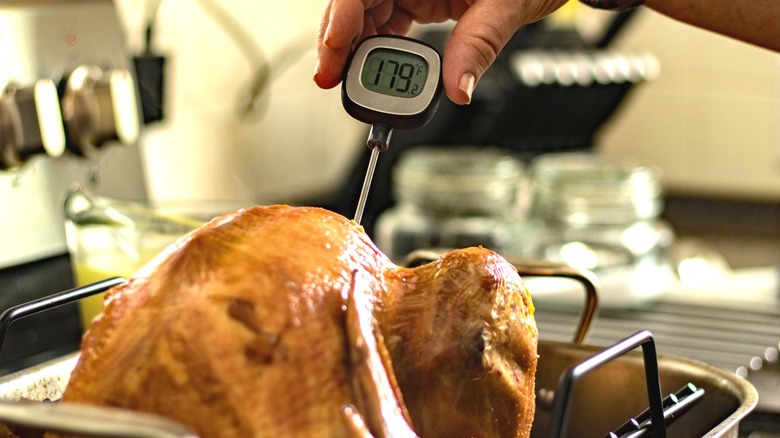
While visual cues can help you gauge the doneness of roasted lemon chicken or oven-seared pork chops, you actually do need a meat thermometer for perfectly juicy and flavorful results every time. Digital instant-read models dominate lists of the best meat thermometers according to online reviews, as they give you super quick, accurate readings. However, one thing these tools cannot do is sit around in a hot oven, as using them this way seriously risks your safety.
It can be tempting to poke a thermometer into food and leave it inside as it cooks, so you can open the oven and see the temp at a glance. However, most instant-read gadgets are battery-powered and should be kept at room temperature, as standard lithium batteries can explode and catch fire in hot environments. Batteries generally perform the best without suffering damage at 50 to 110 degrees Fahrenheit, and ovens (and air fryers and closed grills, for that matter) heated to 212 degrees Fahrenheit or above can cause them to combust. Remove your food from the oven every time you want to test it — the risk is not worth saving that tiny bit of time and effort.
Additionally, many instant-read thermometers have plastic bodies, which will warp or melt in the oven and release harmful chemicals into your food. To avoid disaster, find out if your thermometer is battery-powered and follow the rules in its instructional manual, no matter the type.
What types of meat thermometers can stay in the oven?

Not all digital meat thermometers are dangerous to use in the oven. Besides the instant-read kind, there are convenient and reliable probe thermometers like the Polder Classic Digital Thermometer and Timer. These are composed of two parts: A digital display monitor that sits outside the oven, connected by a cord to a metal probe that goes into the food. The probe and cord can safely withstand the heat, while the monitor shows you temperatures in real time, eliminating the need to check on your dish over and over. This is especially great for making baking easier with a meat thermometer, since some goods like delicate cakes suffer from opening the oven door.
As for a non-digital option, most old-school dial thermometers can withstand hot environments. These battery-free tools communicate temperatures by using a clock-like dial display, and most models are made of metal and are therefore oven-safe (but double-check the manual to see what temperatures your product can handle). That being said, these analog tools are often slow to measure and require a close look to read accurately, which can be inconvenient when you're trying to get dinner on the table ASAP. They can be serviceable in a pinch, but you're better off using a digital model in a safe and responsible manner. Avoid other meat thermometer mistakes like putting yours in the dishwasher, and it will return your care by ensuring all your recipes turn out exactly right.