

How Banana Ketchup Differs From Tomato Ketchup
We may receive a commission on purchases made from links.
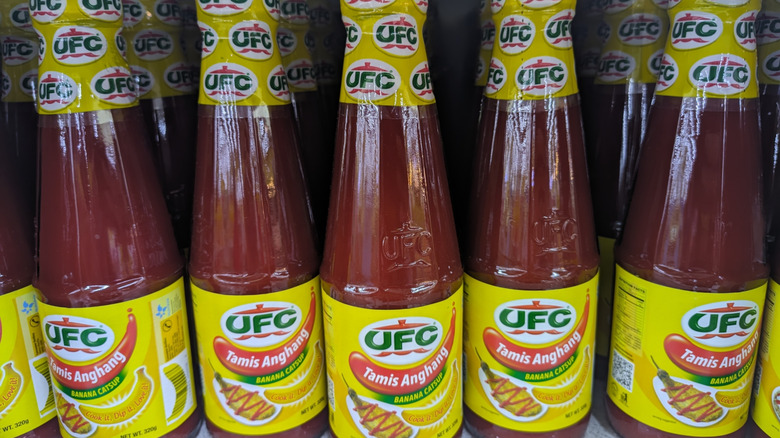
There are few condiments more tried-and-true than ketchup. While some people may resist variations on classic brands like Heinz, they probably haven't tried the Filipino response to the condiment: banana ketchup. The name may have you doing a double-take, but banana ketchup has been around for almost a century. It was first developed in the Philippines in the 1930s in response to tomato shortages during World War II. Instead of tomatoes, the sauce was made by combining pureed bananas (a fruit readily available in the archipelagic country) with vinegar, spices, and red food coloring to make a flavorful sauce.
You can spot banana ketchup by its slightly darker hue compared to stoplight-red tomato ketchup. Aside from color, there are some key flavor differences between the condiments. Banana ketchup is certainly less acidic than the tomato-based stuff and doesn't rely on corn syrup or added sugar for sweetness. Instead, it offers a nice balance of natural sweetness due to the base of fruit, as well as a subtle tang and spicy heat from chiles often added to the mix. It has different nutritional benefits too, which include fiber and potassium from bananas. The play of sweetness and acidity makes banana ketchup a perfect complement to a multitude of Filipino dishes you should try, like silog (a traditional fried rice and egg dish), lumpia, which are Filipino egg rolls, or even as a sauce for spaghetti — without outshining other flavors in the dish, as tomato ketchup sometimes can.
The culinary invention aimed to make the Philippines more self-sufficient
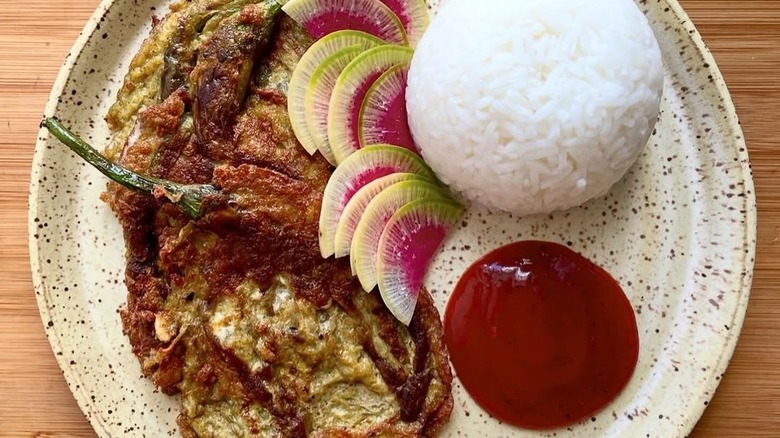
Food scientist and humanitarian, María Orosa is to thank for creating the original banana ketchup recipe, and the condiment was later mass-produced in the early 1940s. Orosa invented banana ketchup with the goal of making the Philippines more self-sufficient, and less reliant on foreign imports like tomatoes. Today, banana ketchup is now eaten widely and is a staple part of the cuisine in the country, as well in the Caribbean, as the perfect condiment for grilled meats and everyday dishes.
While the first banana ketchup was quite simple, nowadays recipes have evolved to reflect the tastes and culinary ingenuity of home cooks and chefs. For instance, some recipes call for adding aromatics like garlic, ginger, and allspice to simmering onions, banana, and vinegar then blending together all the ingredients and serving with tortang talong (a traditional Filipino eggplant omelette). Other banana ketchups also include soy sauce and a bit of tomato paste, which gives the sauce a kick of umami, reminiscent of that in the tomato-based version. And finally, many offer heat from chiles like jalapeños, which makes for the perfect pairing alongside spam or garlic-fried rice. If you're new to banana ketchup, the good news is you can pick it up in Filipino markets and feature it in your next pork dish, or experiment with making the sweet condiment in your own kitchen. If that seems too much like hard work, there are many brands available online, including this FilaManila-brand spicy banana ketchup from Amazon.