

How Korean Barbecue Became A Global Hit
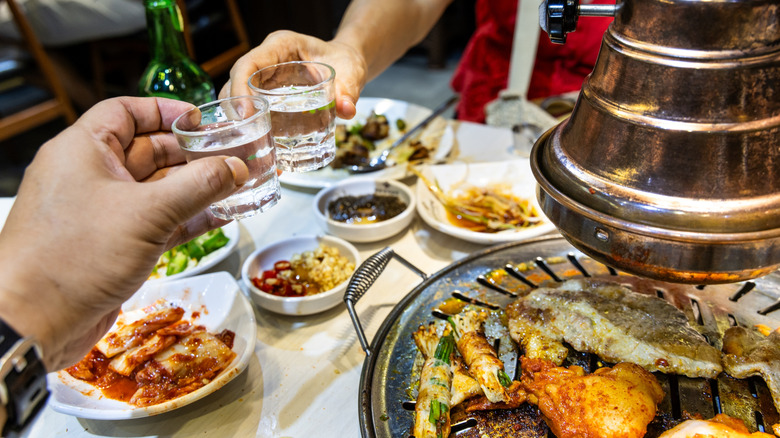
Anyone who's gathered with friends around a sizzling tabletop grill, flipping juicy pieces of flavorful meats and noshing on tiny-plate side dishes, can attest to the phenomenon of Korean barbecue. While the food is undoubtedly masitseumnida (the Korean word for delicious), it's far more than a way to fill your belly. Korean barbecue dates back thousands of years — likely to ancient nomadic tribes — and has evolved into an interactive dining event. It's a ritual of sorts but still a very common way of eating and socializing.
That's especially true now in global restaurants showcasing Korean barbecue as a communal experience with hands-on participation by everyone sharing the meal. Despite royal connections to Korean barbecue, the version we enjoy today started with a dish called maekjeok, basically the forbearer of bulgogi, the thinly sliced marinated beef that remains central to the meal. The tradition of cooking over open fires now takes the form of small gas or electric grills built into restaurant or home tabletops. Though wildly popular now outside the Korean Peninsula, Korean barbecue only recently become a global hit.
It didn't spread prolifically in America until after the Immigration Act of 1965 expanded Korean immigration, bringing new culinary specialties into the Western dining repertoire. Even so, Korean cuisine remained largely tucked within Korean homes and communities until pop culture in the late 20th century brought the Hallyu (or Korean Wave) of interest in K-pop music, K-drama, and Korean films. Finally came an interactive coming-out party for its hidden prize: the Korean barbecue tradition.
Korean barbecue in America
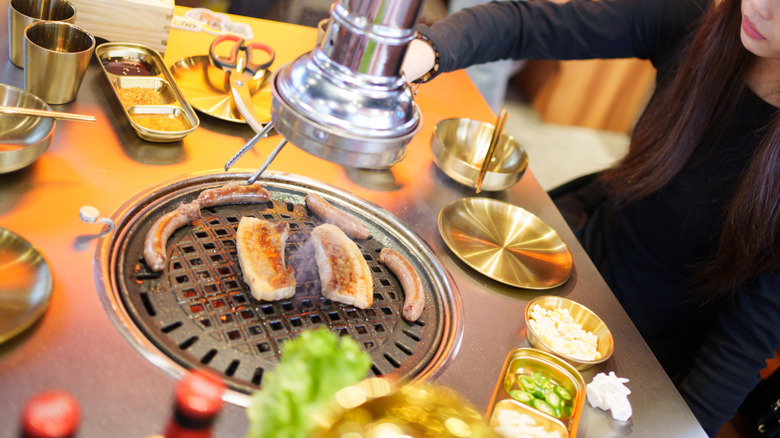
From New York to Los Angeles, Atlanta, Houston, and other U.S. cities, thriving Korea Towns initially introduced Korean cuisine in humble ways: small late-night cafes, food trucks, and karaoke bars. K-town districts still offer those venues for Korean fast-food or low-key dining, but Korean barbecue has risen to mainstream status. High-end restaurants, chain eateries, and secret "authentic" K-BBQ popups proliferate across America, including the well-known all-you-can-eat joints in the Los Angeles Koreatown and other areas. There's even assimilation-style Korean food at places such as Korilla BBQ in New York, which serves the barbecue in burritos and tacos.
America is certainly not the only country jumping on the K-BBQ wagon. You'll find Korean food, including barbecue, in France, Japan, Australia, Germany, Dubai, and many more countries across the globe. Items served may differ by location or individual chefs, but generally, guests cook marinated meats such as pork belly (samgyeopsal), beef short ribs, and the sweet-and-savory bulgogi beef. It's common to wrap the cooked meats in lettuce or perilla leaves and dip into sauces, including spicy ssamjang paste or flavored sesame oils.
Then, there's the seemingly endless small-plate side dishes, known as banchan. Kimchi is a given, accompanied by a spread of sides, including lots of greens. Expect to find things like bean paste stew, cold noodles, streamed eggplant, bean sprouts, green onion salad, seasoned spinach, spicy cucumber salad, fish cakes, radishes, mushrooms, and much more.
To maximize this experience, check out our list of the 9 mistakes you're making when eating at a Korean BBQ restaurant.