

11 Mistakes To Avoid When Shopping At A Farmers Market
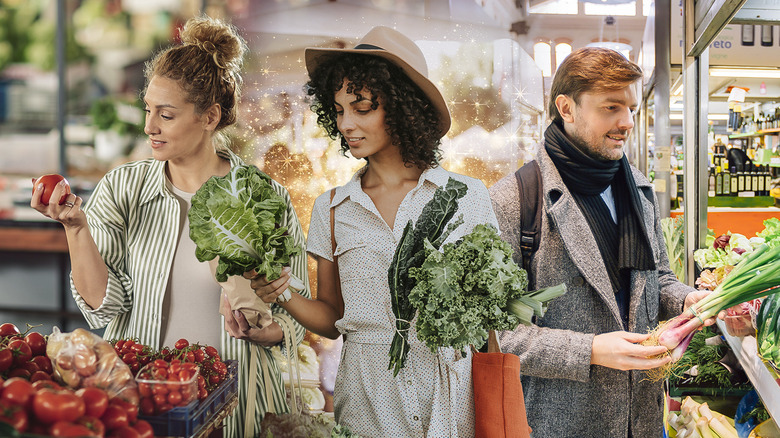
There's no better way to start a weekend morning than by pouring yourself an iced latte that's the perfect shade of brown before heading to your local farmers market. It's a chance to stock up on the freshest produce you can find, of course, and also a place where you might be able to pick up some specialty food products and perhaps even some local art. Maybe it's where you buy yourself a wildflower bouquet just to treat yourself or grab a fresh pastry from your favorite local bakery's stand.
Going to the farmers market is an enjoyable experience, but that doesn't mean that it's impossible to make mistakes when you're there. In fact, a lot of people commit a farmers market sin from time to time. But by knowing what you're doing wrong, you can ensure a better experience, a cheaper farmers market bill, and maybe even fresher produce. These are the mistakes you should avoid the next time you go shopping at a farmers market.
1. Forgetting to bring shopping bags
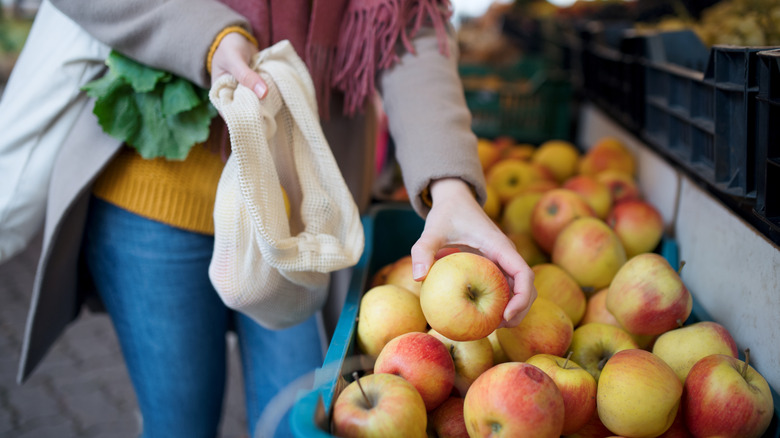
A lot of people may assume that going to the farmers market is basically the exact same thing as going to the grocery store, but just held outside. However, it's important to remember that a farmers market isn't likely to offer some of the features that are ubiquitous in a grocery store. For example, there's a good chance that your local farmers market won't provide you with bags in which to carry your goods. Individual vendors may have small bags for individual items, but if you're planning on hauling several different things home from the market, it makes sense to bring your own bags with you.
But don't worry — you don't need to go out and buy bags just to use at the farmers market. Any tote, backpack, or other appropriately sized bag will do the trick. If you drive to the farmers market, you can just keep these reusable bags in the car so you always have them on hand when you need them. Plus, by not using a disposable plastic bag, you can feel good about the fact that you're producing just a little less waste than you might if you were to get your groceries bagged in plastic at the store.
2. Not bringing cash
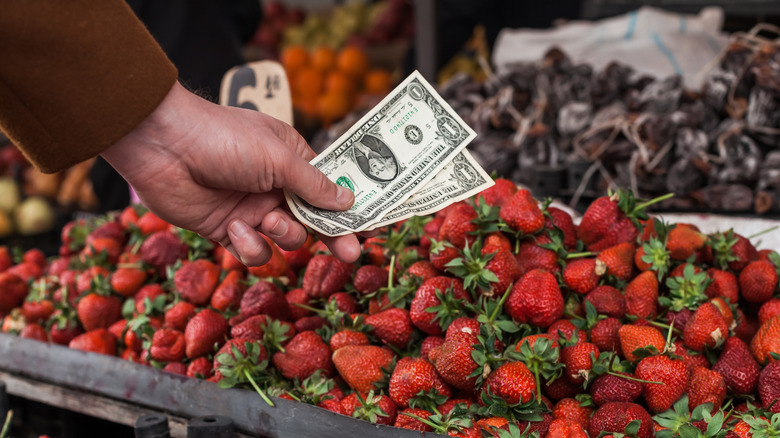
You can use your credit card everywhere these days ... right? Not necessarily. You may find that some vendors allow you to pay with a credit card, but there's a good chance that others will not. After all, credit card companies take a small percentage of each sale, which costs the seller money. Additionally, credit card machines can sometimes be tricky to use, and farmers may not want to deal with them. Therefore, you might come across a vendor that only wants to accept cash. It just makes sense, then, to make sure that you have plenty on hand before you head to the market.
Make sure to get a good mix of larger and smaller bills, since you don't want to be asking vendors to break a $100 bill. Having $5s and $10s in your wallet ensures that you can get through transactions quickly without being a burden to the vendor. So, after your first sip of that perfect iced coffee, make sure to stop at the ATM.
3. Overbuying fresh produce
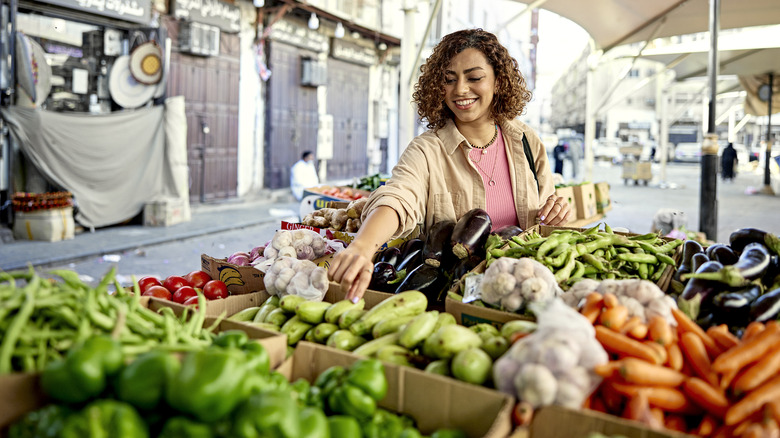
A good farmers market is absolutely brimming with colorful produce looking fresh and inviting. And on a particularly sunny spring or summer day, it can be easy to feel like you want to try absolutely everything. But you should be mindful of how much produce you really consume in a week before going all out at the farmers market. Overbuying fresh produce is a common mistake people make at a farmers market, and it can be a costly one if you can't eat all of it before it goes bad.
Be strategic in what you buy. Don't buy any produce that looks good but that you don't tend to eat a lot of. For example, it's not worth spending $5 on a punnet of blueberries if you don't really eat blueberries on a regular basis anyway. And if you already have a big bag of spinach in your fridge, there's a good chance that the rainbow chard you see at that one farmers market stand is going to wilt before the chance you get to sauté it with some garlic.
Of course, it can be fun to pick up random treats at the farmers market, but creating a shopping list before you go can be a good idea. That way, you won't end up throwing away any excess produce at the end of the week.
4. Assuming that you're going to be getting the cheapest prices
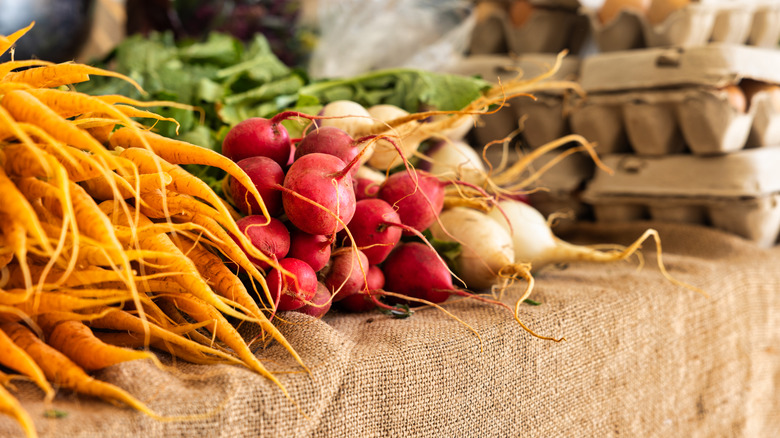
If you're not well-acquainted with farmers markets, then you may assume that, because you're buying directly from a producer, that you're in for cheaper prices than you would normally get at the grocery store. However, you shouldn't go into a farmers market expecting that you're going to get an incredible deal. The truth is that farmers markets are often expensive — and as farming costs increase, the prices at your local farmers market are often rising as well.
A farmers market is a great place to go when you want to buy local, support farmers who live near your area, or are looking for super high-quality produce. However, they're generally not the best place to go when you're trying to buy the cheapest produce possible. Of course, all farmers markets are different, and you may have one in your area that actually does offer lower-than-expected prices. But it's always a good idea to go into a farmers market situation with the understanding that it's likely to be a pricier experience than shopping at the grocery store.
5. Trying to haggle
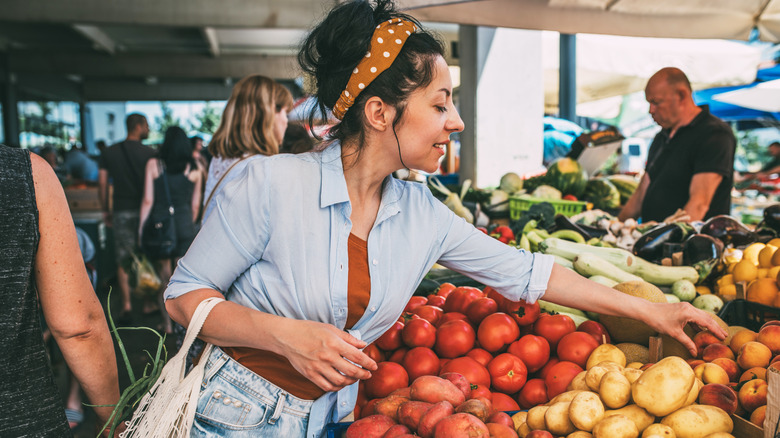
Something about being at an outdoor market makes some people feel like haggling is an appropriate way to get a better deal on their produce. However, this is a major farmers market faux pas. Think about it: When was the last time you tried haggling for tomatoes at the grocery store? Probably never. The farmers market works the same way: Farmers set a specific price for their goods, and if you want them, that's what you're going to have to pay. Haggling at a farmers market is generally not going to result in a reduced price and is likely to upset the vendor to whom you're speaking.
It's important to remember that farming is an incredibly labor-intensive industry and that farmers who are selling to markets are often using organic or otherwise sustainable practices that make their production costs higher than normal. Asking for a lower price, then, can come across as tone-deaf or even insulting.
6. Asking for free samples unsolicited
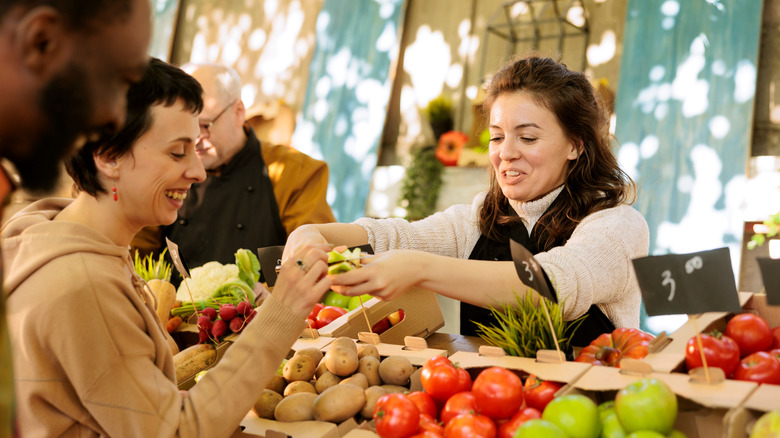
There are some farmers market stalls you visit that may offer you a free sample of whatever they're selling. Perhaps you'll get the chance to taste some local honey or munch on a piece of fresh carrot. Those samples are part of what makes the farmers market experience so fun. However, it's important to remember that you're probably not going to get a free sample at every vendor you visit — and that's okay.
A vendor may have a variety of reasons for not offering a free sample. Maybe the product in question is difficult to serve or present in an appropriate way. Perhaps they cannot provide samples for everyone and therefore choose not to provide them at all. Or maybe it costs them too much money to provide samples. Whatever the case may be, if the free samples aren't already out and offered, it's generally not a great idea to ask if you can try anything for free.
7. Forgetting to stop by all the stands before deciding what to buy
You know when you first get to the farmers market and see a container of super fresh strawberries, bold and red and fragrant, and you decide to buy them right away? Then, just a few stalls later, you realize that another vendor is selling strawberries that look even better — for a few dollars cheaper? It's a bummer to realize that you should've purchased your produce from the other stall, which is why it's so important to stop by all the stands before finally deciding what to buy.
Generally, it's a good idea to take a walk around the whole farmers market when you first arrive. That way, you can see everything for sale at different vendors, and you can take a closer look at pricing. Then, by the time you make your second round, you'll know exactly what you want to buy and where. Sure, it takes a bit of extra time, but it might just save you some money — and ensure that you get the freshest, most delicious-looking possible produce in the process.
8. Arriving to the market too late
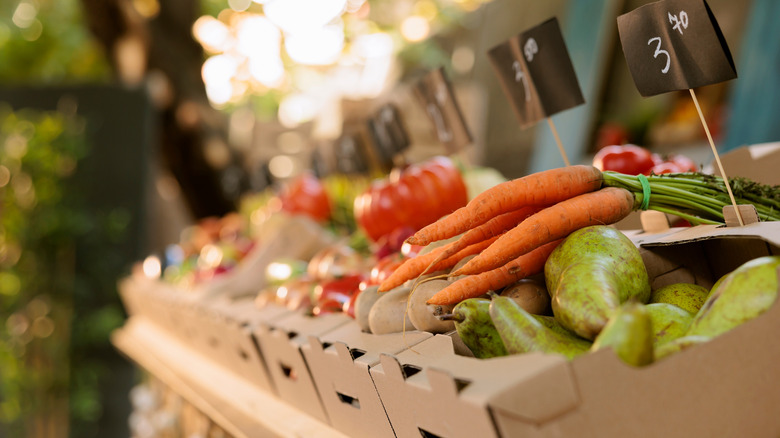
Many of us like to take our time waking up on weekends, getting breakfast and a coffee — or two — before we head out the door, even to a place as enjoyable as the farmers market. But if you're trying to get the best and freshest produce, the last thing you want to do is get to the farmers market too late. A vendor isn't likely to bring a lot more than they think they can sell, which means that you might be left with very little to choose from by the time the market is winding down. There's a good chance that you won't get the freshest version of whatever it is you're buying — but you might still pay the same price for it.
Our advice? Take note of when the farmers market opens, and plan to be there relatively early in the morning. Ideally, you'd be there right as it opens, but planning to get there within the first hour or two will generally do the trick. Sure, it might require you to get up a bit earlier than you normally would on a weekend, but it just might be worth it when you see what kind of beautiful produce is available when you get to the farmers market before noon.
9. Not handling produce with care
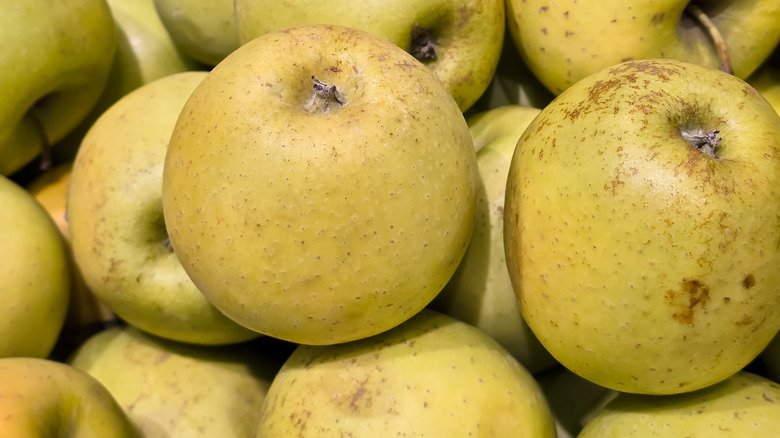
When you're shopping for certain types of produce, you may want to give your tomato or cucumbers a squeeze to make sure they're not going off and getting soft. Similarly, you may want to feel for how ripe an avocado is before buying it for your taco night. Therefore, there's a good chance that you'll be handling some produce that you don't actually end up buying. That's okay, but it's a good idea to remember to handle all produce with care. Even if you don't buy it, someone else might, and they're going to want it to look as fresh and as intact as it can be. Plus, it costs the vendors money if you end up banging up a piece of produce that they will no longer be able to sell — and that won't make you any friends at the farmers market.
Therefore, when you're trying to find the best tomato or ear of corn or bell pepper, just be sure to handle the produce with a light, careful touch. It'll make the shopping experience better for everyone at the market.
10. Assuming that a farmer doesn't have organic produce just because they're not organic certified
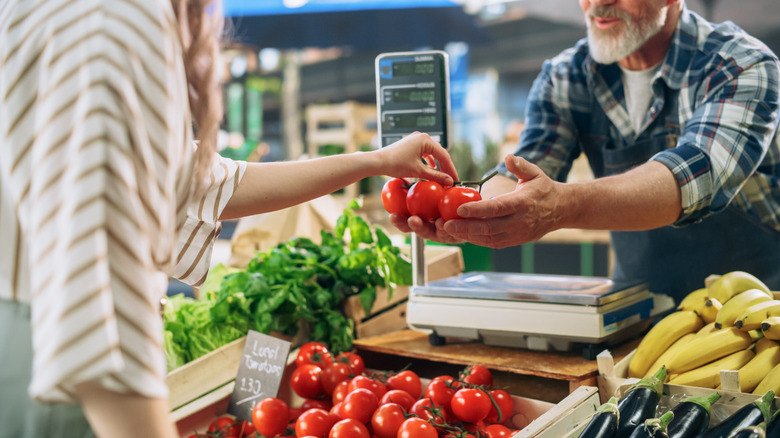
Part of the reason a lot of people want to shop at a farmers market is the fact that they can get organic produce there. If you're one of those people, then you may be on the lookout for signs at certain vendors saying that they're "certified organic." However, it's important to remember that there may be farmers out there who are growing their produce organically, even if they don't have a certification. This is because organic certification can be expensive, and smaller farms often don't have the revenue to purchase said certification. In fact, some of the farms that are most focused on sustainability may not have any kind of certification at all.
Wondering how, exactly, the produce in question was grown? Your best bet is to ask the farmer (or the person working at the stand) about their growing practices. Not only will you gain a better understanding of where your food comes from and how it's grown, but you may even build a connection with your local farmer in the meantime. And who doesn't want to know the person who's growing your food?
11. Buying produce that's clearly out of season
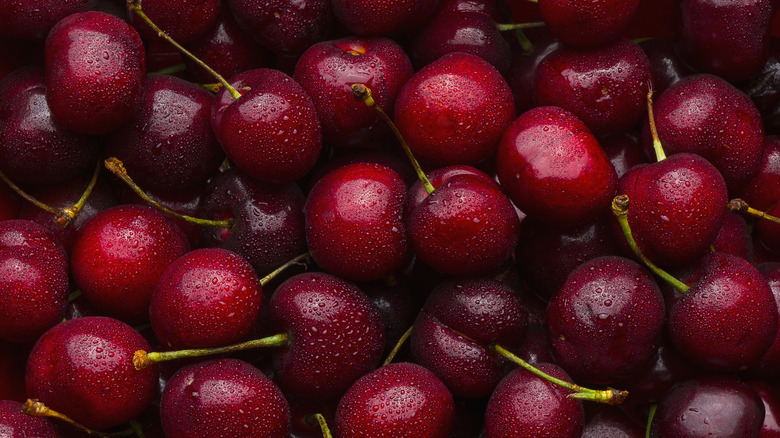
Depending on the kind of farmers market you're going to, you may be getting the freshest, most local produce available ... or it might come from further away and technically be no fresher than the stuff you would buy at the grocery store. Of course, the best way to figure out if this is the case or not is to speak with the farmer or person running the stand. However, one way you can be fairly certain that you're not getting local produce is if it's completely out of season. Buying cherries in the middle of the winter? They're probably not from nearby if you live in Chicago.
Of course, this doesn't mean that you can't buy out-of-season produce at the farmers market if it's available for a good price and you don't mind if it's not local. However, you shouldn't be paying a premium to be buying stuff shipped from across the country — or a different country altogether — just because it comes from a farmers market.