

How A Mule, Molasses, And Circus Mayhem Birthed Shoofly Pie
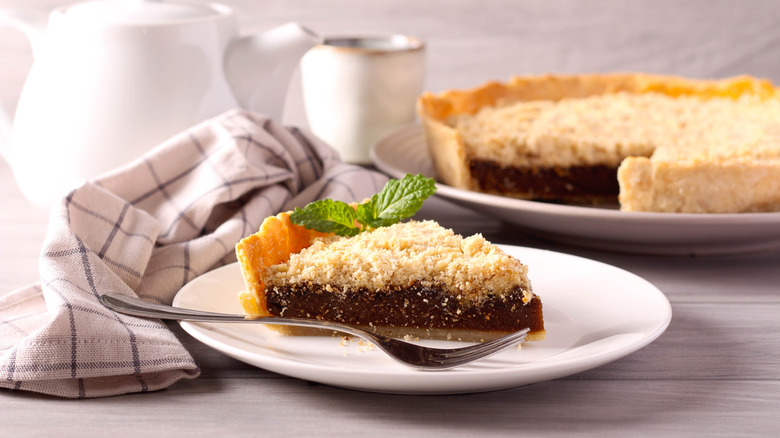
A pie with a name as colorful as "shoofly" is bound to have a few stories about it. You can hardly even read the name without conjuring the image of someone swiping their hand above a slice of pie, shooing away the flies that would otherwise descend on this decadent dessert. Given the clear directive in the name, it makes sense. This pie must be named for the fact that flies are drawn in by its sweet aroma, perhaps even stuck in its sticky molasses filling, and need to be regularly shooed away by a prudent pie protector. It seems like a simple enough, logical enough story. The only trouble is that it isn't true. The real history of shoofly pie (and its strange name) goes much, much deeper, linking back to a popular old tune, a boxing mule, and a brand of molasses.
Now, if you've never heard of shoofly pie, we forgive you. It is one of those nearly forgotten vintage pies. It is a classic Pennsylvania Dutch recipe, a simple pie crust filled with a bittersweet molasses-rich center, a crumble top, and an intriguing name. The shoofly pie made its first appearance in Philadelphia, Pennsylvania, in 1876 as "Centennial Cake" at a celebration of the 100th year since the Declaration of Independence was signed. The ingredients for the cake were the sort of pantry staples that most homes had on hand, so it quickly grew in popularity. As this dessert spread, it began to deviate from both the original recipe and the original name.
Where did the name shoofly come from?
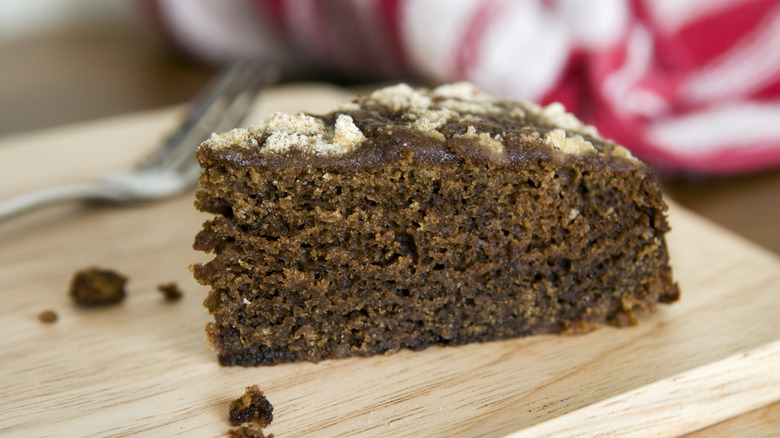
The first big change came in the addition of a pie crust. Adding a crust to the bottom of the Centennial Cake turned it into an easy-to-eat handheld, somewhere between a pie and a crumb cake. At the same time, the names "shoofly pie" and "shoofly cake" began to take hold. But where did these new names come from?
As it turns out, the name shoofly likely referred to a brand of molasses available at the time. And we know what you're thinking: "Well, surely then the molasses brand was named in reference to swatting at flies." But, again, you'd be wrong. The etymology of this pie is particularly circuitous, with a host of strange connections. Shoofly brand molasses, you see, was actually named after a mule — a boxing mule, in fact. Shoofly the mule would stand on his hind legs, gloves strapped over his front hooves, and engage in mock-boxing matches with other animals for the entertainment of the masses.
Now, you may think that this mule connection had taken us back as far as we could go in tracing this unusual pie name, but we still have not reached the source. It would be perfectly reasonable to think that the tendency of equines to swat away flies with their tails could've been enough to land this boxing mule his title, and it may have been. But there's one more pop-culture reference to follow, and it's a song you may well have heard: "Shoo Fly, Don't Bother Me" by Dan Bryant, released in 1868.
Shoofly pie isn't named for flies?

If you've ever heard it before, you know that it is a catchy number. But the phrase "shoo fly" apparently entered the American lexicon and took off as a slang phrase. In H.L. Mencken's 1919 book, "The American Language," he bemoans this particular bit of slang, stating, "Shoo-fly afflicted the American people for at least two years." You can trust someone writing a book with a title like that to be very careful with his word choice, and his use here of "afflicted" is likely a clue to just how pervasive (and annoying) this phrase must have been at the time.
So, there you have it. The likely origin story for this unique U.S. pie is that it was named for the molasses that was named for the mule that was named for the ditty. The first record of a recipe titled "shoofly pie" doesn't come about until 1890, so it makes sense that with the phrase "shoo fly" becoming popular slang in the late 1860s, it could transfer slowly to the mule, then the molasses, and then the pie. Then again, food history is rarely cut-and-dry — just look at the uncertain origin of the name snickerdoodle. It could certainly also be the case that the popular turn-of-phrase simply found its way to the pie because of the sticky wells of molasses that can form while it's baking. We will likely never know for sure.