

A Pitmaster's Advice On Cooking Pork Spare Ribs That Are Perfectly Tender And Smoky
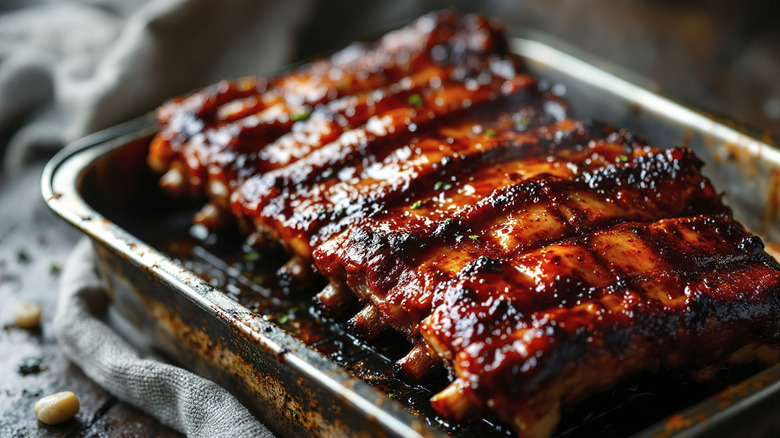
If you are a true rib lover, then you know that spare ribs are maybe the most inappropriately named cut of meat you can throw on your smoker. Both baby back and spare ribs will make some delicious barbecue if handled correctly, but with rich layers of fat and big chunks of meat surrounding the bone, spare ribs deliver more flavor for a lower price. The more expensive baby back ribs are generally leaner and more tender, but if you know meat, then you know fat is where the flavor is, and less tender isn't always a downside; it's an opportunity. So, we reached out to a legendary pitmaster, Aaron Franklin, the owner of the world-famous Franklin BBQ, to ask how he gets his smoked spare ribs perfectly tender.
Spare ribs have more connective tissue than baby back ribs, which means a long cooking time, and Franklin tells us that he splits up his smoke into two parts. "I prefer to start [with] full spare ribs, meat side up, and cook at moderate temperatures until the surface has a nice mahogany color," Franklin reveals. The ideal mid-range cooking temperature for ribs is 225 degrees Fahrenheit, which is just enough to slowly cook ribs without drying them out. "Around 3.5 hours or when the color is about two shades darker than you prefer, wash excess smoke off with a good spritz and delicately apply your favorite (warm) BBQ sauce and let set for a few minutes," the pitmaster adds. Then, it's on to rib round two.
Turn over your low and slow spare ribs over halfway through
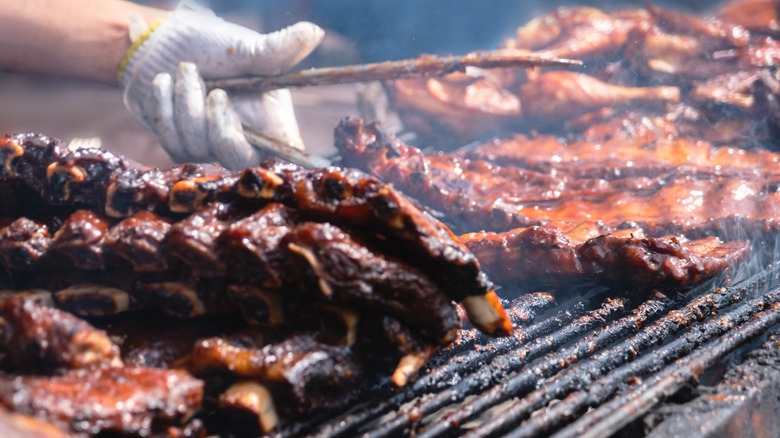
The second half of your spare rib smoking involves flipping them over to ensure all that connective tissue is properly broken down. To do that, Franklin recommends that when the ribs appear "a little tacky," you "wrap tightly, meat side down, in foil with a bit of warm barbecue sauce and a splash of apple cider vinegar and place back on the cooker." Then, leave the ribs to cook for "about 2 more hours or until you can feel them getting almost tender through the foil." While a pitmaster like Franklin can give us time and technique tips, he notes that part of making great barbecue spare ribs is just developing a feel for it, admitting that "this part is very tricky and really takes some practice."
To make sure your spare ribs get tender, you should be watching your temperature closely. Apart from the aforementioned cooking temperature of 225 degrees, the goal temperature for the ribs themselves should be between 200 and 205 degrees, which is high enough to melt the connective tissue that will make your spare ribs tough. The foil wrap that Franklin recommends is particularly important, because that will shield your ribs from overcooking over such a long period. If you follow his technique and watch your temperatures, spare ribs will deliver barbecue heaven every time.