

Pay Attention To This Pricing Strategy At Peter Luger Steak House Or Risk An Overpriced Meal
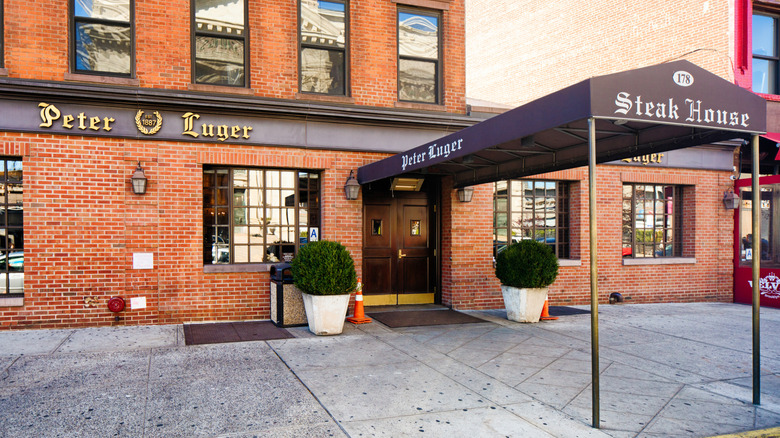
Peter Luger Steak House is a New York landmark, known as much for its dry-aged porterhouses and exceptional burgers as for its old-school charm. But if you're not careful, the charm might come with sticker shock. One of the more understated — yet effective — pricing strategies at Peter Luger involves how the menu is structured and what's not said.
For starters, you'll notice that prices are listed without dollar signs. At a glance, this might seem like an aesthetic choice, but it's a well-documented, intentional move rooted in behavioral studies. Research suggests diners spend more freely when prices are listed without currency symbols — possibly because the visual cue of a dollar sign reminds people they're parting with money. It's possible Peter Luger uses this minimalist presentation to keep you focused on the food, not the cost.
Peter Luger may be one of the more iconic examples, but it's far from alone in how it shapes diner behavior. Many restaurants rely on subtle pricing cues to influence how customers spend — often without diners ever knowing. Removing dollar signs from menus is just the beginning. Hospitality research shows that even small formatting choices — like ending a price in a 0 instead of a 9 — can influence how a fine dining restaurant feels to the customer.
Designing for bigger checks
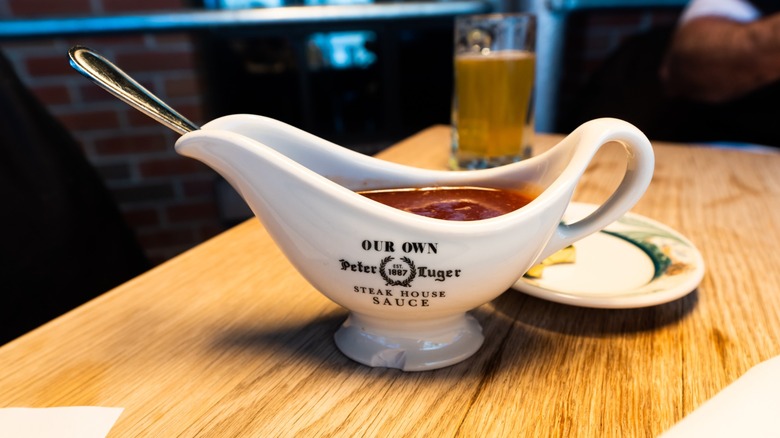
The real wildcard is buried further down the menu in the "Surf" section. Unlike the steaks, which come with clear prices and can be purchased at a major discount, the seafood section is a bit of a mystery. It says that items are priced "by the pound," without giving any actual figures. That leaves plenty of room for interpretation — and for your bill to balloon. This is a common feature at high-end restaurants and part of an effective pricing strategy. Leaving prices off the page minimizes sticker shock while reinforcing a sense of exclusivity. If you're not familiar with the market rate for seafood or assume it's in line with the rest of the menu, you're in for a surprise. The takeaway? Always ask about the price. Your waiter might be the only source of truth.
Reputation plays an equally powerful role. A restaurant with decades of legacy and a loyal clientele — like Peter Luger — builds an atmosphere where prices go unquestioned. Whether you're there on a date, celebrating a milestone, or entertaining clients, the social context makes it awkward to ask what something costs. In the world of high-end dining, design, psychology, and reputation quietly guide the experience — and often, the final bill.