

The Absolute Best Flour To Use For Angel Food Cake
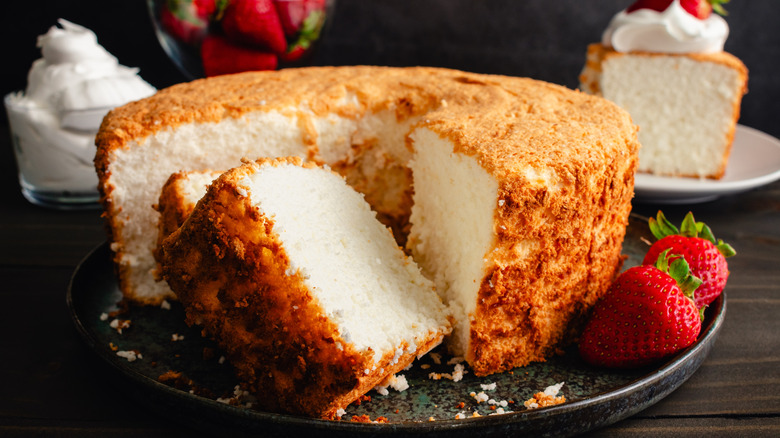
Angel food cake is adored for its lofty height and angelic lightness — qualities that are directly influenced by the type of flour used. You would think that all-purpose flour, the go-to for general baking, would do the trick. Yes, it will give an average angel cake, but if you go with a flour that has one significant difference to your all-purpose, you'll end up with a next-level angel cake that will leave you floating. This flour is unbleached cake flour.
Cake flour in general has a low protein content (around 7% to 9%), and the unbleached version is ideal for delicate angel cake. Compared to all-purpose flour, which contains 10% to 12% protein, unbleached cake flour develops much less gluten when mixed. This reduced gluten development is essential to ensure that the cake maintains its airy structure without collapsing under its own weight. The fine texture of unbleached cake flour also plays a role. Its soft, fine particles incorporate smoothly into whipped egg whites, helping to maintain the batter's volume and integrity during folding and baking. On the flip side, the coarser texture and higher gluten potential of all-purpose flour can deflate the meringue base, resulting in a denser and flatter cake.
In addition to that, unbleached cake flour is free of the chemical treatment that bleached varieties often have to go through. This means it has a slightly higher acidity, which works beautifully with egg whites to stabilize and lift the batter during baking. The result is a cake that rises higher in the oven and maintains a more structured, domed appearance once cooled.
Superior texture and moisture
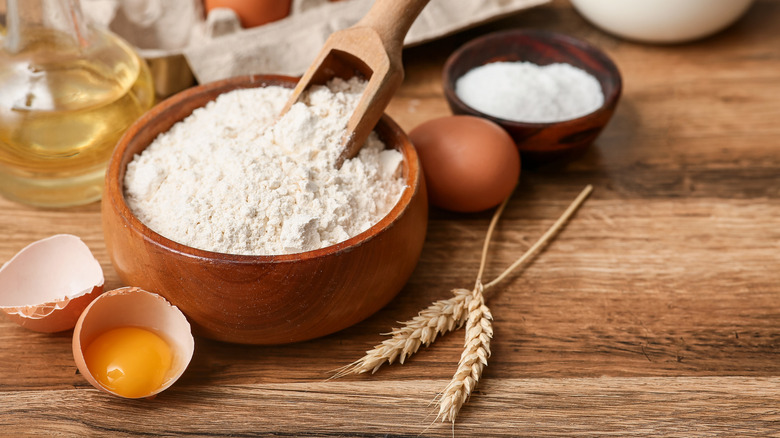
Height aside, the texture of angel food cake is what makes it stand out amid its sponge cake peers — and again, unbleached cake flour proves its value. The minimal gluten structure contributes to an ultra-fine crumb . Each bite feels soft and velvety rather than chewy or bready. The starches in unbleached cake flour are also very effective at absorbing and holding moisture. This means that the batter not only bakes into a soft and fluffy cake, but that it also retains that moisture over time. On the other hand, a cake made with all-purpose flour tends to dry out due to its stronger gluten network and less absorbent starch profile, which results in a tougher crumb.
Another advantage of unbleached cake flour is its natural composition. Because it has not been chemically altered through bleaching, it keeps its subtle flavor nuances and a more natural starch quality, enhancing the vanilla or almond flavors that are synonymous with angel food cake recipes. Finally, when you are investing time into separating eggs, whipping the whites to stiff peaks, and carefully folding your ingredients into each other, using the right flour ensures that all that effort you have put in pays off. Unbleached cake flour supports the cake's delicate rise, complements the egg structure and results in a tender, moist texture that remains fresh and light for days. For bakers seeking a truly exceptional angel food cake — tall, tender, and irresistibly light — opt for unbleached cake flour to deliver a cake that makes you think you are eating flavored clouds made by angels.