

What To Keep In Mind Before Adding Inclusions To Sourdough
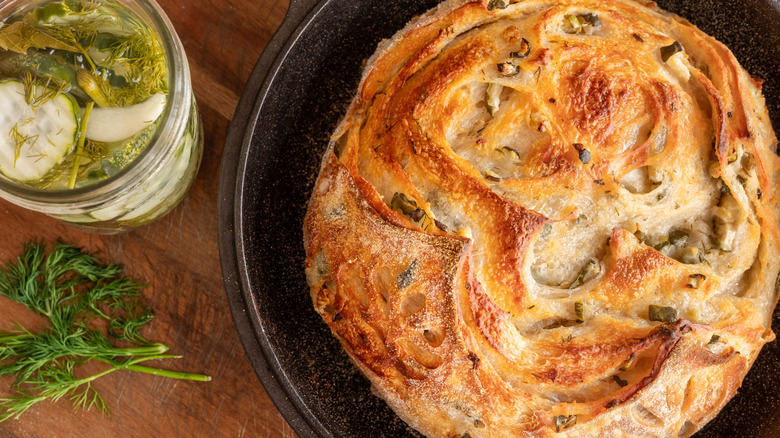
When it comes to making sourdough more exciting, inclusions like cheese, herbs, fruits, or spices can take a loaf from basic to bakery-worthy. But before you start tossing ingredients into the dough of your recipe for fresh-baked sourdough, it's worth thinking through how you add them as their form affects everything from flavor distribution to the texture of the loaf.
Let's take cheese, for example. If you want bursts of melted cheese scattered throughout the bread, opt for cubed pieces. They'll hold their shape better and create cheesy pockets in the final loaf. But, if you'd rather the flavor be more integrated throughout the crumb, shredded cheese is the better choice. The same rule applies to other ingredients. Chopped chocolate or coarsely shaved pieces will melt into puddles and leave gooey bites behind, while finer shavings or chips will melt more evenly into the dough. With jalapeños, slices will give a bold hit of heat in select spots, while dicing them subtly integrates their flavor throughout the loaf. Ultimately, larger chunks will provide random pops of flavor, whereas smaller bits will fully infuse the dough.
Keep in mind, however, that how you prep your inclusions is just as important as understanding exactly when you should add them to the dough – preferably, after a few stretches and folds.
Consider moisture, balance, and bread structure
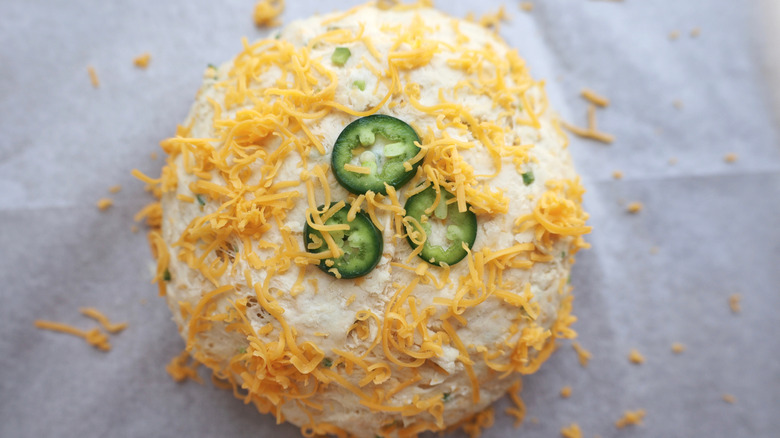
Beyond the size and shape of your inclusions, think about how they'll affect your dough overall. Moisture-rich add-ins like olives, sauteed onions, or fresh berries could be one of the reasons why your sourdough is sticky as the extra moisture can loosen up your dough and throw off fermentation, if ingredients are not properly drained or patted dry. Dried add-ins instead risk the opposite.
Additionally, if your inclusions lean salty (like cured meats or certain cheeses), you may need to scale back the salt in your base recipe slightly to maintain flavor balance. You'll also want to be mindful of quantity. Too many add-ins can weigh the dough down, making it harder to rise properly or leaving you with an overly dense crumb. A good rule of thumb is to stick to about 20% inclusions relative to the flour weight, adjusting based on how bold or subtle you want the final loaf to taste.
Don't forget that inclusions affect the crust, too. Sugar-based items like dried fruit or chocolate may caramelize at the edges or even burn if exposed on the surface, so it helps to fold them in gently and keep most of them tucked inside the dough during shaping.