

18 East African Dishes You Need To Try At Least Once
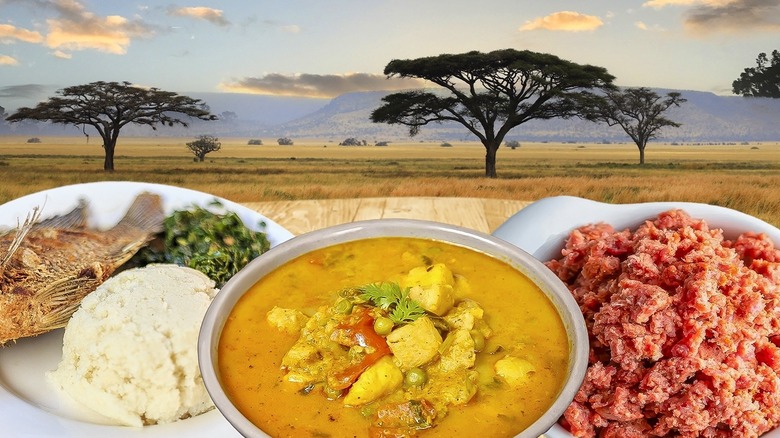
Time to break out of your culinary rut and explore a cuisine loaded with flavor, history, and a diversity of textures and ingredients. African cuisine holds quite a range, depending on the country and culture it originated from. As an anthropology major with a focus on African studies and food culture, I am drawn to the cuisine of East Africa. In addition, I find the use of starches, vegetables, and spices unique, as they pull from surrounding cultural cuisine, mostly Arabic and Indian. This proximity promotes intercultural mixing due to exposure and trade routes. Of course, colonization plays a role in intercultural mixing, inevitably influencing East African foods.
"The spice trade between East Africa and India goes back hundreds of years," explains Mohamed Yakat Ali, Executive Chef at Jiko, a five-star restaurant located in Kenya. "When the British colonized East Africa, they brought Indian laborers to help build the rail network. Many of these workers settled in the region; generations later Indian flavors and ingredients have been adopted in local recipes across Kenya. So many dishes from my childhood that I assumed to be traditionally Kenyan, were actually derived from India." Some examples are biryani, chapati, and samosas.
Even within a dish, there can be a true mix of cultural influences. For instance, Yakat Ali explains, "In Eritrea and Ethiopia, the iconic spice mix 'berbere' that flavors their dishes is made from cardamom (Southern India), fenugreek (Mediterranean), cumin (Western Asia), pepper (India), nutmeg (Indonesia), dried chilis (the Americas), paprika (central Mexico), allspice (Central America), garlic (western China), cloves (Indonesia)." He concludes with a beautiful saying, "We are all connected by the foods we eat."
Kachumbari (Kenya)
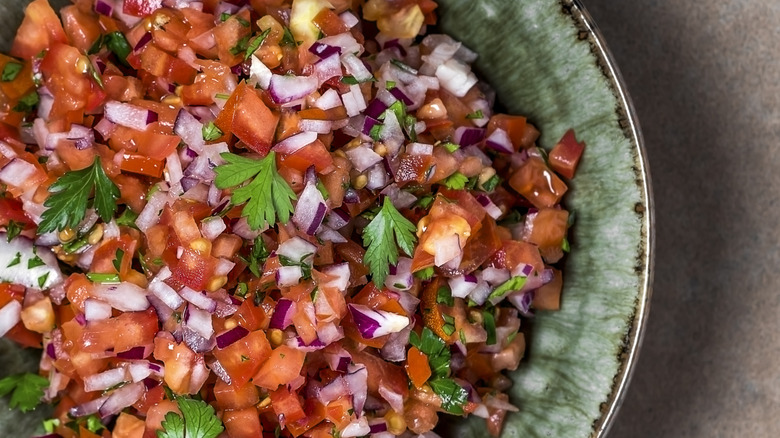
Stews, steaming hot grains, and charred, juicy meat come to mind when conjuring up images of East African cuisine. However, there are other popular, fresh dishes that you need to try at least once. Kachumbari, a Kenyan tomato salad, can best be described as a fresh, chunky salsa. It's raw, tomato-based, and looks quite a bit like pico de gallo. Onions, spicy peppers, and juicy tomatoes are chopped, sliced, or diced as the base. Then, an acidic component like citrus or even alcohol, along with salt, is used to enhance the flavors. Olive oil and cilantro add fat and pizzazz to help bring the dish together.
Kachumbari is popular across East Africa and has historical ties to India, being quite similar to cachumber. Because of its simple ingredients and refreshing flavor, it's an easy side to whip up and is often enjoyed alongside heavier fare. Kachumbari is often enjoyed with meats. Mohamed Yakat Ali paints a picture: "On a cold day at home, a rich beef stew and sukuma wiki with a side of kachumbari."
Chipsi mayai (Tanzania)
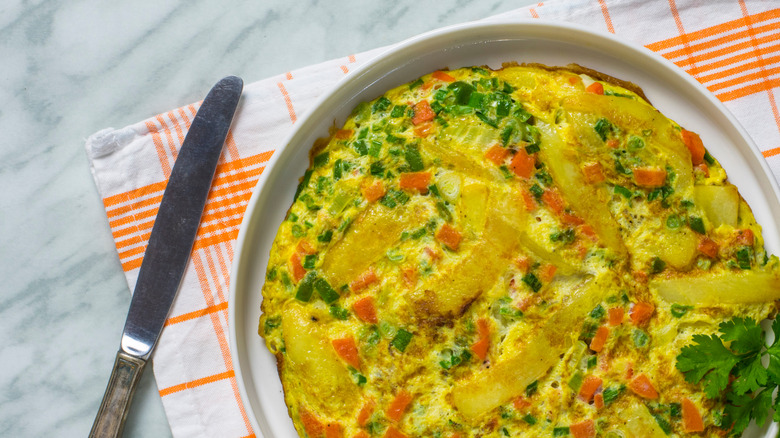
In Tanzania, they've discovered the ultimate brunch food. Instead of just being a breakfast food consumed later in the day like most brunch items, this recipe is a fusion between classic breakfast and lunch fare. Ever heard of an omelet stuffed with French fries? This Tanzanian street food is loaded with vegetables and often served with kachumbari and grilled meat.
There is something about the freshly fried crispiness of the starchy root vegetable alongside the silky, soft, and dense eggs that gives this dish a touch of duality that's quite pleasing. Minced fresh chilis often give chipsi mayai an extra kick of heat, which is sometimes mixed with minced cilantro, adding a refreshing grassiness to balance the fatty nature of the dish. Although it originated in Tanzania, you can find this dish all along the East Coast of Africa, being sold by street vendors or even featured in upscale restaurants.
Matoke (Kenya)
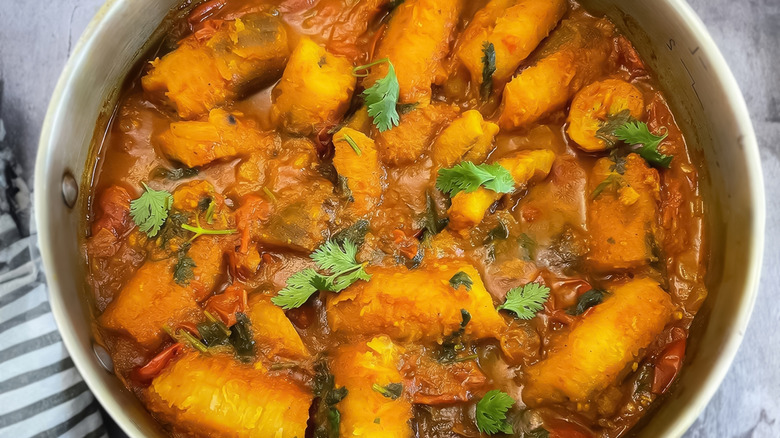
My biggest regret is that I never tried matoke — also known as matooke – when traveling in East Africa. This dish is a meal within itself, loaded with sauces, spices, flavoring, and beautiful texture. That texture comes from the use of green bananas. Green bananas are not the unripe bananas you see in grocery stores in the United States. Bananas have a rich history of being eaten as a vegetable, and it was only recently that they were cultivated to be uber-sweet and large. The green bananas used in matoke are closer to plantains, as they are starchy, less sweet, and stiffer when ripe. Because of their starchy nature, they have a rich potato-like mouthfeel that is slightly stickier and denser than the spud.
Think of matoke like mashed potatoes with gravy. The green bananas are sliced into large chunks, or sometimes even mashed. They are cooked with onions, spices, and tomato sauce or paste. Ginger, garlic, curry, turmeric, paprika, cumin, and red pepper flakes are common spices used in matoke, and typically, broth is used to create a cohesive dish, allowing the spices to cook into the bananas. The dish is best described as thick, starchy, saucy, and tangy.
Kitfo (Ethiopia)
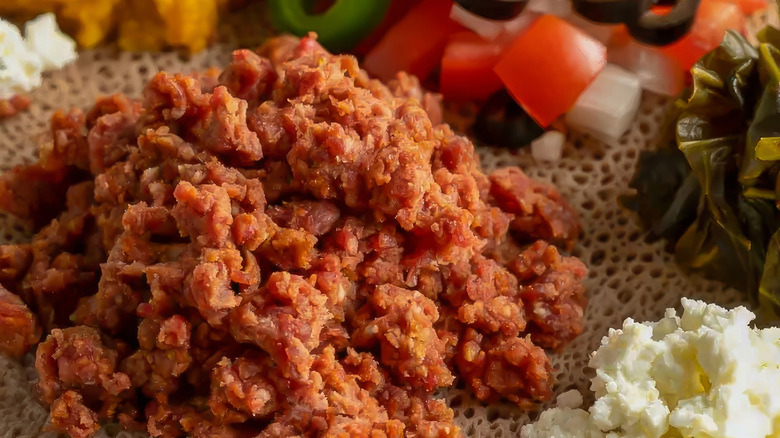
Much of East African cuisine is naturally vegetarian, but that doesn't mean that meat isn't consumed on occasion. Goat and chicken are the most widely consumed meats in East Africa. Beef is less common, but makes an appearance in the decadent dish Kitfo. Mohamed Yakat Ali explains, "Kitfo is a delicacy; traditionally cattle are raised for dairy, and beef is reserved for ceremonial occasions and community gatherings when the various cuts of meat can be shared across various preparations. The most lean cut (typically loin) is finely chopped and seasoned with fragrant mitmita spice."
Yakat Ali explains why the dish is such a delicacy. "It's rare to find raw meat in African recipes — the bold flavor from mitmita and herb-infused clarified butter deliver a rich, silky, and layered flavor that is unlike any other food from the continent." Flavorful clarified butter is the key that makes kitfo so unique. The texture is chewy, buttery, and spongy. It's an absolute must-eat East African dish that you need to try once in your life.
Mandazi (Swahili Coast)

Everyone loves fried dough. In fact, all over the world, there are different versions of this crave-worthy comfort food. You're likely most familiar with the donut version, but on the Swahili coast, you'll find mandazi. This "African donut" is so much more than just fried dough. It's typically made with your basics: flour, eggs, and sugar, but added elements like coconut milk, spices, and nuts are what make mandazi unique. Warming spices include cardamom, cinnamon, and sometimes ginger, which bring life to the fried dough, and sometimes chili spice is included to add a light kick. The coconut milk adds density and a mildly fruity, tropical flavor, while ground peanuts and almonds add a nutty undertone and chewy mouthfeel.
Served traditionally along with breakfast, mandazi is now sold across East Africa in the morning. However, they are sometimes reheated and enjoyed at dinnertime or alongside tea. Enjoy spin-offs like puff puff, or the sweeter and fluffier mahamri.
Ugali (Kenya)
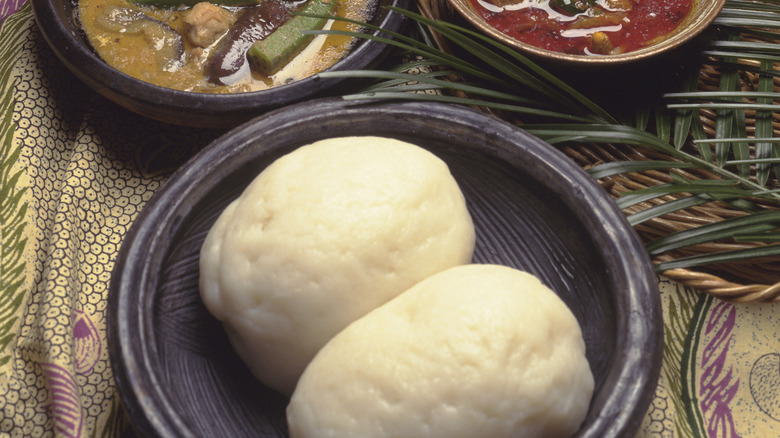
Perhaps one of the most common dishes in both East and West Africa is ugali, referred to as fufu in the West. It's essentially a starchy ball that is served alongside a main dish. Mohamed Yakat Ali explains, "Both ugali and fufu are staple foods; it is Africa's equivalent to rice in many parts of Asia. Paired with stews, vegetables, and grilled meat, ugali and fufu are inherently neutral in flavor; essentially a delivery vessel for their accompanying dishes. Depending on the region, the ingredients can vary; cassava, yams, and plantain in West Africa, corn in Kenya, and sorghum in more arid areas of the continent."
Ugali leaves room for interpretation and can be made with just about any starchy root or grain. Yakat Ali makes a unique version himself: "At Jiko, where we experiment with and adapt traditional recipes, we added saffron and milk to ugali; resulting in a richer, more layered flavor, served with rock cod and wilted amaranth. We are currently working with local farms to plant varieties of millet and sorghum in an effort to revive the ancestral recipe of ugali; our challenge is in finding quality seeds, due to the lack of diversity amongst seed banks in the region." However, he goes on to say that, "Ugali was traditionally made with millet seed, until the 15th century, when corn was introduced to the continent by the Portuguese, and an Italian priest adapted the recipe with this new ingredient."
Agotogo (Rwanda)
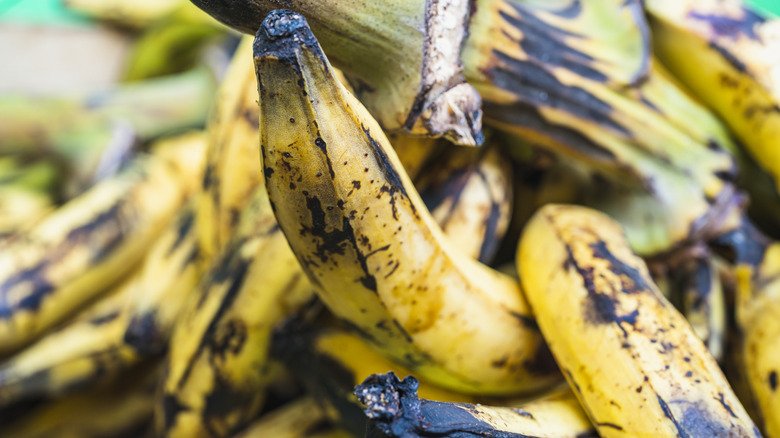
A simple and easy Rawnadan dish that has similarities to matoke is agotogo, which is stewing with flavor. Made with a base of plantains in a tomato sauce, ingredients like onion, garlic, and olive oil give it a punch of flavor. The plantains are sliced lengthwise or cut into large chunks. In West African fashion, crushed peanuts are included in quantity, and thinly sliced collard greens are typically cooked into the sauce. The dish is served alongside a starch such as ugali or rice.
Sometimes additional vegetables like carrots, eggplant, or peppers are added to the sauce. Goat, chicken, beef, or fish are often included depending on the region or occasion. For instance, in a coastal community, fish might be considered, or for a special occasion, beef might be used, while goat would be a more common choice. This savory dish has a very pleasing starchy texture that mixes well with the tangy sauce.
Wali na Maharage (Tanzania)

Every culture has its version of rice and beans. And each one has unique ingredients they use to upgrade their rice and beans. In Italy, white beans are popular, while black beans dominate Mexico. For Tanzania, it's the heavenly combination of kidney beans and coconut milk. This dish couldn't be any easier to make; in fact, I have a pot of it simmering on my stovetop as I write this, filling my home with rich and vibrant aromas. Like many classic rice and bean dishes, the ingredients are minimal, typically using onion, garlic, ginger, kidney beans, and coconut milk, along with varied spices like turmeric and coriander. Fresh cilantro can be minced and added, and be sure to serve with piping hot rice.
Brush up on a few tips you need when cooking with coconut milk to ensure you're using the right kind and getting the most from your can (unless you have access to fresh coconut milk). Feel free to add in additional vegetables while cooking the onions, or include shredded dark leafy greens.
Doro Wat and Saga Wat (Ethiopia)
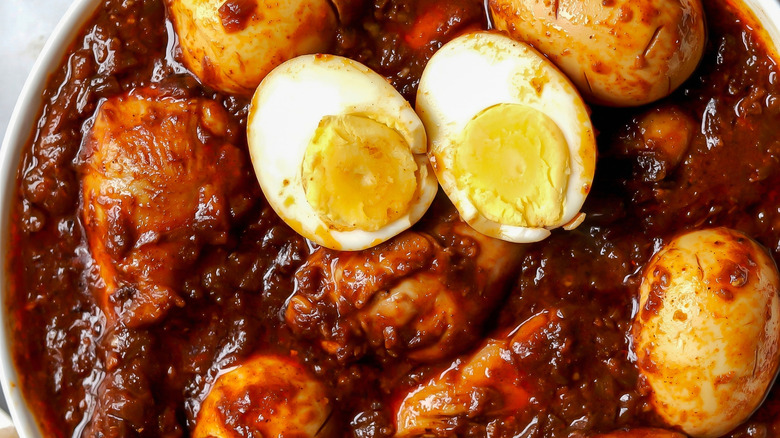
Ethiopian cuisine is complex, filled with aromatic spices and rich sauces. While most cultures don't tend to combine chicken with chicken eggs in a dish, doro wat breaks down that boundary. Chef Mohamed Yakat Ali explains the magic of the dish. "Doro Wat is sensual; it's sweet, spicy and paired with sharply sour spongy injera. Traditionally eaten by hand, the fragrant dish is considered somewhat philosophical, as it's served with both the chicken and the egg. The dominant flavor comes from berbere, the infamous spice mix, slow-cooked with onions, ginger and garlic to create a deep and complex flavor. The sweet caramelized onion, combined with the heat of the berbere and ginger packs a punch; it's addicting."
The beef version, saga wat, is quite similar and is a wonderful delicacy of East Africa. Yakat Ali describes it as "... a spicy Ethiopian beef stew, made from blended onions, berbere, niter kibbeh (spiced clarified butter), simmered till fork tender." Both dishes are deeply aromatic and simmered in a tomato base. Like most stews, it's eaten alongside a starch.
Isombe (Rwanda)

Tucked in the green mountains of Rwanda is a vegetable-heavy dish that everyone needs to try at least once, called isombe. Luckily, it's simple enough to make at home, and some of the more exotic ingredients can be easily substituted. This dish uses chopped or pounded cassava leaves, but any robust dark leafy green like collard greens or kale will do. Start by cooking the onions and garlic, then add the leaves and let them simmer in water to soften. Add spices, then peanut butter, and let it cook a little longer. Use sugar-free peanut butter like Teddy's instead of Jif or Skippy. Chunky peanut butter brings a nice crunch and variation of texture to the isombe.
Other vegetables like peppers or eggplant can be added, or even meat. This dish should slow-simmer, similar to collard greens that are made similarly. Palm oil and peanut butter help to add richness to the isombe. The dish ends up looking quite a bit like Indian saag, for reference, and can be enjoyed with rice or another starch of choice like cassava or taro.
Rolex (Uganda)

Yes, we all know Rolex as a popular, high-end, name-brand watch. But rolex in Uganda means something much tastier. This common street food is essentially a rolled-up omelet inside chapati, a popular flatbread. In the United States, we might call it a breakfast wrap, but rolex is eaten around the clock in East Africa. The dish's creation was relatively recent, and it got its name from the confusion of English speakers when vendors yelled "rolled eggs," which sounds quite a bit like "rolex."
Rolex pulls from ingredients around the world. Chapati originated in India but is extremely popular in East Africa. Chapati can be made using simple ingredients like flour, water, oil, salt, and sugar. It's poured onto a skillet and fried, and set aside. Eggs are whipped with minced produce, sometimes including meat but typically cabbage, peppers, carrots, and chilis. The egg mixture is cooked on the same surface, and then the chapati is laid on top. The two flat disks are rolled together and then served hot. Rolex, the popular rolled egg dish, may have started from humble beginnings, but today it is served in restaurants in a multitude of variations.
Chapati (East African)
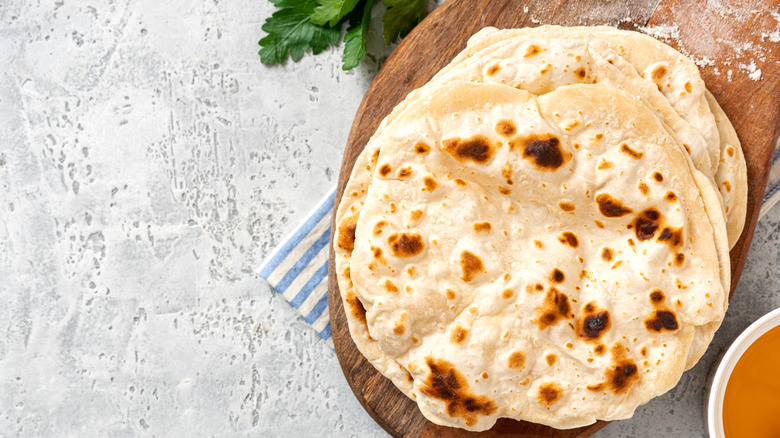
Although chapati is not an African-born food, its popularity spread rapidly through East Africa, and it has become a staple. The British imported many Indian laborers to East Africa in the 19th century, which resulted in a melding of cultures. It has even kept its name and is used with a similar purpose. Chapati is an Indian flatbread, similar to naan, but made with whole wheat flour and is quite a bit thinner. It's used as both a wrap (for rolex, the popular Ugandan street food), but also to scoop up stews, vegetables, and meat.
Because of its simple, filling, and accessible ingredients, chapati is sensationally popular amongst every economic demographic in the East. You can find chapati served as street food or in five-star restaurants, as it's quite versatile. And, although it's technically of Indian origin, it still makes the list of East African dishes you need to try at least once because you'll find it on almost every street corner, in almost every household, and at almost every restaurant in East Africa.
Beyaynetu (Ethiopia)
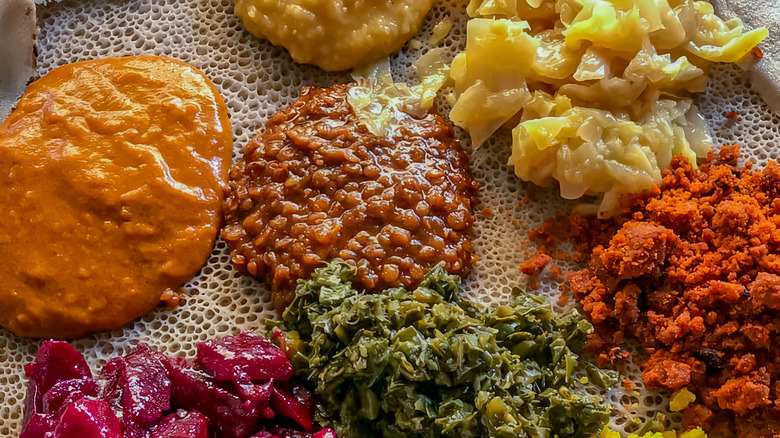
Perhaps one of the most popular Ethiopian dishes, beyaynetu is a great example of the fusion between East African and Indian culture. At first glance, it looks like a crepe filled with a variety of sauces and stews. Part of the allure of the dish is that beyaynetu offers variety. It's vegetarian, along with many Ethiopian foods, and uses a laundry list of ingredients. Beyaynetu is truly the sample platter of Ethiopian cuisine, so it's a good place to start for those just getting their feet wet when it comes to East African food.
Teff flour, which is a grass seed, is commonly used in Ethiopia. It's used to make a flatbread or crepe-like disk for the rest of the food to sit upon. Usually, it's served with at least three vegetarian dishes piled inside, but you are welcome to load on as many as you can fit. A variety of dishes are selected, perhaps one with a collard greens base, one with a tomato base, one with a bean base, and one with a pumpkin base. It's a complete meal served on its own edible plate, which can be used to scoop some of the sloppier dishes into your mouth. Use your hands, and enjoy.
Sukuma wiki and beans (Kenya)
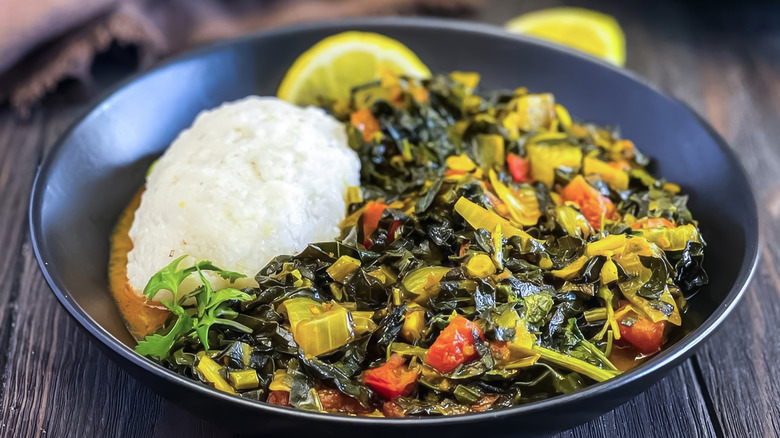
While some meat-based and more involved dishes are reserved for special occasions, sukuma wiki and beans is a go-to, commonly consumed side dish in East Africa. Mohamed Yakat Ali explains, "Sukuma wiki (a Kenyan variety of kale) is commonly prepared in homes throughout Kenya. Nyama choma, samosa, and biryani are more lavish dishes served for special occasions; evoking childhood memories from celebrations and family gatherings."
This collard greens dish is similar to one you might find in the South of the United States, with a few variations. It's typically vegetarian and made with onions, oil, tomatoes, salt, and fine strips of collard greens. Like any household recipe, there are plenty of versions including other spices and vegetables, but at the base of the dish, it's all about the tomatoes and greens. The collard greens must be simmered for quite a while, as they are tough and bitter when eaten raw. If time is of the essence, the greens can be replaced with spinach.
Nyama choma (Kenya)
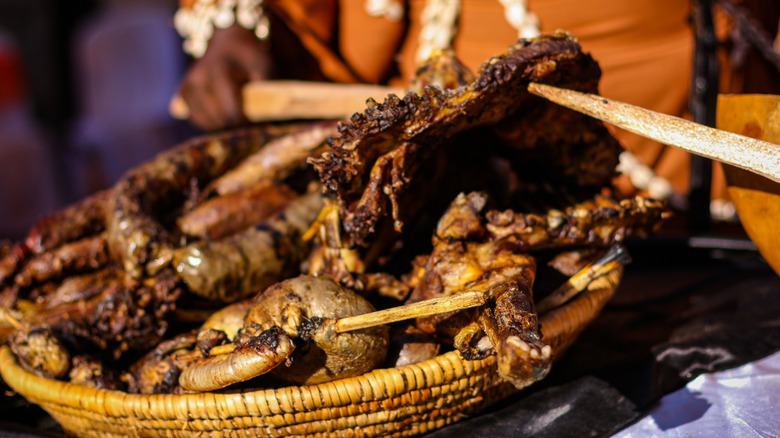
The beautiful thing about nyama choma is that it's often more than just a meal. Much like roasting a turkey is intrinsic in the social fabric of United States culture, this barbecue dish is designed to do more than just dampen the taste buds. It's a meal meant to bring people together, presented as a sign of hospitality or enjoyed during a celebration. There are many traditions surrounding nyama choma, but on a simple culinary level, it's a form of grilled meat. Typically goat, but sometimes beef or other livestock, nyama choma tends to be smoky, flavorful, and rich with spices.
The grilling methods originated from the Maasai people, but folks all over East Africa enjoy the tradition. Because nyama choma is so interwoven with community and socialization, eateries called "choma joints" were born, and are enjoyed as a place to enjoy great food, company, and often music. It's clear that nyama choma is more than just exceptionally grilled meat; it's a social and cultural experience.
Mkate wa Sinia (Swahili Coast)
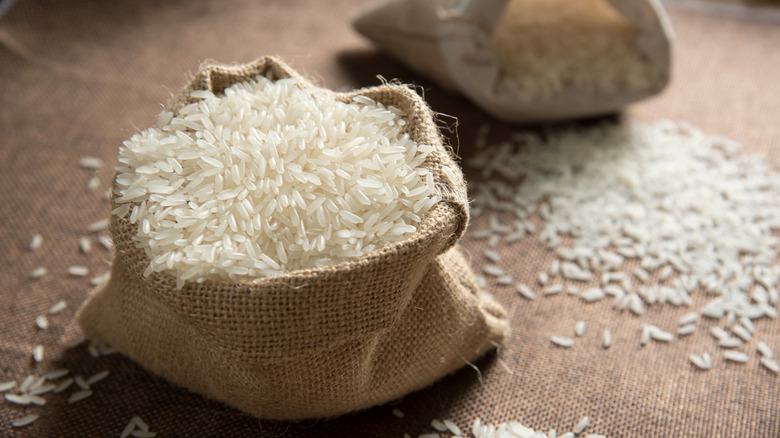
Gluten-free folks gather 'round, because this sweet and cakey delicacy is made with rice instead of wheat. Mkate wa Sinia, which is popular on the Swahili Coast, is a spongy rice-based cake that is often served with tea, or sometimes with breakfast. Its main ingredients consist of basmati rice, coconut milk, and sugar. Egg white and yeast account for the pleasing spongy texture, melted butter helps to contribute to the density, and cardamom is used for a warm and floral flavor.
The key here for the desired texture is to wash and then soak the rice overnight. Then, you blend it along with the coconut milk before introducing the other ingredients. This creates more of a rice-flour or cream-of-rice texture that is smoother and finer than using the basmati whole. The work of the yeast is also key — and it needs to have time to rise — so the process to make mkate wa Sinia takes the hands of a baker, and the patience of one, too.
Ubuyu (Tanzania)
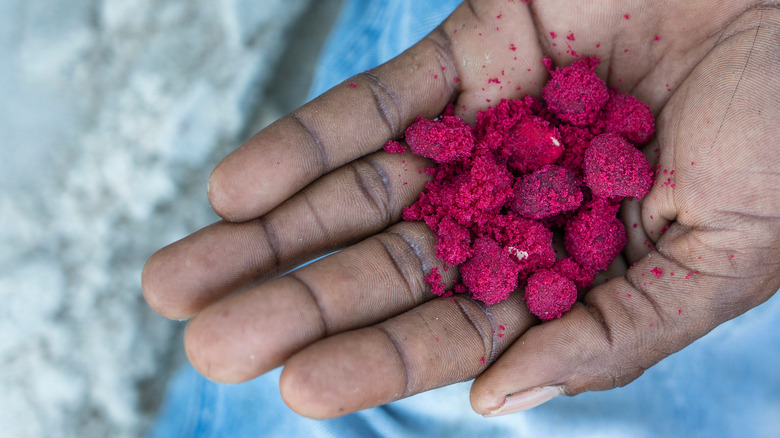
If you've ever been to Zanzibar, then it's likely you've come across ubuyu, a baobab seed candy that's bright in both color and flavor. It is considered a candy, although it's really a flavored seed. The seed is thought to hold incredible nutritional elements and is even considered a superfood. If only all candies had a hidden superfood element.
The seed itself has a citrusy flavor, which gets coated in a red, sweet, spicy, and sour outer layer. This layer is made mostly of sugar, black pepper, cardamom, salt, and vanilla. These flavors are often repeated in sweet treats along the eastern coast of Africa, especially notes of cardamom and vanilla. Folks chew and suck on the seeds until they spit out the fibrous inner layer. Ubuyu's tiny red balls will surely leave you red-handed. Other spin-offs have been developed involving milk and a hot chili pepper version, but the original has stayed steadily popular in East Africa and beyond.
Cassava in coconut milk
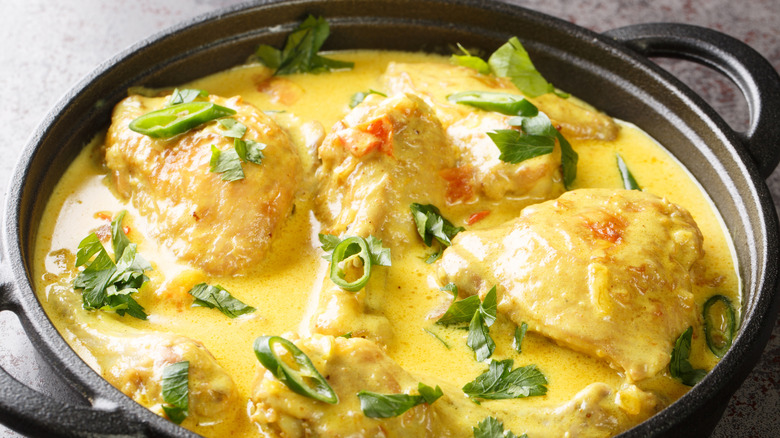
Who doesn't love a decadent dish? Anything made with coconut milk is typically off-the-charts delicious, and cassava in coconut milk is no exception. Also known as "coconut mogo," it's a coconut-based stew loaded with cassava, chilis, spices, and sometimes meat. It's fragrant and loaded with aromatics like garlic and ginger, cumin, and turmeric. Fresh lemon juice and cilantro give it a tangy and grassy-fresh taste. This savory dish has mild undertones of fruity goodness from the coconut and lemon juice. It's a stick-to-your-ribs powerhouse dish packed with carbohydrates to fuel your day. It's simple and inexpensive to make, making it a good East African dish to try at home.
Cassava in coconut milk has a rich mouthfeel from the fatty coconut milk, but is broken up by pieces of starchy and chewy cassava. These pearls of cassava add to the density, and when meat is added, the dish becomes even richer. It's often served alongside meat or cooked vegetables. Cassava, also known as yuca, is an easily accessible starchy root vegetable used as a staple in diets around the world.