

Why Anchovies And Sardines Aren't As Interchangeable As You Might Think
We may receive a commission on purchases made from links.
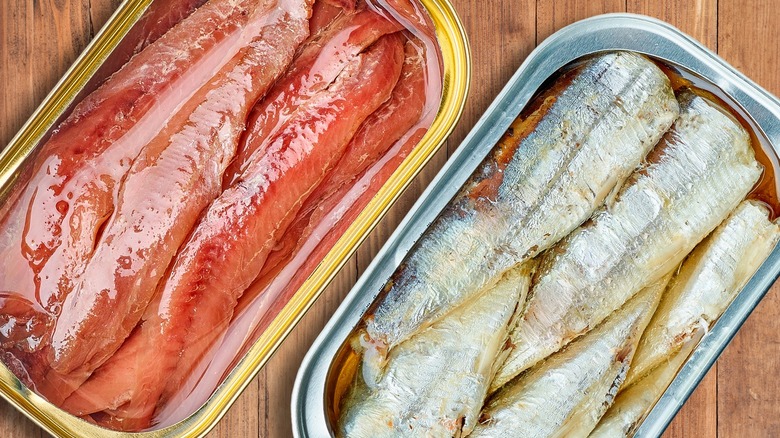
No Caesar salad is complete without anchovies, but it might not be the best idea to swap them for their often mistaken counterpart, sardines. The delicious offerings tend to be confused with each other as they are similar in nature, but they do differ significantly when used in the kitchen. Part of a group called forage fish, which are prey for larger fish such as tuna, both anchovies and sardines only consume plankton. While they're found in similar zones, such as the Mediterranean Sea and the Pacific Ocean, sardines prefer cooler and saltier waters, while anchovies are known to like warmer temperatures, thriving in fresh, salty, or even brackish water.
Anchovies play an incredible role in feeding our oceans' ecosystem. They also have an integral role in the kitchen that dates back to Roman times, and are usually enjoyed fresh, fermented, or fried across many cultures. Often found in the grocery store in slender tins or glass jars, these delicacies are known for their ability to add a salty and umami punch to dishes and dressings. Sardines, on the other hand, are often larger, meatier, and slightly fattier. They're also a part of the herring family. Sardines tend to be sold in tins, too. However, they are considered as a main ingredient: cooked perfectly to a crisp in the air fryer as an appetizer, topped on pasta dishes in large filets, or served in a number of Basque-inspired pintxos.
How to use anchovies and sardines, respectively
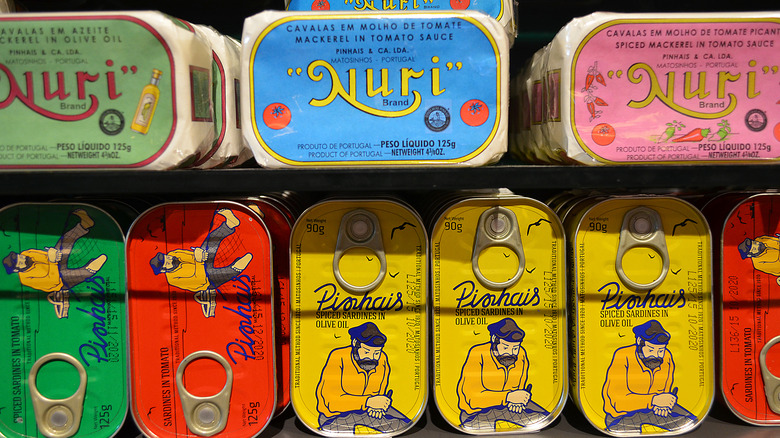
Depending on their use, splurging on artisanal jars and tins of fish might be worth it. You are likely to find the product (anchovies or sardines) to be more flavorful and meatier than cheaper, lesser-quality alternatives.
There are plenty of great ways to utilize canned anchovies beyond salads. Top the tiny filets on a pizza to balance the acidity of a tomato sauce or use anchovies to underline the savoriness of a sandwich like a BLT or turkey club. Otherwise, blend them into a compound butter with fresh herbs. If you plan on melting down a few anchovies for a savory sauce, it might be okay to opt for the cheaper option. Just be sure to check the label for the quality of the oil. For the eco-conscious and experimental home cooks, there are many creative (and sustainable) ways to utilize leftover packing oil.
If you're looking to make milder-tasting sardines the star of your meal, opt for whole and plump fillets with just a tad of brininess. In our ranking of canned sardine brands, we found Wild Planet Sardines in Extra Virgin Olive Oil with Lemon to be number one. Top the tinned fish on grain bowls for a protein-packed lunch, serve them smashed on crusty sourdough bread, or pair them with green olives and fennel in a summer pasta — these are just a few of the absolute best uses for canned sardines.