

Why You Probably Can't Handle The World's Hottest Pepper

You may know a thing or two about hot peppers and spicy sauces, boasting your ability to consume jalapeños on the regular and aiming for the hottest dipping sauce at restaurants. Maybe you've even participated in pepper-eating competitions with Scoville Heat Units (SHU) reaching over 8,000 (here's how the Scoville Heat Scale works). However, you're probably not a match for the world's hottest pepper. For over a decade, the Carolina Reaper held the Guinness Book of World Records' spot for hottest pepper, with a 1.64 million SHU rating. Unbelievably, it was dethroned in 2023 with the reveal of Pepper X.
Pepper X earned its world record with an SHU rating of 2.693 million, over 1 million SHU hotter than the famed Carolina Reaper. Those who have gotten their hands on the perilous pepper report painful side effects like abdominal cramping, sweating, and a feeling of burning in the throat, arms, and chest. The inventor, Ed Currie, told Scientific American that it took him "five to six hours" to fully recover from eating Pepper X. Other common side effects from extremely hot peppers can include rapid breathing, excess bodily fluids (like tears and saliva), gastrointestinal problems, diaphragm irritation, and general discomfort. If you thought eating a jalapeño was like breathing fire, you'd be in for a surprise with Pepper X! Maybe stick to less spicy chile peppers for now.
Pepper X is not for the faint of heart
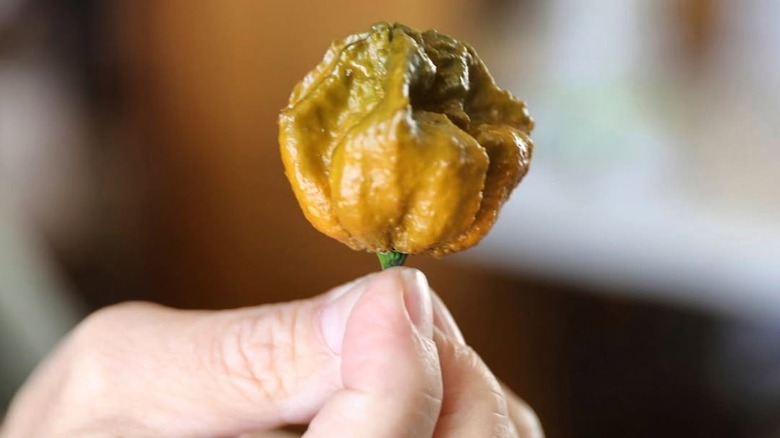
Ed Currie is the founder of PuckerButt Pepper Company, a pepper-growing business based out of South Carolina that is also responsible for the invention of the previous hottest pepper, the Carolina Reaper. Both the Carolina Reaper and Pepper X are the result of meticulous cross-breeding between peppers; but when Currie began his pepper growing journey, he never dreamed of owning two World Record titles. The Carolina Reaper is a mix between hybridized Asian and Caribbean peppers, while Pepper X is a mix between the Carolina Reaper and an undisclosed, similarly hot pepper. The perfect cultivation didn't happen overnight, though, and it took Currie about 10 years to unveil Pepper X with the capsaicinoid levels he was hoping for.
Capsaicinoids are the compounds in a pepper that bring the heat, triggering a chemical reaction in mammals that conveys a warning signal to our brains. You might have heard the old wives' tale that a pepper's spice comes from its seeds, so if you pick out the seeds, you'd have a less spicy pepper – but this is false. Those capsaicinoids actually live in the fleshy white "placenta" of the pepper, and according to the Guinness Book of World Records, "Pepper X's exterior has many curves and ridges, meaning there is more area inside for the placenta to grow." Currie issued a warning about the extraordinary heat from Pepper X when eaten raw, but it is significantly more tasty and easier on the stomach when consumed as a salsa or hot sauce.