

America's First Cocktail Included A Splash Of 'The Green Fairy'
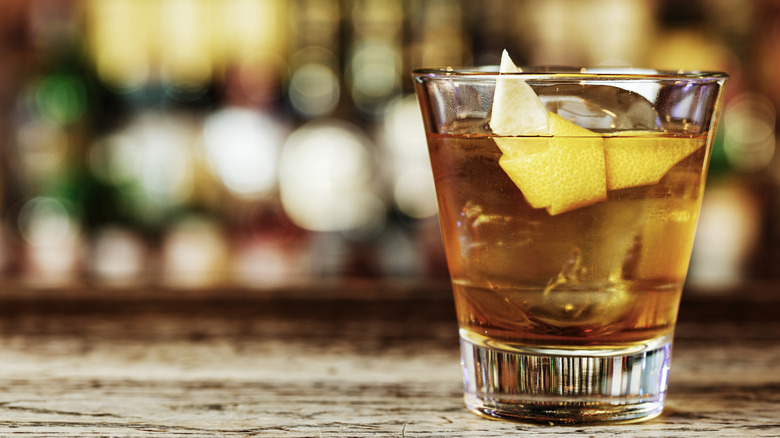
Before the craft cocktail became the standard, mixologists ambitiously blended spirits in dimly lit corners of New Orleans' 19th-century apothecaries, eager to establish America's inaugural mixed drink. Antoine Peychaud was the first to put a libation on the map with the Sazerac in 1838 — a blend that was innocent enough. A classic Sazerac cocktail recipe features Cognac (later replaced with Rye Whiskey), bitters, sugar, water, and a lemon peel garnish. These ingredients were mixed and poured into an absinthe-rinsed glass, which brought aromatics and eventually controversy to the drink.
We must remember that Peychaud wasn't a bartender by trade, but a pharmacist, and he was fully aware that wormwood-derived absinthe offered potential medicinal benefits such as improved digestion, pain relief, and antimicrobial properties. But absinthe brought along a slew of additional side effects, with reports of hallucinations, including adverse reactions such as mania, numbness, and even violent behavior.
Absinthe's green hue and mind-altering effects led to its label as "the green fairy," an alluring and unsettling homage to the spirit's mind-altering strength. At the time, this was credited to the bitter compound thujone. However, a study published by the Journal of Agricultural and Food Chemistry cited that the compound wasn't prevalent enough in 19th-century (or modern) bottles to induce psychedelic effects. The culprit? Hallucinations were likely due to the spirit's high 140 proof concentration, a staggering 70% ABV. Bad players like copper sulfates were also commonly added to enhance the color. And copper poisoning can lead to — you guessed it — hallucinations.
How the Sazerac survived its ingredient-based setbacks
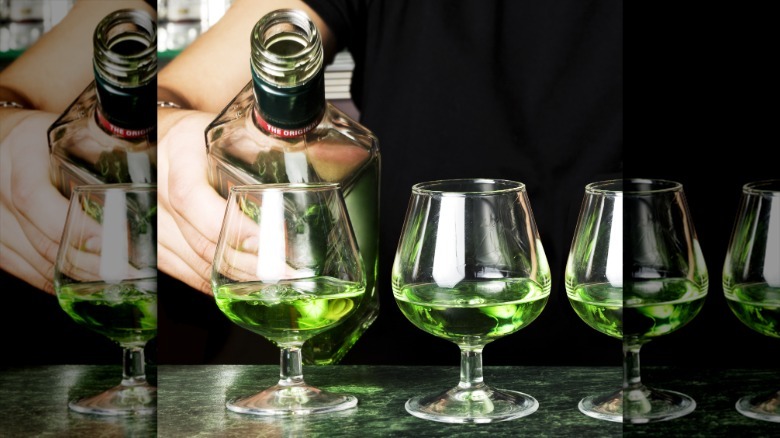
Absinthe hysteria reached its peak in 1912, and it was banned across the United States, stripping the aromatic soul of the Green Fairy from patrons' glasses. Bartenders adapted by substituting anise-flavored liqueurs, with the most famous being Herbsaint, which was distilled to a lower and safer 50% ABV. When absinthe was legalized once more in the United States in 2007, it surprisingly retained its original strength, with modern blends ranging from 40% to 75% ABV.
Before the Sazerac pivoted from this seemingly psychedelic ingredient, it lost another one of its most crucial parts — a Cognac base. The fruit-based brandy was Peychaud's preference for the libation, but the phylloxera louse decimated much of France's vineyards in the late 19th century, which led to a supply chain crisis. As a result, the delicate notes of cognac were replaced with the strong, peppery character of American rye, adding body to the drink and putting it on par with its cousin, the Old Fashioned cocktail.
Despite these creative adaptations to keep the Sazerac afloat, it was once more upended by America's prohibition, a nationwide alcohol ban that spanned from 1920 to 1933. The drink quietly slipped into private homes and speakeasies, and the Sazerac brand pivoted to spirit-free goods and foods, keeping the drink's namesake alive through the ban. The cocktail is a testament to American resilience and grit, and it's a gentle segue for first-time absinthe drinkers, as the delicate rinse is much lighter than a full-on shot, with no risk of experiencing the hallucinatory states of the past.