

Why Grapes Make A Better Sorbet Than Ice Cream
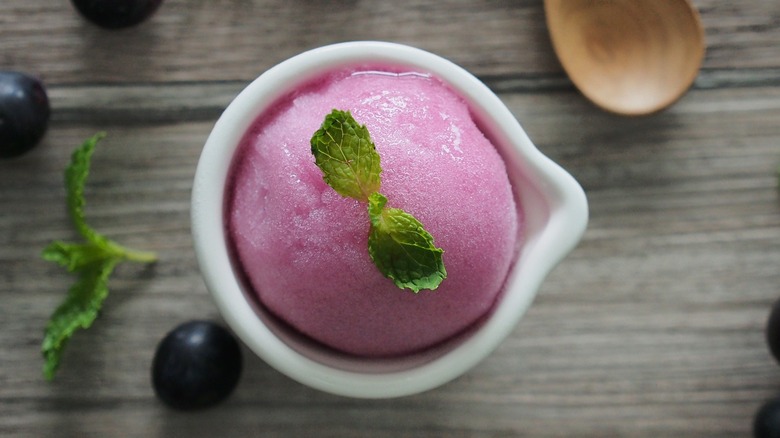
Have you ever heard of Moon Mist ice cream? It's a favorite of the Canadian Maritimes. Developed in Nova Scotia sometime in the 1960s, it gained popularity through the '70s and '80s. For many years, it was only an ice cream shop staple, available in massive commercial-sized tubs. The flavor broke from traditional ones like vanilla or chocolate, which are often viewed as boring by younger customers. It was an eclectic mix of banana, bubblegum, and grape. It's one of the few established grape ice creams you'll ever find, too. Grapes are generally considered too watery to be turned into ice cream.
At up to 84% water, grapes have a tendency to freeze hard. That's why frozen grapes are recommended as a fun substitute for ice cubes. They become like marbles. In ice cream, a large chunk of grape would feel like a shard of ice, which could be unpleasant. On the other hand, if you make the grapes into a puree, there's still a problem. Grapes get their color, and some flavor, from a chemical called anthocyanin. Freezing breaks that down, so the color and taste will differ from what you expect of a grape. This is also the reason artificial purple color is often used in grape-flavored things, including Moon Mist ice cream.
Why grape sorbet works but grape ice cream usually doesn't
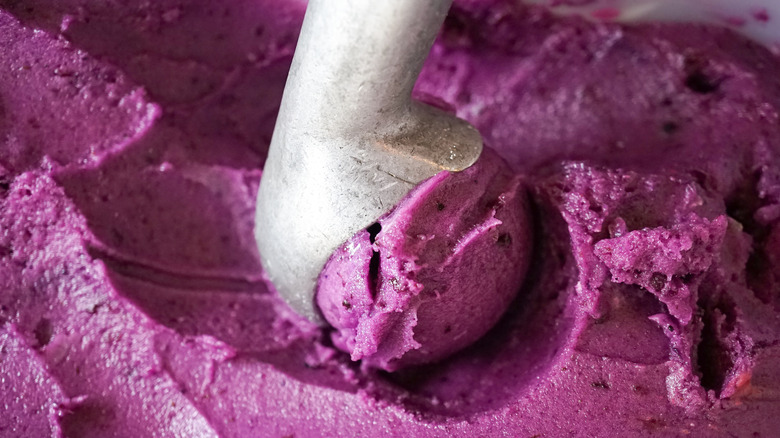
Grapes lend themselves much better to sorbet. Sorbet only needs water and sugar to work, two things grapes have in abundance. Sugar lowers the freezing point of water, reducing the chance of large, chunky ice crystals because it's harder to fully freeze a sorbet. That's why it's typically soft and creamy even without any creamy ingredients. That's just whipped sugar. There are a few mistakes you can make when whipping up a sorbet, however, including not adding enough sugar.
Ice cream needs about 60% water in the base. Grapes, with their high water content, can throw that off. You need to balance that with fat and sugar to get the right texture. You could make sorbet out of only grape juice and sugar. The sugar turns the water into syrup, some of which remains unfrozen. Mixed with smaller ice crystals, this creates a pleasant, creamy texture.
The reason Moon Mist (and any other grape ice cream) is such an anomaly is that making grape ice cream takes more work. The acid may need to be stripped away from the grape flavor to make it less likely to curdle the milk and sour the final product. The color also needs to be added back in. But mostly it's that ice problem. A small batch of grape ice cream can freeze fast. That means smaller ice crystals. However, large-scale production, freezing huge amounts, means slower freezing. With that comes the formation of larger ice crystals, making an unappealing final product.