

The Only Step Standing Between You And Perfect Crepes (It's So Simple)

In some European countries, learning how to make good crepes is almost like a rite of passage. Though the recipe is pretty straightforward, everybody knows that the smallest tweaks to the ingredients or technique can yield a very different end result. While we're mostly aiming to fill the crepes with delicious ingredients, the flavor and texture of the papery-thin pancakes is still important — and one of the best ways to ensure they're perfect is allowing the batter to rest in the fridge, before cooking.
The opinions on how long the crepe batter should rest, vary. Some say 20 minutes is enough, while others chill it longer. The truth is that some rest is better than no rest, and realistically speaking, we're not always working with the same amount of time. At Tasting Table, we let the batter for our easy-peasy crepe recipes chill for an hour. If you're in a pinch, however, let the mixture rest while you're prepping the fillings. Chilling overnight is a great option, too, especially if you're planning to make crepes for breakfast.
There is such a thing as too much rest, though. Ideally, you'd cap the chilling period at 24 hours to ensure ingredients like eggs and milk stay fresh. This is also the reason why resting should happen in the fridge, particularly with longer time frames. According to the USDA, perishable foods shouldn't be left at room temperature for longer than two hours, so refrigerating crepe batter is your safest bet.
Chilling the batter makes for softer crepes
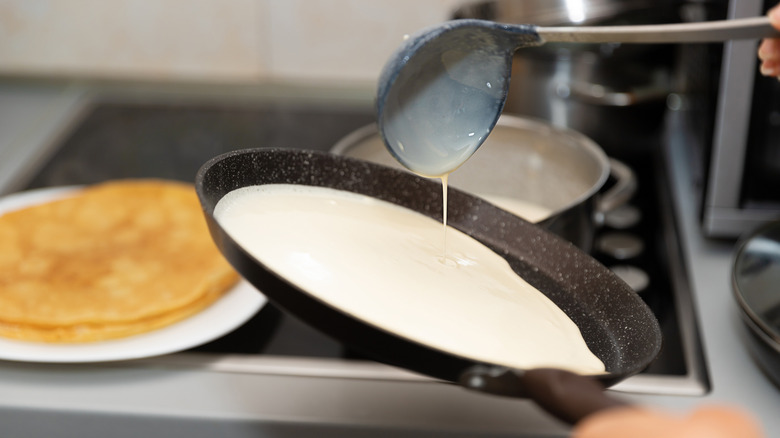
Regardless of what you're adding into your crepe batter, the foundation is always made of eggs, milk, and flour. This combo of ingredients is mixed together so fast that it doesn't really have enough time to fully combine — the liquid ingredients need a little longer to fully soak into the starchy flour, which is why the batter should rest. You'll notice that the longer you chill it, the thicker the batter becomes as liquid is absorbed. If it turns too thick, just add a bit of milk before cooking them.
Letting batter rest in the fridge also helps the gluten in the flour to become more elastic, which is important if you want neat crepes that don't tear in the pan. Crepes that haven't had a chance to rest are tough unlike their chilled companions that are softer and more tender. Since they are very thin, any rubberiness or toughness is easily felt and will be a problem when you try to roll them or fold in fillings. That said, if you're still finding the texture to be imperfect, strain your batter for even smoother homemade crepes.
The final benefit of briefly refrigerating the batter will be apparent in the crepe's flavor. Ever had a crepe at a restaurant and wondered why it doesn't taste as starchy as the ones you make at home? A batter that has rested better fuses ingredients together, resulting in an enhanced flavor — the more you know!