

11 Ground Beef Dinners Everyone Ate In The '60s
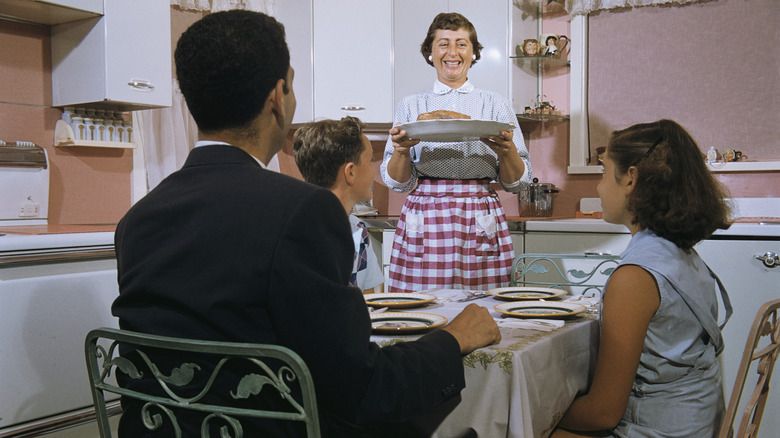
In the 1960s, ground beef was the hero of dinner time. This simple, versatile staple could be used in many different ways — from pies and casseroles to sandwiches and rolls — so it regularly graced tables across the country. Plus, it was incredibly affordable. In fact, per data from the Morris County Library in New Jersey, in 1961, it cost only $1 for 3 pounds of ground beef. So, it's no surprise that this decade even saw the publication of the "Ground Beef Cookbook" — that's how popular this simple meat ingredient was.
Here, we're taking a look at some of the most popular ground beef dinners that people ate throughout the '60s. Many still hold up today, and can (and are regularly) made in exactly the same way, or with plant-based ground beef alternatives (for those who might have since gone off meat). Come with us as we take a trip down ground beef memory lane — but first, a warning, this list features more than one mention of macaroni casserole.
Shepherd's pie
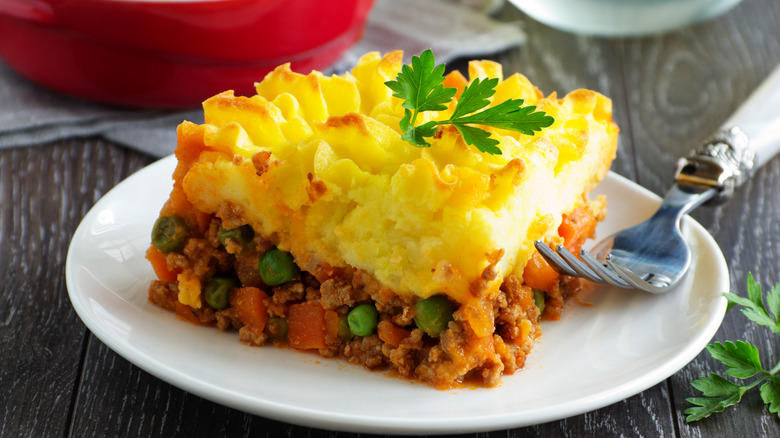
Traditional shepherd's pie isn't actually made with ground beef at all. Nope, this meat and potato pie comes from 18th century Britain, where peasants would make it with lamb and mutton. It makes sense when you think about it — a shepherd's job is to farm sheep, after all. However, a very similar dish originated around the same time (if not earlier), called cottage pie, and it was this version that was made with ground beef. Today, shepherd's pie and cottage pie are often used interchangeably, but in the U.S., shepherd's pie often refers specifically to the ground beef version.
Anyway, semantics aside, shepherd's pie made its way from the U.K. to the U.S. at some point in the 19th century (one recipe appears in "Mrs. Rorer's Philadelphia Cook Book," for example, published in the late 1800s), and it remained a firm favorite. In the '60s, everyone was eating it for dinner, likely because it was comforting, simple, and relatively affordable to make.
Some remember calling this meal bird's nest. However, in all but name, the dish seems to be almost identical to shepherd's pie. "My Irish grandmother made 'bird's-nest,'" recalls one Redditor in r/GenerationJones. "It was ground beef with diced onions on the bottom, a layer of corn (might have been canned creamed corn?), then topped with mashed potatoes, which would brown on top. Yum!"
Pasta and meatballs
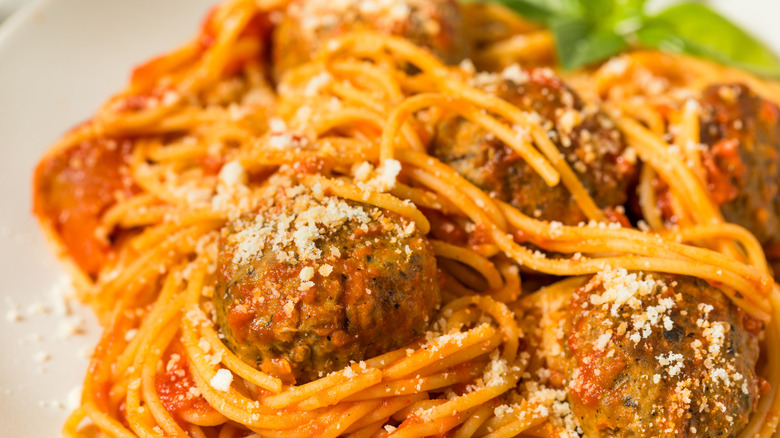
Another popular way to enjoy ground beef in the '60s was to combine it with ingredients like bread crumbs, herbs, and flour, roll the mixture into balls, heat them in a skillet, and serve with pasta. This was particularly popular in Italian American families, which makes sense, given that spaghetti and meatballs is an authentically Italian American dish. That's right, it's not eaten in Italy, but was likely developed by immigrants in the late 19th or early 20th centuries.
But not all families chose to serve their meatballs with spaghetti. Some opted for rigatoni, while others opted for smaller pasta types, like macaroni. When asked about main dishes for Sunday dinner in the '60s, one Facebook user responded, "Macaroni and meatballs with salad that you have after the meal." They continued, "Then demitasse coffee with anisette. Grew up in an Italian house."
Of course, not everyone paired pasta with meatballs. Others chose to serve them Swedish-style, with thick brown gravy, or opted for rice. Some also have fond memories of eating Waikiki meatballs from the "Betty Crocker Cookbook," published in 1969. The Hawaiian-inspired dish involved serving meatballs in a sweet and sour sauce, alongside ingredients like pineapple and green peppers.
Meatloaf
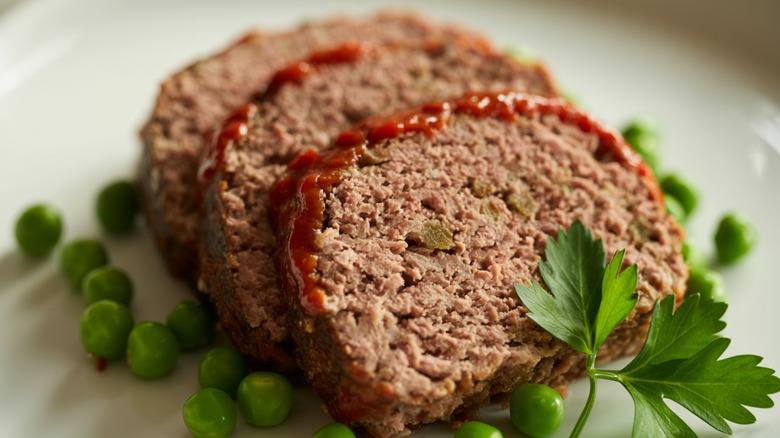
If you were to hop in a time machine, head to a '60s family home, and sit down at the table for dinner, there's a strong chance you'd encounter meatloaf. The dish, made with ground meat (usually beef), bread crumbs, eggs, and seasoning, and often covered with ketchup or barbecue sauce, has been eaten in the U.S. since at least the late 1800s, and by the '60s, it was a staple.
Recipes appeared in many beloved cookbooks throughout the decade, like the 1961 "James Beard Cookbook," for example, and brands like PET Evaporated Milk and Campbell's Soup featured print ad meatloaf recipes to promote their products (Campbell's Tomato Soup apparently added a richer, juicier flavor to the dish, while evaporated milk was advertised as the ideal binder).
Everyone had their own way of serving meatloaf. Some paired it with classic mashed potatoes and peas, while others opted for baked potatoes and asparagus. In some households, meatloaf was always served with fresh, homemade cornbread. For many, though, the best part about meatloaf wasn't the dinner, but the sandwiches that followed. "It's still my very favorite sandwich," commented one Facebook user in a group for '60s memories. Another agreed: "I still always make sure there's enough for the sandwich the next day!"
Chop suey
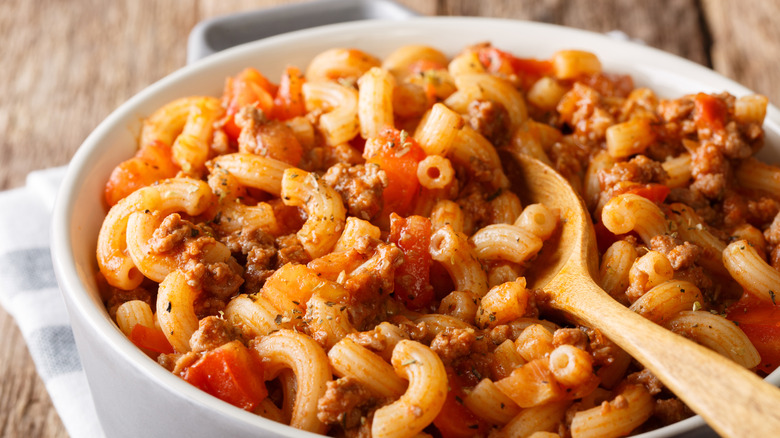
In the '60s, it seems that many different versions of chop suey graced American tables, but most were made with ground beef. "Where I grew up, chop suey meant elbow macaroni mixed with scrambled Hamburg, peppers, onions, garlic, basil, oregano, and tomato sauce," recalls one Facebook user in a group for old family recipes. This version of the dish is usually known as American chop suey (or American goulash), and was likely influenced by Italian-American recipes.
Others, though, remember eating a different kind of chop suey, which paired ground beef with ingredients like soy sauce, bean sprouts, and chopped celery. This version is likely slightly more authentic to the original recipe. That said, no-one is 100% sure where chop suey came from, but one seemingly strong theory states that it was inspired by the Cantonese dish, tsap seui. In a nutshell, tsap seui is a mish-mash of leftover meat and vegetables, fried together in a wok with rice or noodles and seasoned with soy sauce and chicken stock.
Recipes inspired by tsap seui were likely introduced to Americans by Chinese immigrants; in fact, one origin story credits chop suey's invention to a Chinese restaurant in San Francisco in the 1890s. By the '60s, chop suey in its many different forms was everywhere (there were even Polish versions with sauerkraut, ground beef, and Polish sausage). While all were different, all held true to the original concept: A mixture of ingredients, cooked together in a pot, served family style.
Stroganoff
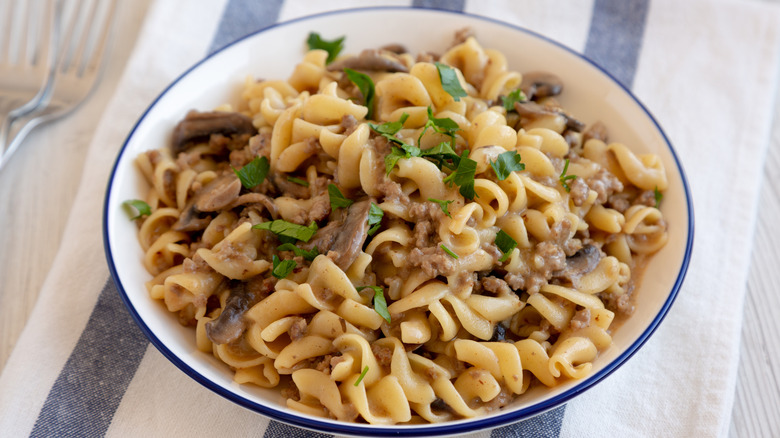
Traditional Russian beef stroganoff features tender slices of beef combined with a creamy sauce of mushrooms, sour cream, onions, and mustard. But when it arrived in the U.S. in the middle of the 1900s, the dish was, of course, Americanized. Out went those lean cuts of meat, and in came the cheaper, more accessible ground beef alternative. And as for the sauce? Well, that was made with canned soup, of course.
Many people who grew up in the '60s remember their moms serving them up homemade ground beef stroganoff at dinnertime. And, as is so often the case, recipes varied from home to home. "[My mom] made her own version of beef stroganoff with ground beef and Cream of Mushroom soup," reads one Facebook comment in a group for '60s memories. Another adds their mom made, "Poor Man's Beef stroganoff with noodles."
Some remember their moms whipping up the dish with the help of "Betty Crocker's New Dinner for Two Cook Book." The book, published in 1964, features a recipe for hamburger stroganoff that advises the reader to combine ground beef with ingredients like fresh mushrooms, cream of chicken soup, and sour cream, and serve with poppy seed noodles.
Chili
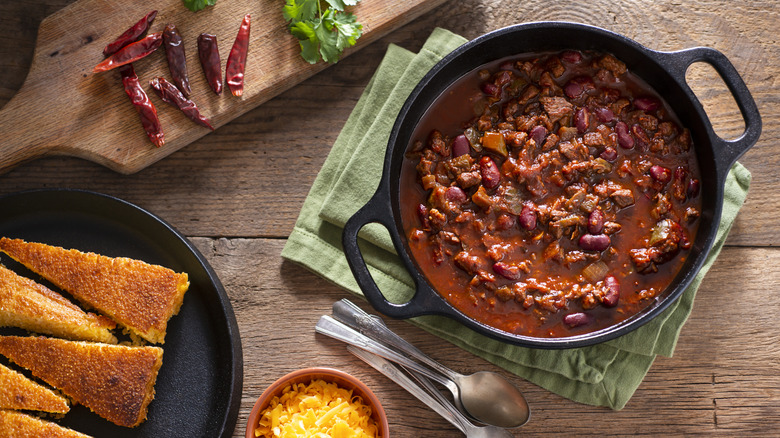
Despite its name, "Betty Crocker's New Dinner for Two Cook Book" features several family friendly recipes. Take the Easy Chili, for example, which could easily feed four if doubled, and was made with hamburger mix, tomato juice, chili powder, and kidney beans (it wasn't lying when it said easy). But Betty Crocker-influenced or not, many families sat down to a dish just like this in the '60s — ground beef chili was a firm dinnertime staple in households across the country during this decade.
Of course, most homecooks wouldn't have needed a cookbook at all, because they had their own recipes. Some made it with homemade tomato soup, celery, and whole tomatoes, while others swore by the addition of Campbell's Tomato Soup or cooked bacon. Everyone also had their own view on what was best to eat with a bowl of chili. For some, it was all about the classic combination of cheese and corn chips, while others had slightly more unconventional tastes, preferring to pair the rich, ground beef stew with peanut butter sandwiches or even marshmallow fluff. To each their own.
Sloppy Joes
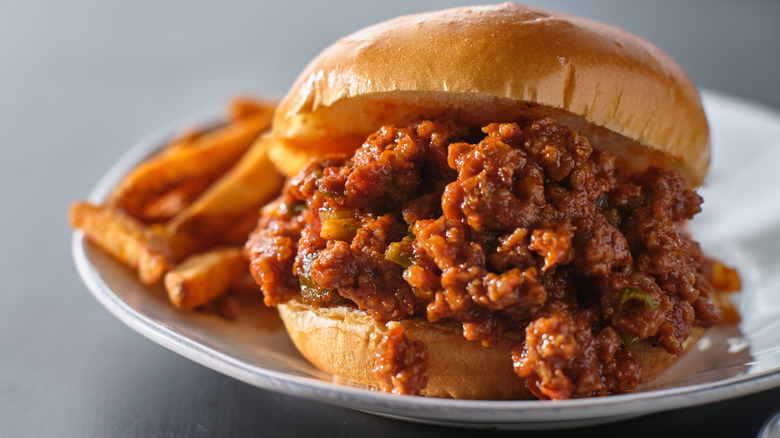
Sloppy Joes were first eaten in America in the 1930s and 1940s, and quickly became a dinnertime staple. As the name implies, they are messy to eat, but arguably, for many, that's part of the fun. Plus, they taste good, and they're an incredibly economical meal — all you need is ground beef, sauce, and some bread.
By the time the '60s rolled around, sloppy Joes were a go-to for families everywhere. Many people had their own recipes (combining ground beef with tomato sauce, onions, and peppers, for example), but, of course, most thought their mom's version was the best. "My mom always made the best sloppy Joe's," reads one comment on a Facebook post dedicated to remembering sloppy Joes from the '50s and '60s. "I still make them myself but they never seem to be as good as my mom's."
In the late '60s, sloppy Joes got even more convenient, and many started turning to a can of Manwich. For the uninitiated, Manwich is a canned "sandwich sauce" introduced by Hunt's for sloppy Joes in 1969. Manwich is still on the shelves, but many still opt to make their mom's original version. "I use my mother's recipe, use buttered and toasted onion buns and they are delicious," another Facebook user commented. "That canned stuff is awful!"
Johnny Marzetti casserole
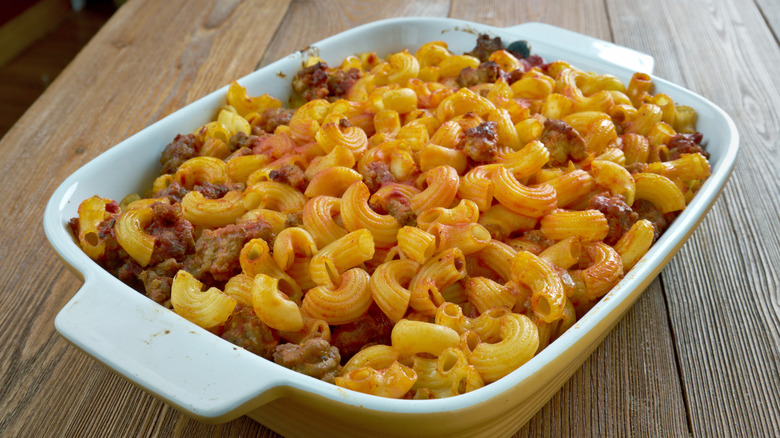
You can probably guess from the name, but Johnny Marzetti casserole likely has Italian-American roots. Like American chop suey, the dish consists of ground beef, macaroni, tomato sauce, and cheese. It's often credited to an Italian restaurant chain from Ohio, called Marzetti's, but of course, like many things in food history, this origin is often disputed. But the truth remains that in Ohio and beyond, Johnny Marzetti casserole was once a household staple, and many remember eating it for dinner throughout the '60s.
As with other ground beef dinners from the '60s, most families had their own twist on Johnny Marzetti. Some added more vegetables into the mix, while others swore by a touch of sloppy Joe's seasoning and corn.
One fictional character who enjoyed Johnny Marzetti in the '60s? Why, Richard Gilmore of the "Gilmore Girls," of course. In one episode, he makes a "Johnny Machete" casserole for his family, but most agree the recipe he whips up, with noodles, ground beef, and canned tomato soup, is likely based on the classic midwestern Johnny Marzetti.
Goulash
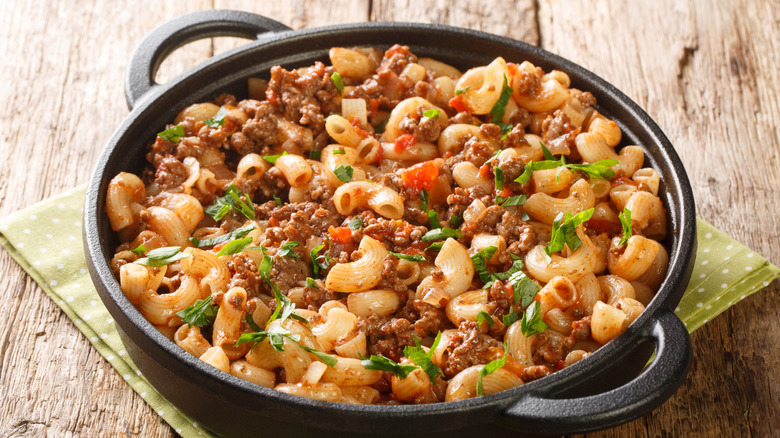
Listen, we have to be honest: There isn't a huge amount of difference between American chop suey, Johnny Marzetti, and American goulash. They all consist of similar ingredients, including ground beef, macaroni noodles, tomato sauce, vegetables, and plenty of cheese. The name used usually depended on the region or household you grew up in, but that said, there do appear to be some subtle differences between recipes.
Some families, for example, would add creamed corn to their goulash, while other recipes call for a dash of chili powder or powdered smoke. Many goulash recipes also contained paprika, which is one of the only ingredients that links it back to the dish it likely descended from: Hungarian goulash. "My grandmother's recipe is almost entirely paprika and chili powder for spices," reads one Reddit comment in r/Old_Recipes. "Topped with a ton of cheese."
Real, authentic Hungarian goulash doesn't involve macaroni noodles, but is made with lots of paprika, beef chunks, vegetables, and a thin, brothy sauce. As you've probably guessed, the American version was inspired by Hungarian immigrants who arrived in the U.S. in the tens of thousands in the early 20th century.
Hamburger gravy and mashed potatoes or toast
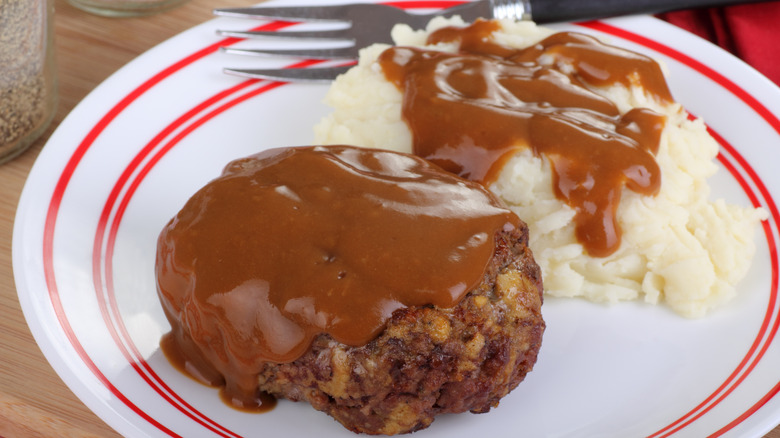
Simple hamburger and gravy was a pretty standard dinner choice in the '60s, especially in big families. It was affordable, and by mixing the ground beef with ingredients like diced onions and flour, you could make it go further. "I remember asking mom why we ate so much hamburger gravy and why grandma made it all the time (they both made it so well!)," recalls one Facebook user in a group for Branford, Connecticut memories. "She said we couldn't afford much and beef was cheap at the commissary."
Often, families would serve up the hamburger gravy with mashed potatoes with vegetables on the side, but boiled potatoes, rice, and noodles were common side dishes, too. Some would serve it on toast, which is often referred to as "s**t on a shingle" (or S.O.S.), and was often eaten in military families. It could also be made with chipped beef, but hamburger gravy was a popular, economical option.
Stuffed cabbage rolls
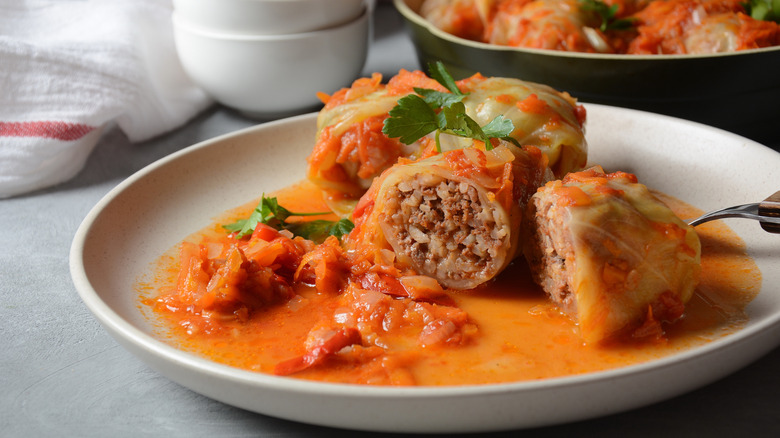
Humble cabbage rolls have quite the history. They were likely first eaten in the Middle East thousands of years ago, before they made their way to Europe, and then to America with immigration. In the '60s, many remember eating cabbage rolls stuffed with ground beef for dinner, although recipes varied depending on your household. "My grandmother made sweet and sour cabbage rolls," commented one Facebook user on a post about 1960s ground beef dishes. "They were the best!" Others remember enjoying Polish golabki (often made with ground beef, pork, rice, and tomato sauce).
Some don't recall family recipes, but instead, remember their moms whipping up the stuffed cabbage recipe from the 1963 edition of "The Good Housekeeping Cookbook." In case you were wondering, the latter instructed home cooks to stuff a mixture of diced tomatoes, ground beef, white rice, grated onions, and eggs into cabbage leaves before baking with tomato sauce and a sprinkle of sugar.