

10 Memorable Foods Anthony Bourdain Ate While Filming No Reservations
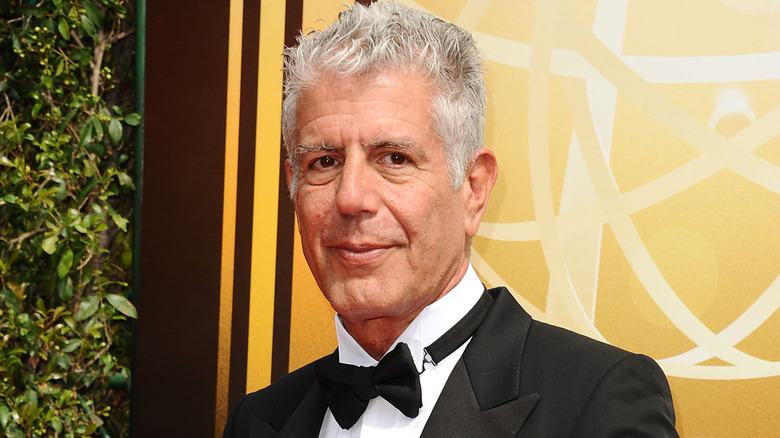
Anthony Bourdain continues to be an influential figure in the world of food, loved by many for his vocal opinions and no-nonsense manner. During his career, he was the star of several food and travel shows, including "No Reservations." The show ran on the Travel Channel for nine seasons from 2005 to 2012, during which Bourdain visited dozens of countries around the world and sampled countless meals with locals. The premise of the show was an exploration of international cuisines and the way they communicated culture, and Anthony Bourdain was the perfect host for this purpose.
Though he consumed far too many dishes over the span of those several years to list, some truly stand out for being more memorable than the rest. Whether it was a special feast Bourdain experienced as the guest of honor or a simple sandwich or burger that anyone could easily sample, Bourdain ate it all. Here are the dishes that were particularly noteworthy during his time filming "No Reservations," and the experiences that led him to those plates.
Sarawak laksa in Malaysia - Season 1, Episode 5
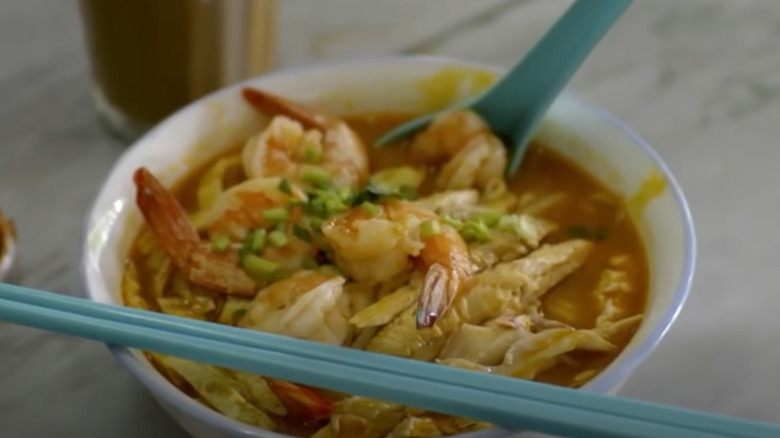
Although Anthony Bourdain famously hated brunch, he was fond of eating different types of breakfast during his travels, especially if noodles were involved. In Season 1, Episode 5, Bourdain visits Malaysia, discovering the multicultural influences that define the country's cuisine. Among the various meals he has, Bourdain visits Choon Hui Cafe in Kuching, Sarawak, which is part of Malaysia on the island of Borneo. Here, he tries a bowl of the local laksa soup, and quickly orders a second after devouring the first.
He lists the dish's contents to viewers, including two types of noodles, chicken, prawns, coconut, chili, and a delicious broth. He described the latter as "super complex," adding, "the wisdom of the ages is contained in there" (via "No Reservations"). In the episode, he notes it is the second time he's dining at the cafe, and he even returned in a subsequent episode of "Parts Unknown." Bourdain is recognized as popularizing laksa among his fans, in particular Sarawak laksa, the type he had at Choon Hui Cafe.
Mortadella sandwich at Bar do Mané in São Paulo, Brazil - Season 3, Episode 9
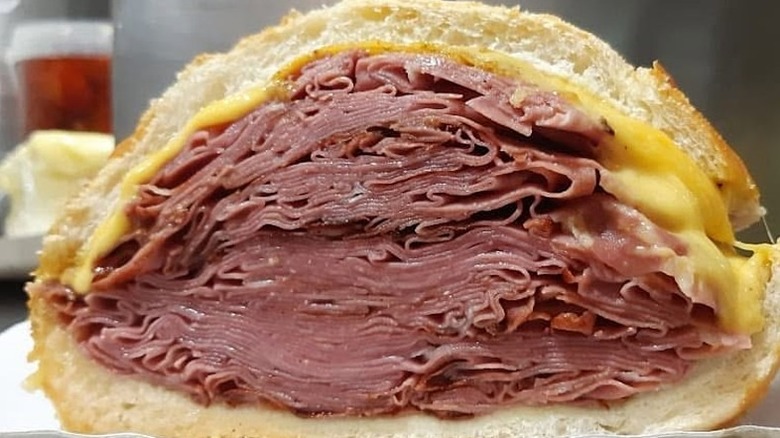
Anthony Bourdain was famously a fan of cheap eats like sandwiches, and the one he had in São Paulo, Brazil, in Season 3, Episode 9 of "No Reservations" stuck with him well after the last bite. In fact, Bourdain recreated a version of the recipe for his cookbook "Appetites," demonstrating his love for the simple food. The dish in question was a mortadella sandwich from Bar do Mané in the Mercado Municipal, a food hub in the bustling Brazilian city.
At the restaurant, Bourdain digs into a sandwich piled high with thinly cut layers of mortadella paired with a soft, melted cheese on a simple Portuguese bun, recommended to him by his friend. He liked it so much that he returned five years later during an episode of "The Layover" filmed in São Paulo. Bourdain's version of the recipe calls for provolone and mustard to add a little tang to the fatty meat. Bar do Mané continues to serve the dish, referring to it as the most famous sandwich in the market.
Sushi at Sukiyabashi Jiro in Tokyo - Season 4, Episode 16
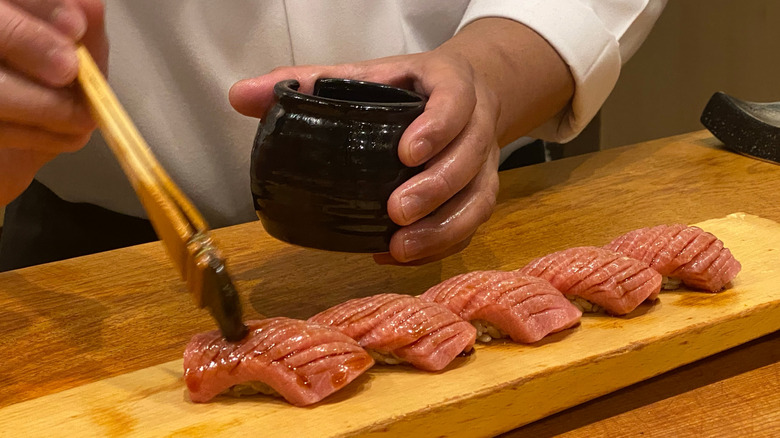
In Season 4, Episode 16 of "No Reservations," Anthony Bourdain visits Tokyo. Here, he dines at Sukiyabashi Jiro, an iconic sushi bar featuring an omakase menu by Chef Jiro Ono. The restaurant is unassumingly located underground near a subway station, and had three Michelin stars at the time. Bourdain notes that people claim it has the best sushi in the world, and after a few bites, he's in agreement. When the episode was filmed in 2008, Chef Ono had been making sushi professionally for more than half a century.
Bourdain explains that ingredients, technique, and timing set this high-end sushi apart from the ordinary stuff, and Chef Ono has all three down. To Bourdain's surprise, he is served and consequently consumes the specific sequence of 15 courses in 20 minutes, describing it as "the best sushi of my life." The omakase includes flounder, squid, tuna, eel, clam, shrimp, and more. He praises the fresh fish and rice, and after eating the sea urchin roll with rice and seaweed, declares, "I'm ready to die now." After musing about perfection, Bourdain thanks Chef Ono for the "unforgettable pleasure." In 2016, Bourdain wrote a piece for The Guardian describing his ideal last meal, noting that it would be at Sukiyabashi Jiro.
Breakfast at Fonda Margarita in Mexico City - Season 5, Episode 1
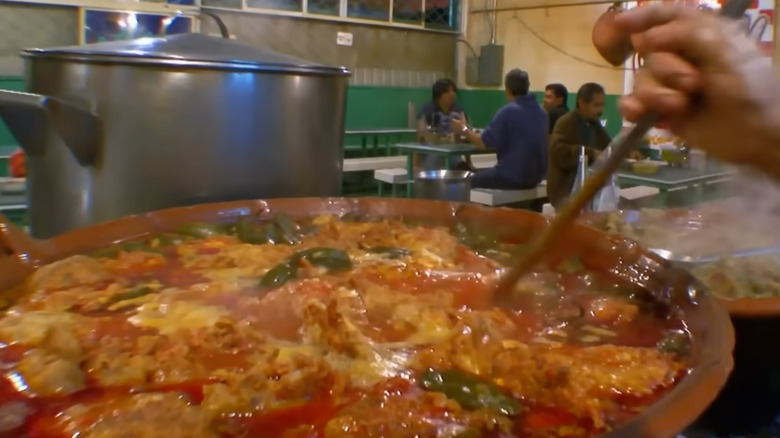
Anthony Bourdain finds himself in Mexico City in Season 5, Episode 1 and although he enjoys a wide variety of street foods, the meal that truly wows him is breakfast at Fonda Margarita. The popular spot is frequented by countless diners every day, so Bourdain is instructed to arrive early to avoid waiting in line. The family-run establishment has been a fixture for decades, highlighting its appeal in a city where great food is the norm. The breakfast menu features dishes that a Mexican matriarch might traditionally prepare, all cooked over charcoal.
Before even sampling the food, Bourdain is excited about the experience, describing the restaurant as having all the signs of greatness, and the meal as one he won't forget. Bourdain and his host order pretty much the whole menu, including specialties like huevos y frijoles, huevos rancheros with fried tortillas, pork loin and salsa verde, beef in a dark chile sauce, chicharron, and plenty more. Bourdain describes them (via the Travel Channel) as "soulful, wonderfully old school grandma dishes," and praises the cooking and delicious flavors, each dish distinct from the last. He describes the unique combinations of flavors in the dishes as stemming from years of experience, shutting down the idea that these hearty stick-to-your-bones dishes are anything but culinary gold.
Wagyu brisket and bone marrow in Melbourne, Australia - Season 5, Episode 12
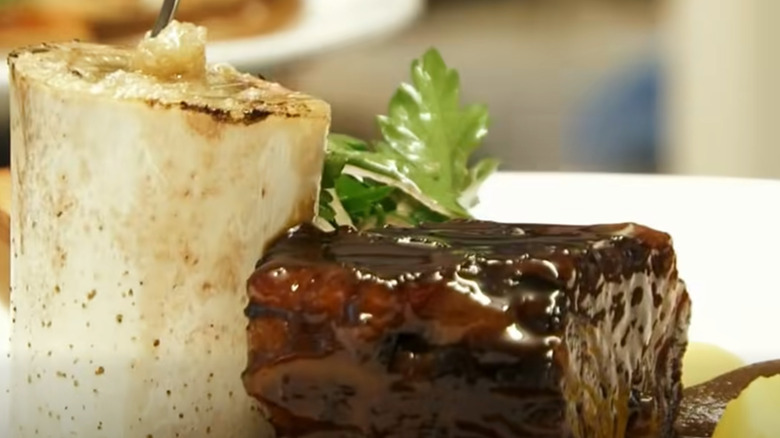
Anthony Bourdain travels Down Under to Melbourne in Season 5, Episode 12. There, Chef Paul Wilson shows him around the city's bustling food scene. On the first evening, they go to Wilson's restaurant Half Moon, where the two are accompanied by some of Melbourne's leading chefs for a multi-course meal. The restaurant is a cross between fine dining and a pub atmosphere, setting the scene for the meal to come. The cuisine is modern Australian and showcases a city that has continued to receive praise for its excellent food.
Bourdain learns about Melbourne's multicultural scene, as well as its proximity to excellent fresh produce and seafood. The food leans Asian with classic Australian ingredients, while shining a light on Wilson's creative repertoire. The men feast on a diverse menu, which concludes with a finale of wagyu brisket and bone marrow, which Bourdain describes as "too much of a good thing" (via "No Reservations"). Although it's the culmination of a decadent meal and Bourdain is close to his breaking point, he affirms that he is more than satisfied with this conclusion to the meal, calling the brisket "unbelievable."
Black Label Burger at Minetta Tavern in NYC - Season 6, Episode 7
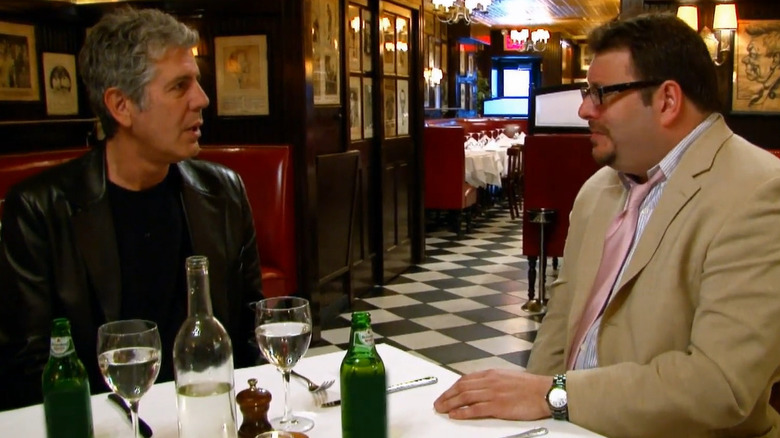
True to his simple nature, Anthony Bourdain loved a good burger. In Season 6, Episode 7, he samples the Black Label Burger at Minetta Tavern in New York City. Bourdain dines with Josh Ozersky, a food journalist and the author of "The Hamburger: A History," a nod to his passion for the classic eat. Ozersky brings Bourdain to try what he refers to as a boutique hamburger, made with the best cuts of beef. Although the specific cuts and proportions remain the restaurant's secret, Bourdain notes that the beef is all dry aged.
The patties are cooked in clarified butter on a flat-top griddle, which Ozersky proclaims is the only way to cook a burger, in order to preserve all of the juices and fat, producing a sort of confit beef. Ozersky also rejects condiments like ketchup (though caramelized onions and cheese are fine), and Bourdain seems visibly frustrated by all of the rules. Once he takes a bite, Bourdain surrenders to Ozersky's opinion, proclaiming, "this floods your head with meaty goodness" (via the Travel Channel). At the time in 2010, the Black Label burger retailed for $26, which Bourdain noted was expensive. Today, the current price is $38 with fries.
Sea urchin with lardo plus Fusilli with octopus and bone marrow at Marea in NYC - Season 6, Episode 13
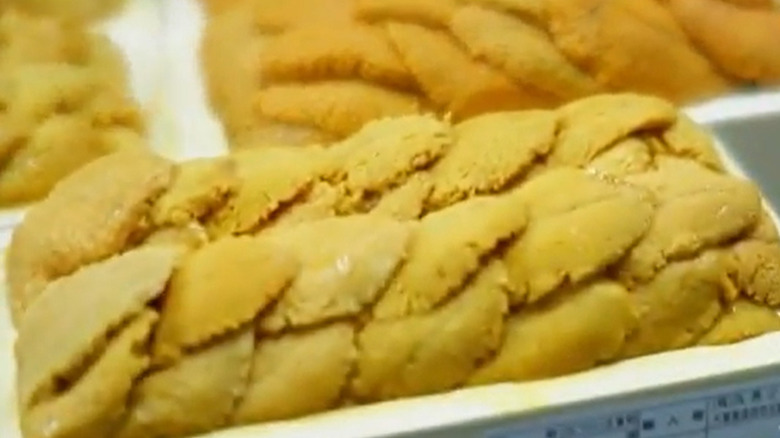
Although some of Anthony Bourdain's best meals on "No Reservations" were from street-side stands and in the homes of locals, given his status in the culinary world, he was also friends with numerous chefs of fine dining establishments. Titled "Food Porn 2," Season 6, Episode 13 follows Bourdain and his friends, including king of actual porn Ron Jeremy, to numerous dining establishments where they consume over-the-top foods. In the episode, Bourdain goes to Marea in New York City, an Italian seafood restaurant that was led by Chef Michael White until 2021.
During the lengthy seafood feast, White serves dish after dish, starting with Santa Barbara sea urchin on toast topped with a thin layer of lardo. Bourdain calls it "morally wrong" and "indecent," with his descriptions leaning heavily sensual, as well as comparing the combination to freebase crack when all you've known is cocaine. Basically, the sensory pleasure is immediate and intense. White also serves lobster with burrata, a combination that's typically frowned upon in Italian cuisine, but ultimately memorable for Bourdain, who calls it "unbelievably delicious." The final dish is handmade fusilli paired with baby octopus and a sauce made with bone marrow, which Bourdain calls "celestial butter." As he continues to eat it, he declares it as "far and away the most magnificent pasta dish I've had in memory."
Cacio e pepe in Rome - Season 6, Episode 20
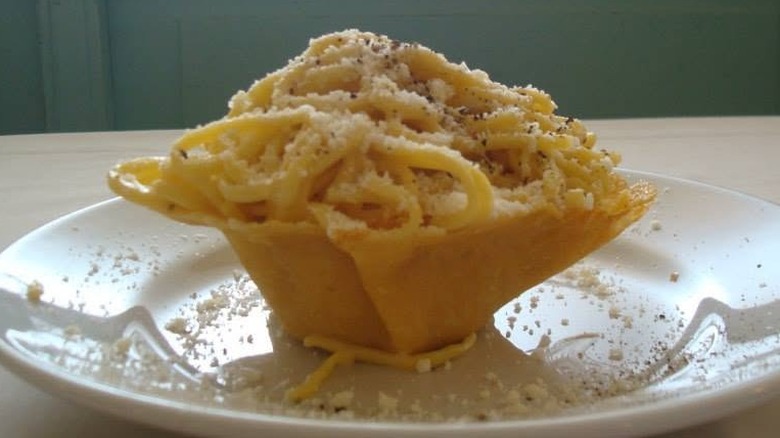
Anthony Bourdain was clear about his likes and dislikes, and he basically described the cacio e pepe dish he had in Season 6, Episode 20 in Rome as one he couldn't like more. The beauty of cacio e pepe is its simplicity, relying on just a few basic ingredients that come together to be far greater than the sum of its parts. The scene starts with Bourdain sitting in a piazza when a waiter arrives and recommends the house specialty, tagliolini cacio e pepe. He describes the cooking process, which uses pasta water, butter, black pepper, and Pecorino Romano to make a creamy sauce for the noodles. The dish is served in a crispy Parmigiano Reggiano bowl that adds textural appeal and a punch of umami flavor to this iconic dish.
Digging into the classic Roman pasta dish, Bourdain is immediately smitten and announces that it has to be illegal somewhere. In an attempt to prevent the local spot from becoming overwhelmed by tourists, Bourdain didn't reveal the name of the establishment, referring to it simply as Restaurant X. Nevertheless, enthusiastic internet sleuths traced it to Ristorante Roma Sparita in Trastevere, allowing fans to visit and try it for themselves (it's still on the menu today).
Lalo in Port-au-Prince, Haiti - Season 7, Episode 1
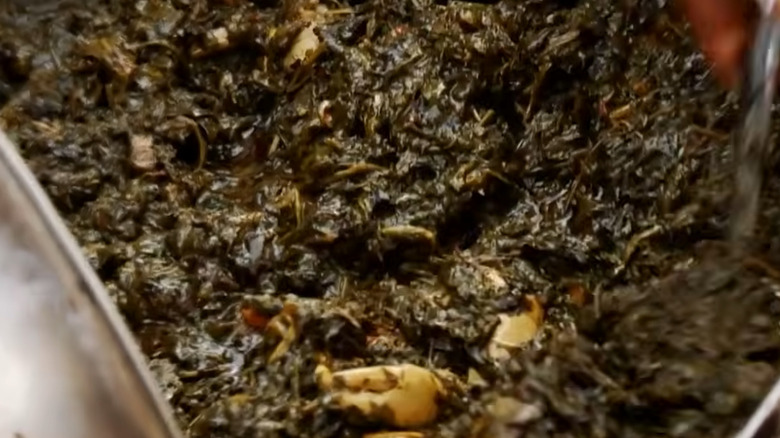
Anthony Bourdain makes his way to Haiti in Season 7, Episode 1 where he spends time in the capital, Port-au-Prince. The episode aired in 2011, one year after a devastating earthquake that left plenty of destruction in its wake. Consequently, the episode shines a light on the state of the island following the natural disaster.
Bourdain's host takes him to eat a local specialty, lalo, from the street stand he deems serves the best. The dish is made with jute leaves, okra, peppers, crab, and salt pork, and served with rice and beans, a pork and chicken stew, and pikliz (a spicy slaw). Bourdain praises the components of the meal and jokes that he isn't as fond of the lalo. When his host looks surprised, Bourdain chuckles and declares he loves it.
The meal becomes incredibly memorable after Bourdain and his crew decide to purchase all of the food at the stand to dole out to hungry locals. Unfortunately, chaos ensues as hungry children and adults clamor for a bite. Bourdain realizes the distinction between acting with his heart and with his head, and the scene ends on a somber note. Years later, he referred to the incident as a moral conundrum that led to consequences he hadn't envisioned.
Amazonian fish and tucupi stew in Brazil - Season 7, Episode 6
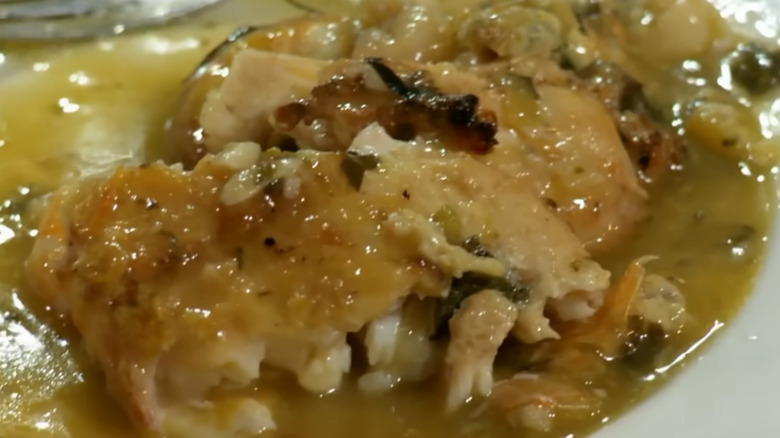
In Season 7, Episode 6 of "No Reservations," Anthony Bourdain heads to the Amazon in Brazil. He begins in the coastal city of Belém, where he meets Chef Ofir Oliviera, who is dedicated to keeping traditional Amazonian dishes alive. The chef shows him how he prepares numerous ingredients, including cassava root, which requires special handling due to its cyanide content. Bourdain then tastes a popular local dish called tucupi, which consists of processed cassava juice, boiled to help eliminate the risk of cyanide poisoning. Considering the deadly consequences of the dish in the hands of amateurs, this is certainly a memorable food served on the show.
Bourdain is incredibly impressed with the tasty broth, which is used as the base for several other dishes and traditionally to preserve meat, according to his host. Bourdain then tastes another preparation consisting of tucupi with shrimp, mussels, mushrooms, tomato, peppers, and fresh herbs, poured over fish from the market and cooked in clay pots. Finally, the men eat a local Amazonian fish, filhote, cooked in banana leaves over the grill. Bourdain finishes the meal in awe of the ingredients and Chef Oliviera's commitment to sharing these unique Amazonian dishes.