

Beef Stew Vs Irish Stew: What's The Difference?
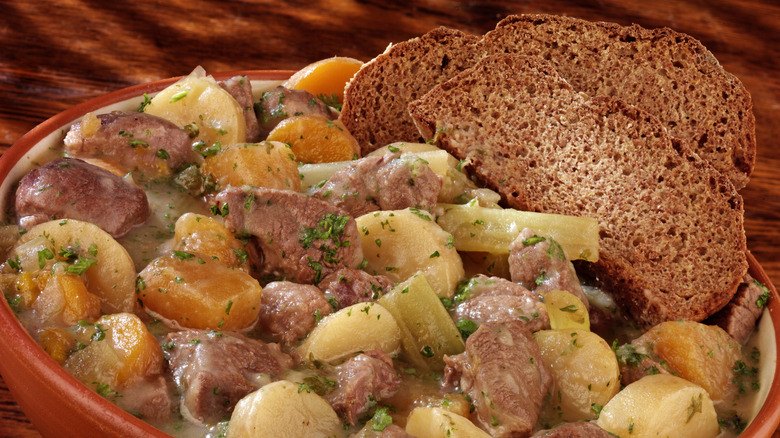
We wouldn't blame you if you thought Irish stew and an old-fashioned beef stew were the same thing. Both are winter-hearty meals cooked low and slow, with tender meat, potatoes, and vegetables all combined in a savory broth. But even though they're both cold-weather comfort food, they actually have different culinary roots. And the biggest difference starts with the meat. Traditional Irish stew is actually made with lamb or mutton, not beef. And yes, mutton and lamb are actually different – lamb is milder and tender, and it refers to any sheep under 12 months old. Mutton, on the other hand, refers to an older sheep, so it can be tougher and earthier.
Traditional Irish stew originated as an affordable one-pot meal made with the cheapest ingredients around. Historically, Irish households relied on mutton, as beef was too expensive, and they already owned sheep to produce wool and milk. The stew itself was very simple. So simple that only potatoes, onions, and water were involved. In later recipes, carrots, turnips, fresh herbs, and pearl barley appeared. Because it would bubble over an open fire all day, the toughest cuts of meat were used, especially the neck and shoulder.
Using this process, the meat becomes tender over time, and the potatoes break down to thicken the broth. Mutton remains a distinct flavor that folks either love or hate — it can be gamey and tough, especially if you've never had it before. Today, as lamb has become more affordable, lamb neck or chops are the preferred options for Irish folks.
Beef stew is more flexible with ingredients, Irish stew is quite simple
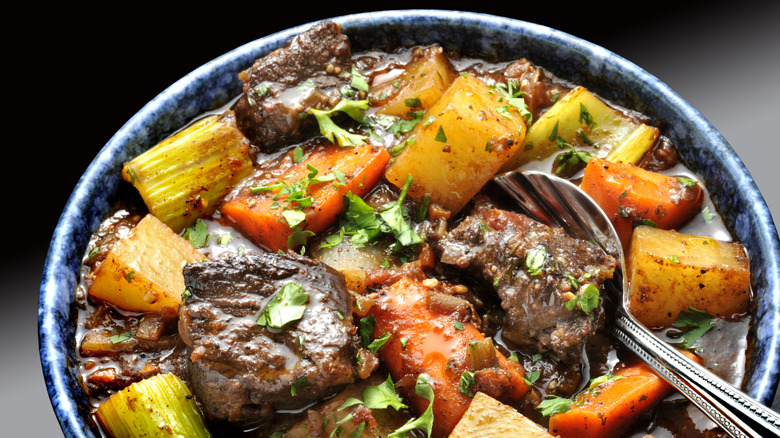
Beef stew, on the other hand, tends to have a longer ingredient list. Along with potatoes and onions, it commonly includes carrots, celery, and sometimes peas. The broth also goes way beyond just water, with garlic, bay leaves, tomato paste, Worcestershire sauce, and even red wine thrown in for more depth and flavor. Sometimes, flour or a roux is added for an even thicker soup. Beef stew also calls for hard-working muscles, like inexpensive beef chuck, that benefit from a nice long braise.
Guinness beef stew is a relatively modern variation that could be considered a mash-up of the two. Adding an Irish stout to any beef stew will give it an even richer taste, and it's often a familiar fixture on Irish pub menus. This particular stew is often served with mashed potatoes, crusty bread, or the traditional Irish colcannon, which is a side dish of potatoes and green cabbage.
As waves of Irish immigrants journeyed to America in the 19th century, their familiar recipes were tweaked to include ingredients found in their new home. These days, modern recipes have adapted old-fashioned Irish stew to include beef, particularly in places where lamb or mutton can be expensive and hard to find. While both stews are all about slow-cooking chunks of tough meat, they're not quite interchangeable. Beef stew is a lot more flexible when it comes to ingredients, whereas Irish stew will always be defined by its humble ingredients and simplistic recipe.