

For Better (Richer) Beef Stew, Give It The Irish Treatment
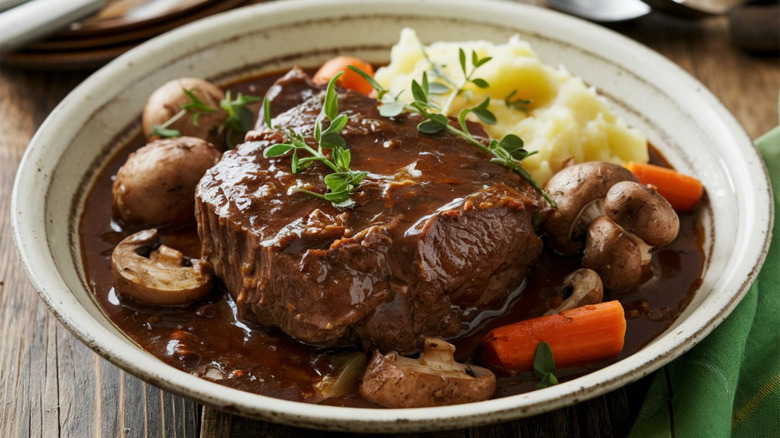
There are certain dishes that you end up developing a love/hate relationship with when growing up in Ireland. Porridge was a big one in my parents' generation. My friends tend to veer away from stews and any type of cabbage. Brussels sprouts have also lost a lot of love along the way, as did boiled bacon. Many families still make these almost weekly, but we have learned how to dress them up a little. One of the most popular upgrades for a stew is to add some stout for a deeper flavor, and it's a simple adjustment that can work in any American recipe, too.
Recipe developer Hayley MacLean utilized the trick when she created this delicious Irish beef stew recipe for Tasting Table. The stout not only provides a rich, malty flavor that cuts through the fat nicely, it also tenderizes the meat. It works in a similar way to red wine, as the acid in the brew breaks down the collagen and brightens the ingredients. Stout also provides an earthier, almost chocolate-like undertone that adds complexity and enhances the savoriness of the beef.
Guinness is the most commonly added Irish stout, but where I'm from in County Cork we like to use Murphy's or Beamish. There are a lot of craft Irish stouts that work well, also — just make sure not to use anything too sweet. You only need to use about one can for every two or so pounds of meat, adding it in alongside the stock before simmering. Pour it into any old-fashioned beef stew recipe, reducing some of the other liquid.
To lamb or not to lamb
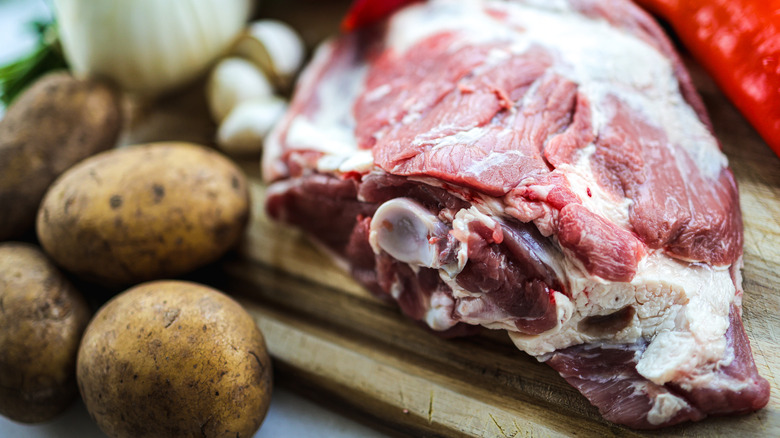
I have personally always loved stew, but only when my father is making it. He uses a technique inherited from my grandmother that involves using both beef and lamb. He starts by simmering some minced lamb in the pot along with aromatics, then he adds in the beef and vegetables. It creates a full-bodied, savory flavor that isn't over the top and the juices provided by the lamb are incredible. This is actually one of the biggest differences between American stew and Irish stew — diced lamb or mutton (yes, there is a difference) is typically used in a traditional recipe, instead of beef.
Irish stew was originally a peasant dish that was made with whatever ingredients were available, like root vegetables and mutton. Sheep have always been abundant in Ireland but back in the day, the younger ones were actually considered too valuable to eat. Once they aged, they were slaughtered and the tough meat was used for slow roasts and stews. While cattle farming is actually the largest and most important agricultural sector in Ireland today, and the country is one of the biggest beef exporters in the world, a lot of people still prefer the flavor of lamb for stew. Mutton isn't used as much as it's a little too tough and gamey, so you won't see it on a menu as often. Beef, however, is a lot more common.
Other ways to give American beef stew an Irish twist
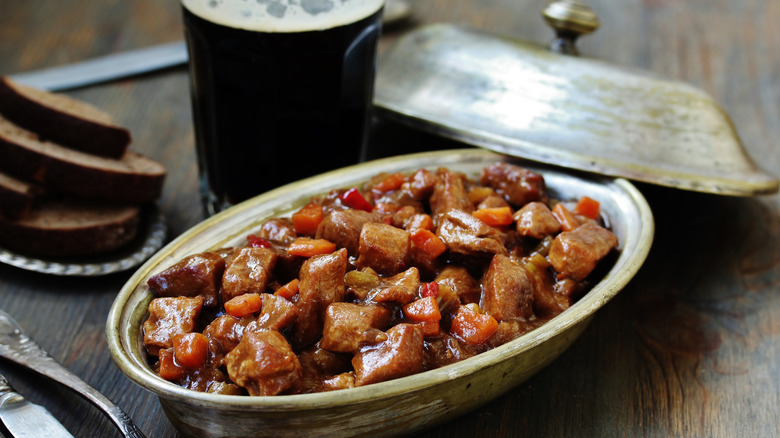
Irish stews are usually thinner than American beef stews as most of us don't bother adding flour to the pot, preferring a lighter texture that resembles a broth more than a gravy. Forgoing the roux can be yet another way to give beef stew the Irish treatment. Of course, everyone has their preferences, but Irish stews also tend to have a simpler profile in general. Only a few key ingredients are used and the seasoning is minimal.
A lot of Irish people, including my family, use turnips along with potatoes and carrots. Again, turnips have been a staple of Irish diets for generations and they hold their shape well during simmering, providing a slightly bitter bite. Pearl barley is another common addition in parts of the country. Parsnips are sometimes found in stew, too. This tends to be where the variety ends.
You typically won't find any peas or greens in an Irish stew, and mushrooms are rare. Having tasted and cooked stews on both sides of the pond over the years, I would say an American stew is a heavier, more robust dish, while Irish stew is lighter and earthier. Both are great but, if you want to try something different, I highly recommend switching it up by at least adding some stout to your beef stew.