

17 Mexican Soups Everyone Needs To Try At Least Once
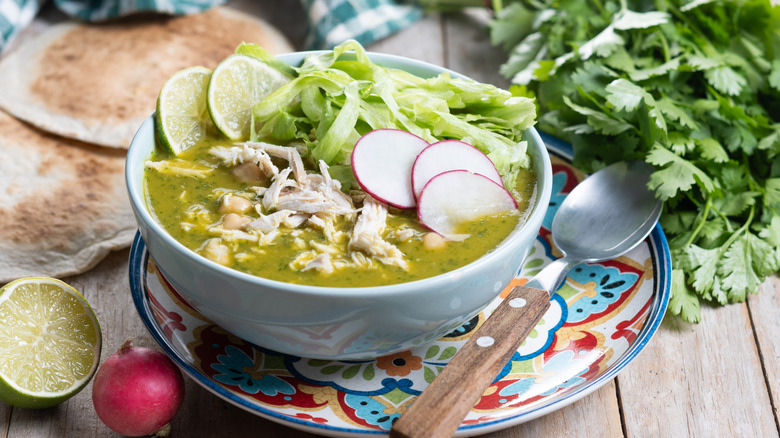
If tacos and enchiladas are the first dishes that come to mind when you think of Mexican food, take note: Soup is an important part of Mexican culture. In fact, soup is the expected first course in the main meal of the day (a three- to four-course afternoon meal called comida).
There are virtually endless variations of Mexican soup (sopa), from those inspired by the interior regions to those hailing from the coastline. For example, caldo (broth) features broth-based soups with meat, poultry, and seafood. In some cases, the pot is so abundant, it's more reminiscent of stew. Many soups are also brimming with vegetables, including potatoes, corn on the cob, tomatoes, and squash. You'll also find soups made with beans, noodles, and fried tortilla strips. Some soups are enriched with fresh and dried chiles, which add depth and complexity (not necessarily heat). And when it comes to serving, Mexican soups reign supreme, often arriving with a medley of colorful, textural garnishes.
Below is an assortment of cherished Mexican soups. Dishes like menudo and pozole are often enjoyed during holidays and celebrations, but they're certainly welcome any day of the week. Some wholesome chicken and vegetable soups are prized for their nourishment and healing properties, but they're also great on a cozy Sunday afternoon. Whether you decide to order one of these soups from a Mexican restaurant or dig up a recipe to make at home, these are the must-try soups from Mexico.
Pozole
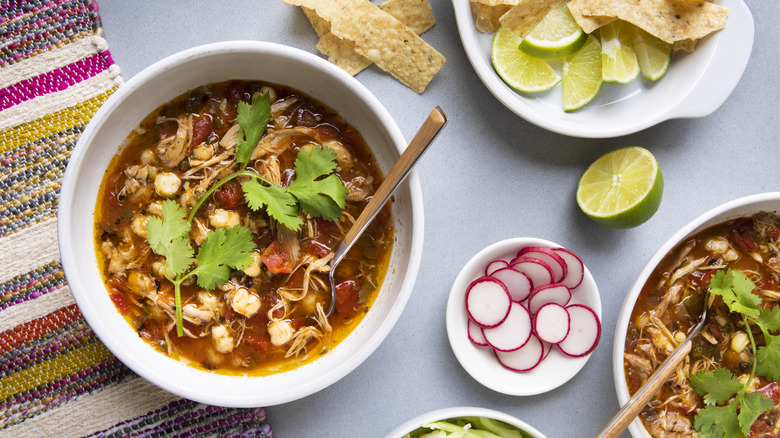
Pozole is a hearty Mexican stew that features tender pork or chicken and the Mexican staple hominy (or nixtamalized corn kernels). To make hominy, field corn kernels (maize) are treated with an alkaline solution that loosens the kernels' tough outer hulls. When added to soups and stews, the kernels expand into light, fluffy puffs of corn.
Pozole is scented with onion and garlic and boldly seasoned with herbs and spices. The red version of pozole contains dried Mexican chiles like guajillo and ancho; the peppers add smoky heat and a signature red hue. Green pozole (verde) is made with tangy green chiles and tomatillo sauce, and white pozole (blanco) is made without chiles or tomatillos, so the flavors of the meat and hominy shine through.
Before serving, pozole is often garnished with shredded cabbage, sliced radishes, and cotija cheese. In some instances, you'll also find diced avocado, sliced jalapeños, lime wedges, diced onion, and fresh cilantro piled on top.
Caldo de pollo
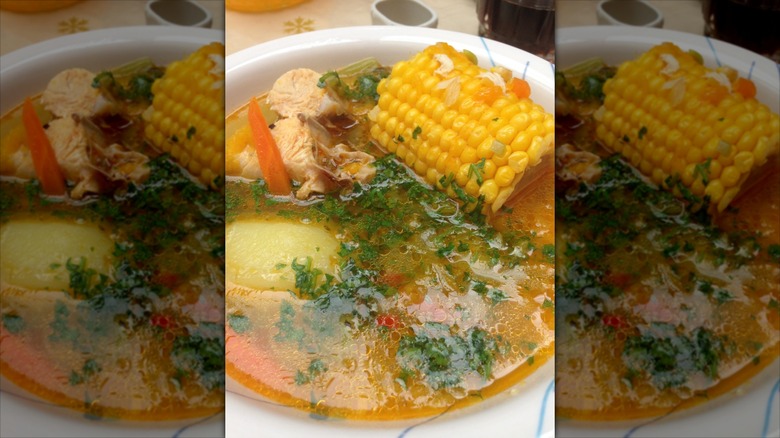
Caldo de pollo translates to chicken broth in Spanish, and this soup is a classic Mexican chicken soup. But it's not just any old soup; it's a staple in most Mexican homes, especially during cold and flu season.
The soup consists of bone-in chicken pieces (often a whole, cut-up chicken which includes drumsticks, thighs, wings, and breasts), aromatics like onion, garlic, oregano, and bay leaves, and lots of vegetables. The broth is minimally seasoned (sometimes with just salt and pepper) and is made from either chicken stock or water and chicken bouillon (Knorr chicken bouillon is a common choice).
Popular vegetable additions include carrots, celery, corn on the cob, chayote squash (an edible fruit belonging to the gourd and squash family), potatoes, and zucchini. Sometimes, cabbage and green beans are also added. The soup is often served with lime wedges, sliced avocado, fresh cilantro, and a dash of hot sauce.
Sopa de fideo
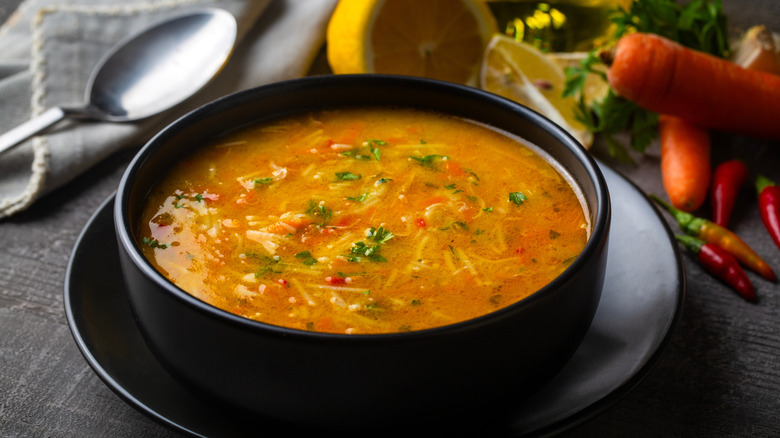
When translated from Spanish, sopa de fideo means noodle soup, and that's exactly what this comforting dish delivers. The noodles aren't broad but rather broken-up pieces of thin vermicelli, thin spaghetti, or angel hair pasta. The base of the soup is tomatoes, either fresh Roma tomatoes or canned tomato products such as tomato sauce, crushed tomatoes, or diced tomatoes.
The seasoning for sopa de fideo is simple and often relies on onion, garlic, and chicken broth or chicken bouillon to perfume the liquid base. What makes this soup shine is the pasta because the dry noodles are toasted in vegetable oil before simmering in the seasoned liquid. Browning the noodles in oil brings out a deeper, nutty flavor and ensures the pieces keep their shape while cooking. Common garnishes for sopa de fideo include sliced avocado, crumbled or shredded Mexican cheese, Mexican crema (a tangy, pourable dairy condiment), fresh cilantro, and lime wedges.
Sopa de tortilla
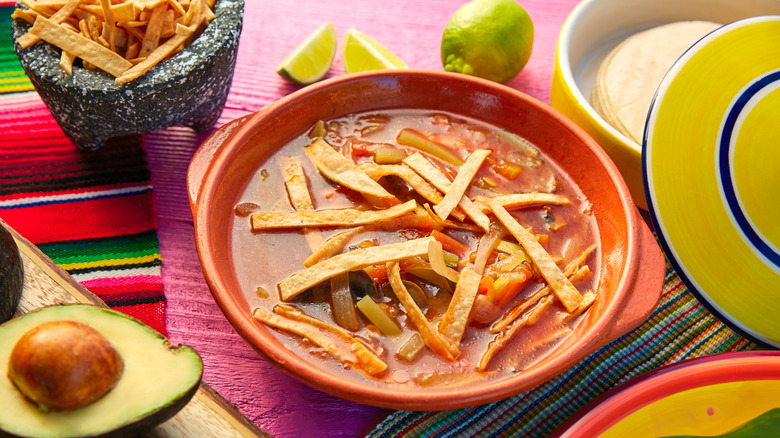
Sopa de tortilla (AKA tortilla soup and sopa Azteca) is a traditional Mexican dish featuring a spicy broth, crisp tortillas, and a bounty of fresh garnishes. The soup base consists of fresh or canned tomatoes, chicken broth, onion, garlic, and dried chiles. The dried chiles are often toasted and rehydrated before cooking to bring out a deeper, richer, spicier flavor. Herbs and spices used to scent the broth often include Mexican oregano, epazote (a pungent Central American herb), cilantro, bay leaves, and ground cumin.
The highlight of sopa de tortilla is the tortillas. Baked or fried corn tortilla strips are added to the soup in a few ways — as the base (the soup is ladled over the tortillas), as a garnish when piled on top, or as a thickener when blended into the broth.
Optional additions to sopa de tortilla include shredded chicken, black beans, and/or corn. Garnishes frequently include shredded or crumbled Mexican cheese, sliced avocado, Mexican crema or sour cream, fresh cilantro, and lime wedges.
Caldo de res
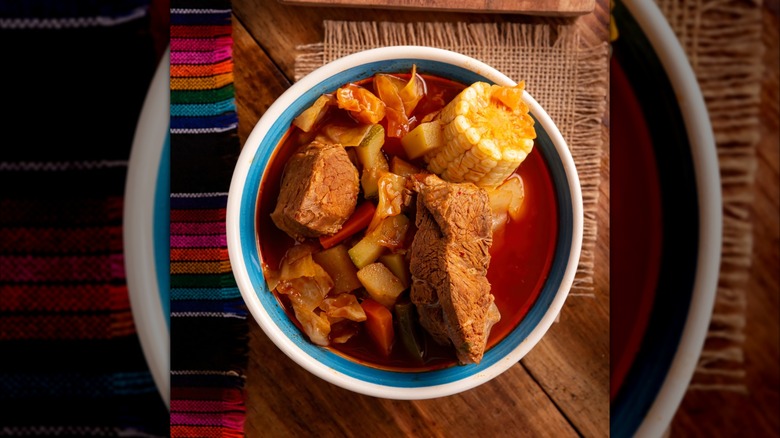
Caldo de res translates to beef broth and it's a Mexican beef and vegetable soup featuring bone-in cuts of beef, meaty vegetables, and a clear, savory broth. The meat used is typically bone-in beef shanks, short ribs, or large chunks of chuck roast, and the beef is simmered for hours until it's fall-off-the-bone tender. During cooking, the broth is enriched with the bones' flavor and nutrients.
The base of the broth is typically water, and it's seasoned with onion, garlic, bay leaves, salt, and pepper. For the vegetables, caldo de res often contains large chunks of potatoes, carrots, corn on the cob, chayote squash, Mexican squash or zucchini, and wedges of green cabbage. Sometimes the soup will also contain additional vegetables, such as tomatoes, green beans, and celery.
When ready to serve, caldo de res is typically garnished with fresh cilantro, chopped onion, sliced jalapeños, and lime wedges. The soup may also be served with warm corn tortillas on the side.
Birria de res
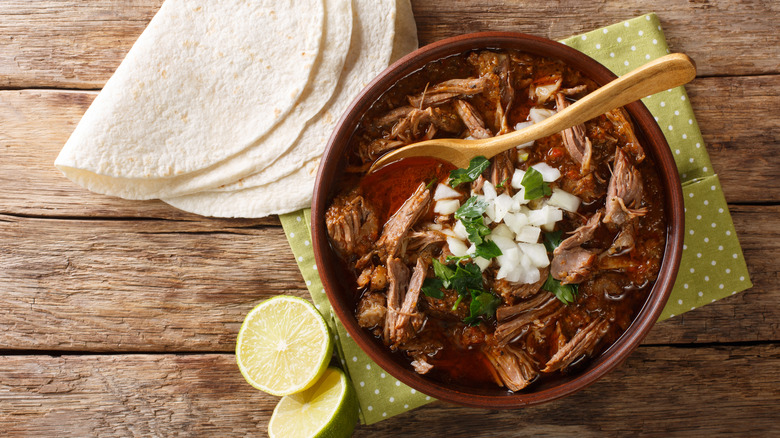
Birria de res is a Mexican beef stew originating from the state of Jalisco. The dish features tender, slow-cooked beef in a spicy, red chili-spiked broth. The meat used is often beef chuck roast or beef shank, but some recipes also use short ribs. The broth is rich and savory and derived from tomatoes, onion, garlic, and plenty of dried chiles, including guajillo, ancho, pasilla, and chile de árbol. This medley of chiles produces a broth that's layered and multidimensional, with nuances of spicy, sweet, and smoky. In terms of herbs and spices, birria de res often includes cumin, coriander powder, Mexican oregano, bay leaves, thyme, and cinnamon.
To serve, birria de res is frequently topped with diced white onion, fresh cilantro, and sliced radishes, and served with lime wedges on the side. The soup is also typically served with warm corn tortillas for dunking (it's common to dip the tortillas in the stew to soak up the fiery red consommé, or broth.
Sopa de albóndigas
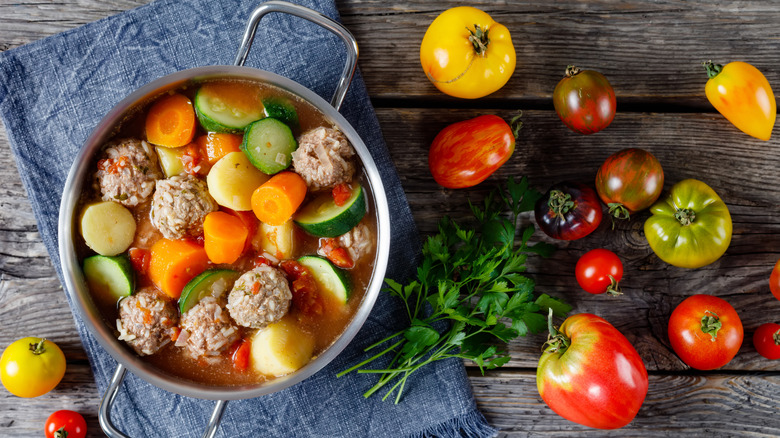
Albóndigas translates to meatballs, and sopa de albóndigas (meatball soup) is a popular Mexican comfort food. The meatballs are typically made with ground beef, but some recipes also include ground pork. The ground meat is blended with aromatics like onion and garlic, herbs like cilantro and mint, spices like cumin and oregano, plus salt and pepper. The seasoned meat is mixed with rice and egg, shaped into balls, and simmered in a hearty broth until cooked through.
The liquid base for this soup consists of fresh or canned tomatoes, onion, garlic, chicken or beef stock, and sometimes oregano, bay leaves, and chipotle peppers (for a little smoky heat). Vegetables are also added to the simmering broth, and big pieces of potatoes, carrots, corn on the cob, and zucchini are customary. To serve, sopa de albóndigas is ladled into bowls and topped with fresh cilantro and lime wedges.
Olla tapada
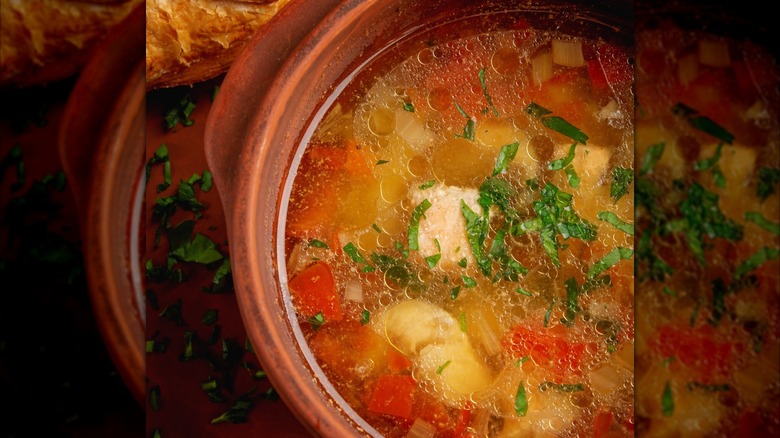
When translated, olla tapada means covered pot and this traditional Mexican chicken and vegetable stew hails from Veracruz, Oaxaca, and Chiapas. Also known as pollo tapado (covered chicken), the stew is made by immersing chicken and vegetables in a rich tomato broth and cooking in a covered clay pot (olla de barro). The stew is cooked without stirring, and everything simmers together until deeply tender and flavorful.
The chicken in olla tapada is often bone-in legs and thighs, and the vegetables are potatoes, carrots, and chayote squash. On occasion, you'll see plantains added, as well as green peas, red peppers, saffron, and achiote paste. The broth consists of tomatoes, onion, and garlic, and it's seasoned with bay leaves, thyme, Mexican cinnamon, salt, and pepper. For sweetness and acidity, you might also find green or black olives, raisins, and/or capers. When finished cooking, the stew is served from the clay pot and partnered with corn tortillas on the side.
Sopa de frijol negro
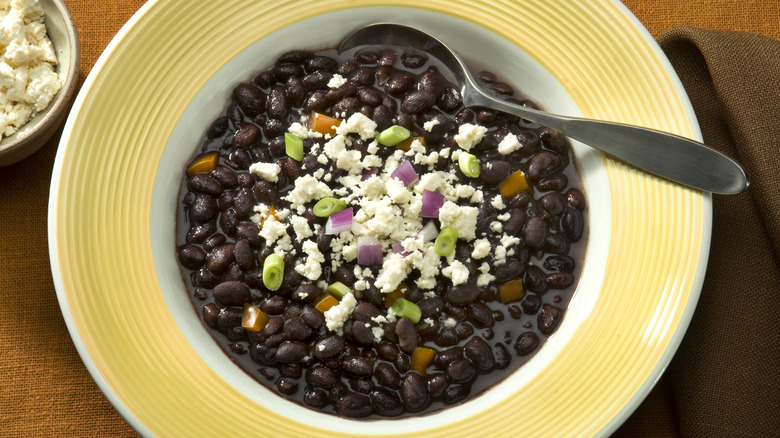
Sopa de frijol negro is a classic Mexican black bean soup that utilizes basic pantry staples, aromatic vegetables, warming spices, and traditional Mexican garnishes. Cooked black beans (either canned or cooked from dried) are married with onion, garlic, fresh or canned tomatoes, and stock (vegetable or chicken) and simmered until the beans are infused with great flavor. Seasonings for this soup can include epazote, salt, and pepper.
You'll find variations of sopa de frijol negro throughout Mexico, including those made with cream or milk and those with fresh chile peppers instead of dried or smoked chiles. The soup is also served both chunky (whole beans) and puréed, for creamy black bean soup. When serving, sopa de frijol negro is traditionally garnished with crumbled Mexican cheese, fresh cilantro, diced avocado, sliced jalapeños, Mexican crema or sour cream, tortilla strips or crushed tortilla chips, and lime wedges.
Caldo de mariscos
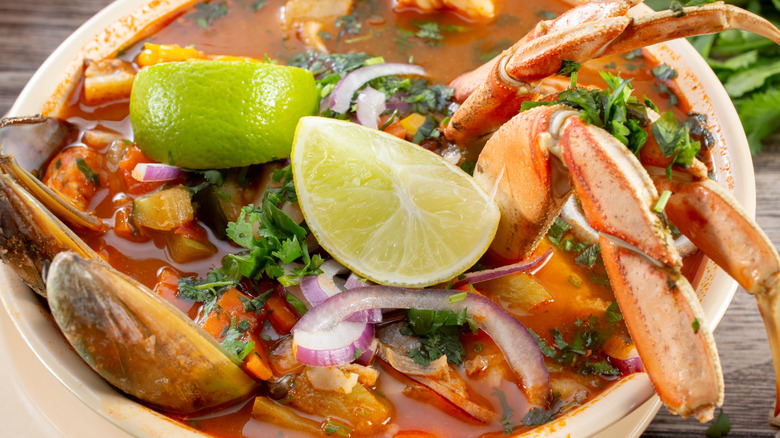
Caldo de mariscos (seafood broth) is a traditional Mexican seafood soup from the Gulf Coast region of the country. Also known as cazuela de mariscos (pot of seafood), the dish centers around fresh fish and shellfish in a rich, tomato-and-chili-infused broth. The soup is often served in tiny clay pots, and it's enjoyed throughout the region.
The seafood in caldo de marisco often includes white fish fillets such as red snapper, tilapia, cod, or halibut; shrimp (sometimes head-on); blue crab; snow crab legs; mussels; clams; octopus; calamari (squid); and/or crawfish. The broth base is derived from fresh or roasted tomatoes and chiles such as guajillo, chile de árbol, chipotle peppers in adobo, and/or pasilla chili powder. The soup is scented with aromatics, herbs, and spices, including onion, garlic, cilantro, epazote, Mexican oregano, and bay leaves. To serve, caldo de mariscos is ladled into bowls and topped with fresh cilantro, Mexican salsa (pico de gallo), and fresh lemon or lime slices or wedges.
Menudo
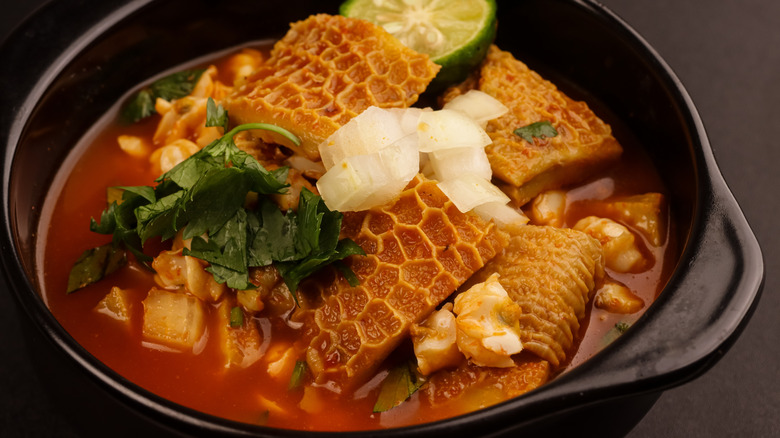
Mexican menudo is one of Mexico's more traditional dishes and often features a slow-simmered stew consisting of beef tripe (cow's stomach), hominy, and a red chili-infused broth. Also called pancita or mondongo, the main ingredient is honeycomb tripe, or the edible muscle lining from the second chamber of a cow's stomach.
The broth for menudo is often made with beef bones and tripe, and is sometimes enriched with pig's trotters (or pig's feet). Scented with onion, garlic, bay leaves, ground cumin, and Mexican oregano, the broth is also spiked with dried chiles — both sweet and fiery — which give the stew a red color and robust sweet-heat. White hominy is also frequently added, giving the stew heft with puffy pockets of sweet corn. There are regional variations, including menudo blanco (white menudo), which is made without the red chiles. Garnishes for menudo include chopped white onion, fresh cilantro, and lime wedges.
Caldo de camarón
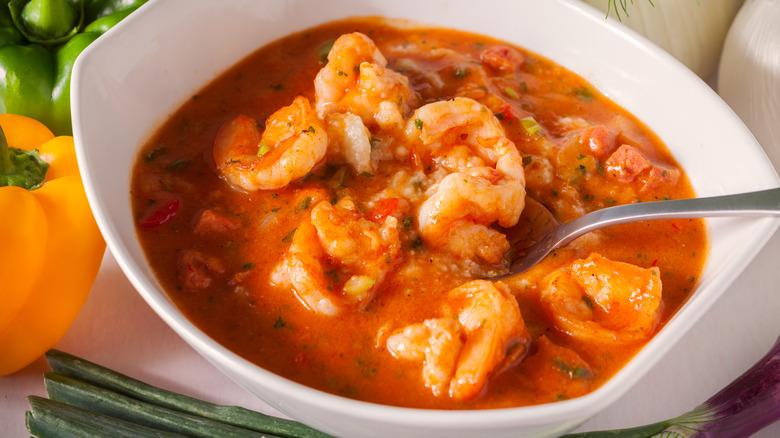
Caldo de camarón translates to shrimp broth or shrimp soup, and it's a traditional Mexican soup boasting plump shrimp and fresh vegetables in a rich, savory broth. The liquid base is often made with seafood or shrimp stock (shrimp stock is made with the shrimp shells), and it's perfumed with onion, garlic, sweet and hot dried chiles, tomatoes, epazote, and bay leaves. There are regional variations, but many recipes include those elements. The chili peppers are toasted before they're rehydrated, which unlocks their essential oils and concentrates their inherent flavor and aroma (smoky, sweet, and fiery).
Popular vegetables in caldo de camarón include potatoes, carrots, zucchini, and corn on the cob. The vegetables are simmered in the shrimp and chili-spiked broth, so they pick up great flavor. To serve, this Mexican shrimp soup is ladled into bowls and topped with fresh cilantro, sliced avocado, and lime wedges.
Sopa de nopal
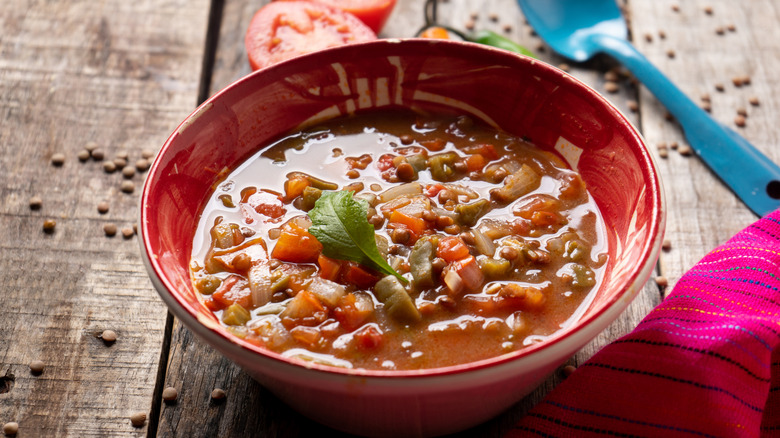
Sopa de nopal, or nopales navegantes (floating cactus pads), is a classic Mexican soup built around fresh prickly pear cactus paddles. The fresh cactus paddles are cleaned, de-spined, sliced or cubed, and cooked by either sauteing or boiling. Once cooked, the cactus is simmered in a rich, herby tomato-based broth. The soup base consists of chicken or vegetable broth, fresh plum tomatoes, onion, garlic, epazote (or Mexican oregano), and cilantro. The cactus is then simmered in the broth until tender and infused with flavor.
There are regional variations to sopa de nopal, including those with guajillo chiles, serrano peppers, jalapeños, mushrooms, black or pinto beans, and green peas. You'll also find the soup enriched with poached eggs, which is traditional in nopales navegantes. To serve, the soup is ladled into bowls and often garnished with sliced avocado, cubed panela cheese, crumbled Mexican cheese, and lime wedges.
Sopa de lima
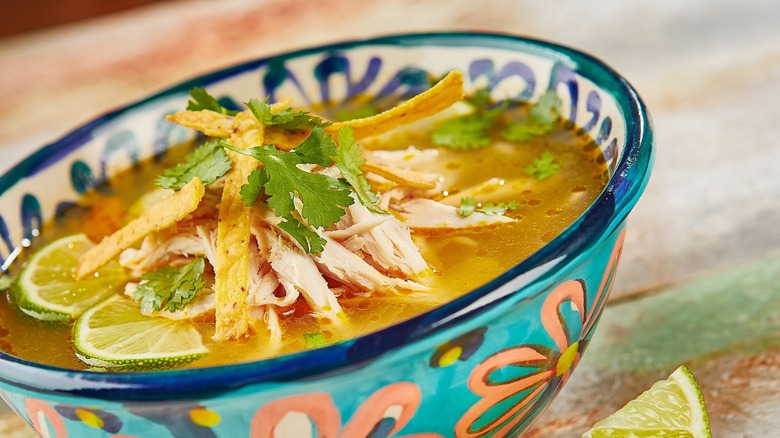
Sopa de lima, or Mexican lime soup, originates from the southern coastal region of Mexico (the Yucatán Peninsula), and it showcases limes in all their glory. The popular soup has Mayan roots and features spiced turkey or chicken in a citrus-forward broth. At first glance, the soup looks like Mexican tortilla soup, but one sip and you'll notice the difference — the broth is frequently scented with grapefruit, onion, garlic, bay leaves, cloves, cinnamon, allspice, and Mexican oregano. There are also versions of sopa de lima with plum tomatoes and peppers like Hungarian wax, Anaheim, poblano, or green bell peppers.
In some recipes, the soup is amped up with sofrito, a blend of roasted garlic, tomatoes, and seasonings. Once the turkey (or chicken) is cooked in the broth, it's pulled apart, shredded, and returned to the pot with the sofrito. To serve, sopa de lima is transferred to bowls and topped with fried tortilla strips, fresh cilantro, diced avocado, and lime wedges.
Caldillo Duranguense
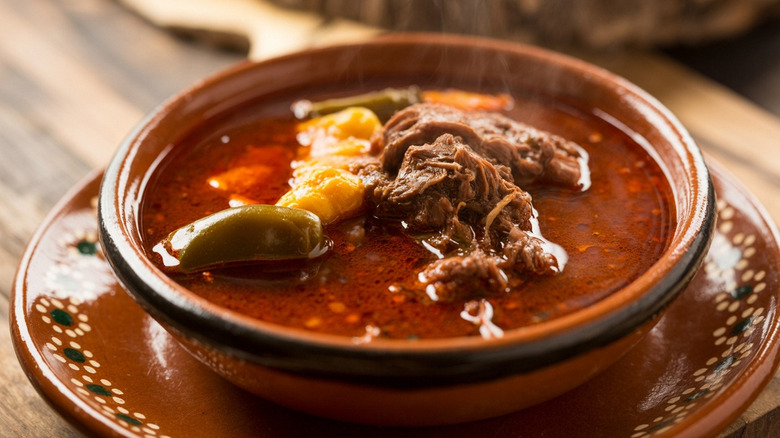
Caldillo Duranguense is a traditional beef stew from Durango, Mexico. While you likely won't find the dish on a restaurant menu, it's often made by home cooks, especially abuelas (grandmothers). The core ingredients for caldillo Duranguense are beef chuck, chiles, tomato, onion, and garlic. The beef and chiles are simmered in a rich beef stock that's also scented with ground cumin, salt, and pepper.
The chiles give caldillo Duranguense its distinctive flavor, and some versions combine dried and freshly roasted peppers. The first is chile pasado, or green chiles that have been roasted, peeled, and dried. This ingredient isn't easy to find, even when shopping in Mexico, as it's not readily available outside of northern Mexico. The second is freshly roasted poblano chiles. The pasado chile delivers a smoky, earthy flavor and meaty texture, and the fresh roasted poblanos are subtly sweet, smoky, and juicy. When married in the broth, the chiles bring incredible complexity to the soup. To serve, the soup is ladled into bowls and topped with fresh cilantro and lime wedges.
Caldo de queso
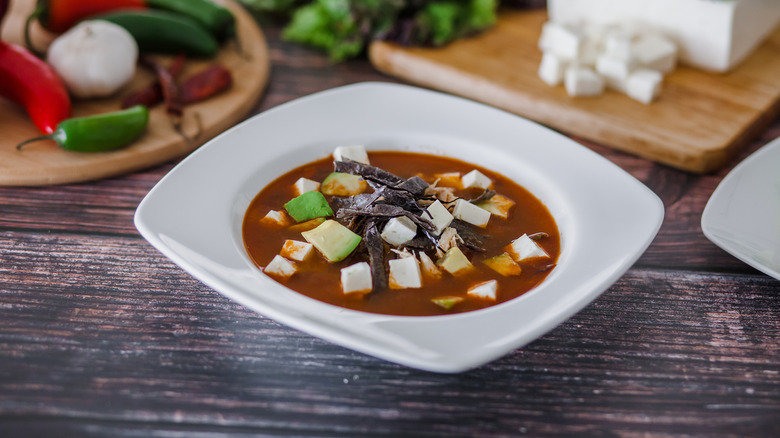
Caldo de queso is a beloved Mexican cheese soup from the Sonoran (northern) region of Mexico. The dish features a satiny, milky broth that's brimming with roasted chiles and cubes of cheese. The creamy chicken broth base is often scented with onion, garlic, cilantro, and Mexican oregano. In many cases, the soup is fortified with chunks of tender potatoes.
What makes caldo de queso unique (and unlike many of the other soups on this list) is the marriage of chiles and fresh cheese. The chiles are typically roasted Anaheim peppers (or Hatch chiles or poblano peppers), and they lend a deep, smoky nuance to the soup. The cheese is queso panela, a firm, non-melting, cow's milk cheese that holds its shape in the hot broth (think paneer or halloumi). When queso panela isn't available, queso fresco is often substituted. When serving, caldo de queso is sometimes garnished with fresh avocado and fried tortilla strips.
Sopa tarasca
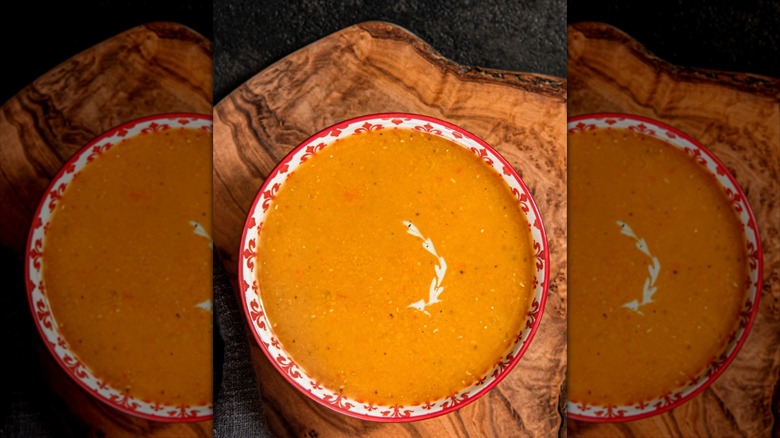
Sopa tarasca is a traditional Mexican bean soup from the state of Michoacán. The soup base is often a simple blend of water, chicken stock (or chicken bouillon), onion, garlic, and bay leaves. In some cases, marjoram and thyme are also added. The broth is further enhanced with roasted plum tomatoes and mildly fiery ancho chiles (dried poblano peppers). The roasted tomatoes add sweetness, and the ancho chiles add notes of raisin, coffee, and chocolate, with subtle smoky undertones.
The heft of sopa tarasca comes from cooked beans, and pinto beans are the common choice. The beans are pre-cooked and then added to the pot to finish cooking in the flavorful broth. The soup can be served either with the beans in their whole form, or it may be pureed until smooth and creamy. To serve, sopa tarasca is transferred to bowls and topped with fried tortilla strips, sliced avocado, crumbled Mexican cheese, Mexican crema or sour cream, and a piece of fried ancho chili.