

Menudo Vs Pozole: How The Iconic Mexican Soups Are Different
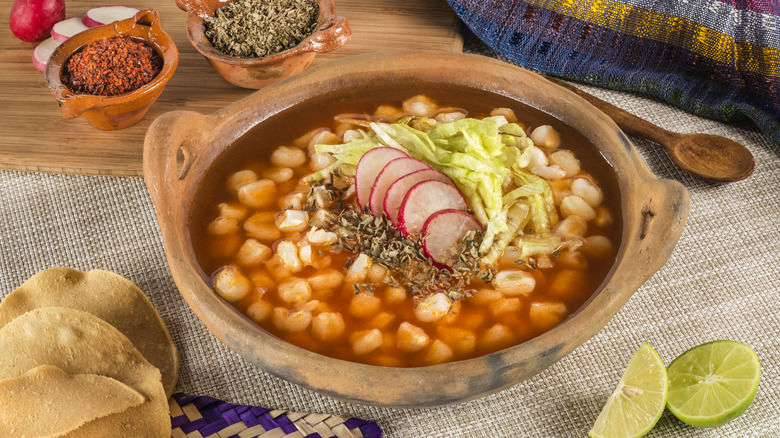
If you've never had the pleasure of eating menudo or pozole, it might be difficult to distinguish one from the other. Both soups feature vibrant hues of red or green broth studded with tender meat, served with a veritable buffet of garnishes perfect for customizing each soup to your liking. As a professional chef who grew up in San Diego and has lived in Los Angeles for a decade, I've been fortunate enough to eat a wide array of both pozole and menudo over the years on both sides of the border. While I do have my own personal favorite, both soups are a labor of love and a delicious expression of the regions, culture, and ingredients that go into each one.
Pozole's pre-colonial roots date all the way back to the Aztecs, while menudo is a dish that stemmed from the need to feed and celebrate community with what little they could afford, making the most of offal as a more affordable protein. The two key differences between pozole and menudo come down to the protein choice and the use of hominy, called maíz cacahuacintle in Spanish. Essential to Mexican cuisine, hominy is kernels of corn that have been dried and then soaked in an alkaline solution, usually with calcium hydroxide. Pozole always includes hominy, while the use of hominy in menudo is more optional, typically seen in menudo made in Nuevo León, Coahuila, Durango, Chihuahua, and Sonora. A menudo in Northern Mexico is likely to include hominy, while central and southern Mexican menudos are less likely to use maíz cacahuacintle.
The difference comes down to meat and chiles
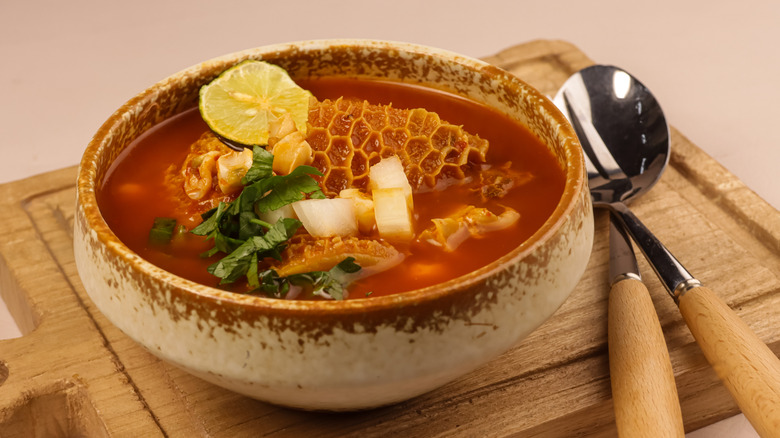
In terms of protein choice, the main signifier of menudo is the use of beef tripe, which is easy to identify thanks to its signature honeycomb texture. Menudo is also sometimes called pancita in central Mexico or mondongo in southern Mexico. Pozole, on the other hand, is usually made with pork, chicken, or sometimes beef, but you'd be hard-pressed to find a traditional pozole made with cow's stomach.
To make things even more confusing, there are three main types of pozole and two main types of menudo, all relating to color. The two most popular types of pozole are pozole verde (green) and pozole rojo (red), while pozole blanco (white) is less commonly seen. The names come from the color of the chiles that are used for the broth, while pozole blanco remains white due to its absence of colorful chiles, relying instead on onion, garlic, and meat to flavor the broth. Pozole rojo usually has a blend of pasilla, guajillo, ancho, and arbol chiles, while pozole verde relies on tomatillos, poblanos, jalapeños, and serranos for its verdant hue.
Menudo rojo is much more common, usually seen in Guadalajara as well as Northern Mexico, compared to its pale sibling, menudo blanco, seen in Sonora and Sinaloa, which also lacks red or green chiles in the broth. Many Mexican restaurants will only offer menudo on the weekends due to the lengthy and laborious cooking process, and similarly, it's made in Mexican households on weekends or for special occasions.
Half the joy of eating both soups is the customization of toppings
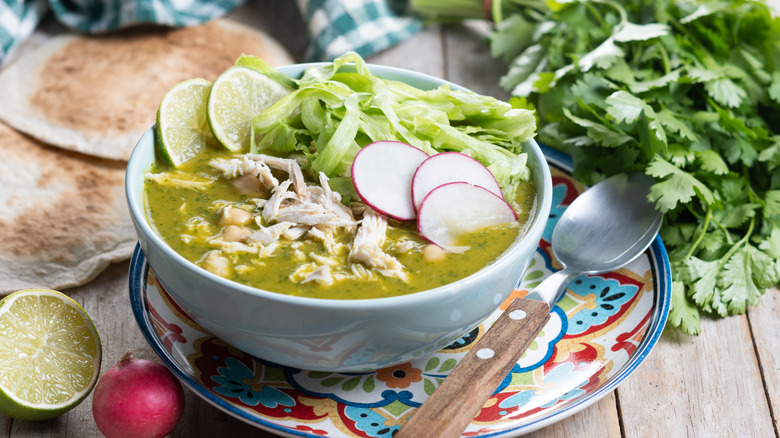
When it comes down to how the soups are served, it's all about the accompaniments. Both soups are usually ladled into a large bowl, then handed off to the eater to top with their own garnishes. Pozole typically includes limes, sliced radishes, chopped white onion, shaved green cabbage or iceberg lettuce, dried oregano, and another dried spicy ground chile, along with fresh, warm tortillas (corn or flour depending on the regionality) and sometimes tender queso fresco and slices of ripe avocado.
Menudo is commonly served with mint, cilantro, limes, white onion, more crushed chiles, and dried oregano, and is also usually served with warm corn tortillas. It's important to keep in mind that, as with all "traditional" soups from all over the world, there are massive variations in ingredients and accompaniments, depending on both regionality and who actually makes the soup, as many recipes have evolved with generations of cooks in a single family.
Growing up in San Diego, I spent many holidays in Mexican households eating late-night pozole that'd been simmering on the stove for hours upon hours while the festivities carried on. While not always made for this purpose, both pozole and menudo are well-known hangover cures in Mexican culture and are frequently eaten for breakfast. A bowl of brothy, spicy, meaty soup with fresh lime and assorted toppings may not eliminate a hangover entirely, but it will bring a bit of life back into you, especially when paired with an ice-cold michelada.