

Antique Dealers Can Spot Authentic Vintage Copper Pots Just By Looking At The Lining
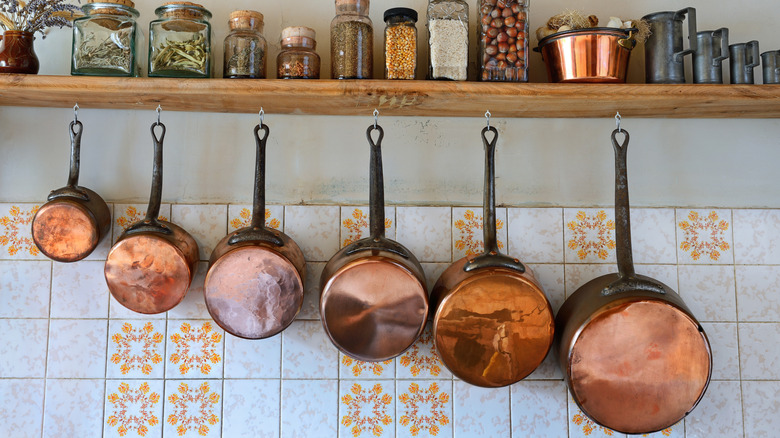
Copper pans are one of the staples of vintage kitchens, adding an instant rustic charm to the room. But if you want to add one to your collection, it might be worth knowing whether it's truly a vintage piece or a more modern product. According to antique dealers, the best way to spot the difference is looking inside.
Modern copper pans are lined with stainless steel, whereas vintage copper pans are lined with tin (or less commonly with nickel or silver). The shift towards stainless steel lining began around the 1960s and 1970s, so this can give you some idea as to the age of your pans.
You will of course need to know how to spot the difference between the two materials. Tin has a bright and shiny appearance when new, which darkens to a deep gray with age. Tin linings were traditionally hand applied, so you should be able to see wipe marks in the texture. Stainless steel can often be identified by the circular machine markings, and will be a shiny silver color regardless of age.
The structure of the pan will also yield very helpful clues as to the material. If you look at the rim of the pan you should see a clear defining line where steel and copper were sandwiched together. Tin linings on the other hand tend to come up over the rim, so the rim itself will be coated in tin.
The pros and cons of tin-lined copper
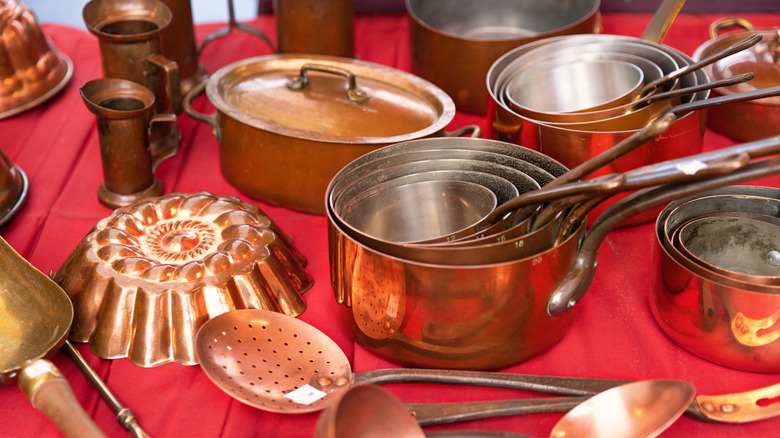
If you're hoping to identify the age of your copper pan to know if you have a valuable piece of cookware on your hands, don't get your hopes up too soon. Older copper pans aren't necessarily worth more –- it often comes down to factors like the maker, the quality, and the condition.
However, there are plenty of practical reasons you might want to know if your pan is lined with tin or stainless steel. Almost all copper pans have a protective lining, and there are pros and cons to each. Tin is more conductive than stainless steel, offering better heat control, which is one of the key attractions of copper pans. Tin offers a non-stick surface and is a non-reactive metal, so you can cook acidic foods without the worry of leaching.
The main downside to tin is that it does wear down over time, and once you can see the copper beneath, it shouldn't be used for cooking. Vintage copper pans can be retinned, but it's a specialist service that can be expensive. Extending the life of your tin-lined pan also means taking a little more care than with stainless steel. Stick to wooden or silicon utensils rather than metal ones, and be prepared to always handwash.