

Why Cooking On Flat-Top Grills Can Leave Meats Disappointing In Flavor And Texture
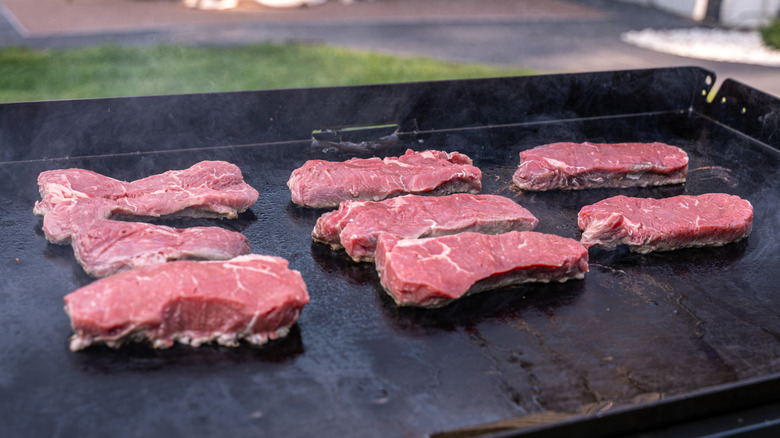
A backyard flat-top grill makes it easy to cook for a crowd without smoking up the kitchen. But think twice before dropping a steak onto a hot griddle, because you'll be missing out on the restaurant-quality steak secret of butter basting. This technique simply involves spooning sizzling butter over a cut of meat like a steak while it cooks in a pan. As the butter melts off the top of the meat, you tilt the pan to collect the fat, spoon it back onto the steak, flipping as you go for even coverage. Repeat until the sear is golden brown and even across the entire steak surface. Among other disadvantages of flat-top grills, their design means there's no pan to tilt for collecting and spooning out melted butter.
Ever flipped a "perfectly" seared steak just to find patches of grey meat in between the lovely browned spots? Flipping and basting with butter helps cook the steak on both sides at the same time. Hot butter gets into pockets untouched by the cooking surface, providing uniform browning. The protein content in the butter browns up as well, slicking the entire steak in an even more golden color than could be achieved via hot griddle alone. Adding some aromatic herbs and garlic takes it over the top, infusing the butter with their flavor, and using that flavored fat to coat every bite of steak. But with a flat-top, covering the whole steak is a more arduous task, and a steak grilled on it might end up being much drier and much less flavorful.
Buttery results without a spoon and a pan
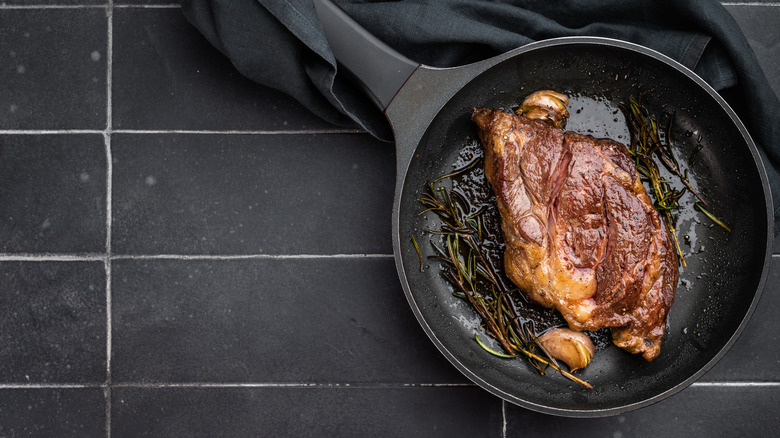
Don't throw out your griddle and cancel your 20-person steak feast just yet. There are workarounds that can keep you from losing out on all the butter-basted goodness, even if you're not planning on searing one steak on your pan at a time. The evenly-dispersed high-heat potential of a flat-top grill can absolutely make for some seriously seared steaks. Help that heat hit 100% of the steak surface by weighing down the meat with a chef's press, which is something every home cook really should have (though a cast iron skillet or a brick wrapped in aluminum foil can also work).
Once that steak has a nicely-browned crust, butter can still be brought on for a luscious, creamy finish. Either melt the butter with the aromatics and spoon it across the plated steak, or serve the steak with a dollop of slowly melting compound butter. Compound butter is simply softened (not melted) butter mixed with herbs, spices, or any flavoring you like. Use this simple method for making compound butter the next time you'd like to try it on your steak.