

The Popular Cracker With Roots To A Forgotten American Bakery
If you're of a certain age, there's a fairly good chance you've eaten Ritz crackers straight from the sleeve, crushed them over an old-school casserole, or stacked coins of pepperoni on top. Those oh-so-buttery round crackers have been an American snack-time staple since the 1930s. But their origin story begins a little earlier, in a Midwestern bakery most Americans have never heard of. Before Nabisco introduced the Ritz cracker in 1934, the Jackson Cracker Company of Jackson, Michigan, made a similar round cracker called the Jaxon. The company was acquired by Nabisco in 1919, and many believe it gave the national baking company access to a prototype that eventually became one of America's most beloved crackers.
The Jackson Cracker Company operated in Michigan in the early 20th century, when regional bakeries supplied their communities with a variety of goods, including crackers and biscuits. As you can imagine, the history of Jackson is much less thoroughly documented than Nabisco, but accounts of Michigan's food history identify this cracker as a predecessor to the Ritz.
The American food industry was developing rapidly at this time, so only larger companies had the manufacturing capacity and distribution networks to bring regional products to a much larger market. But Nabisco waited 15 years before introducing the Ritz cracker, and by then, the country was deep in the Great Depression. It was a risky time for the company to market an affordable snack that felt indulgent, but it was a risk that paid off.
We can also thank Ritz crackers for mock apple pie
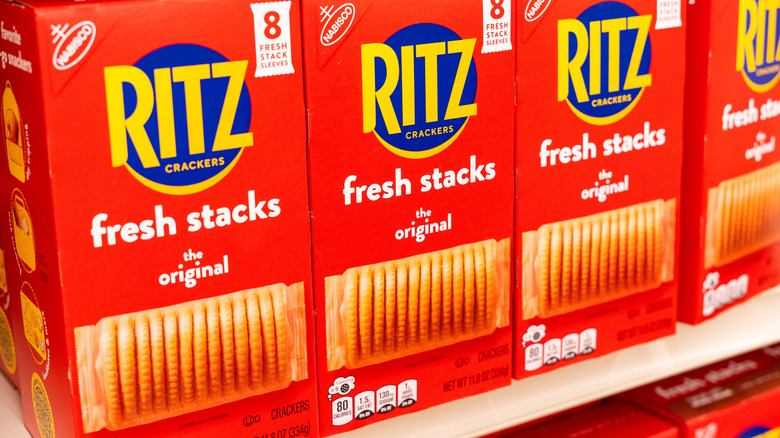
We can thank a Nabisco employee named Sydney Stern for coming up with the name and its distinctive blue-and-yellow branding. Tasked to come up with a catchy brand that could compete with rival cracker Hi Ho, Stern was given just one weekend to brainstorm. Inspired by none other than the luxury associated with the Ritz hotels, the name suggested elegance without the expense. Indeed, a box cost just 19 cents when the crackers were launched, which made them an accessible little treat when other goodies like chocolate and ice cream were out of reach financially. Their buttery flavor, crisp texture, and scalloped edges quickly made them favorites in the American pantry.
Ritz is also credited with introducing the "mock apple pie" during this time — an apple-free recipe that used the cheap crackers as filling when the fruit was in short supply. But that was just the beginning. Throughout the years, inventive cooks have come up with all kinds of creative ways to use the Ritz cracker, including meatloaf, chicken breading, and topping mac and cheese dishes.
The original Jaxon cracker has largely faded from public memory, and Nabisco's cookies and crackers, including Ritz and Oreo, are now part of Mondelēz International, which focuses on global snacking brands. That kind of conglomeration has led to many fans' complaints about the quality of Ritz crackers, claiming they're too bland and dry. So perhaps the next time you open a fresh stack, you'll remember their Michigan roots.