

6 Tips For Cooking Your Steak Over A Live Fire
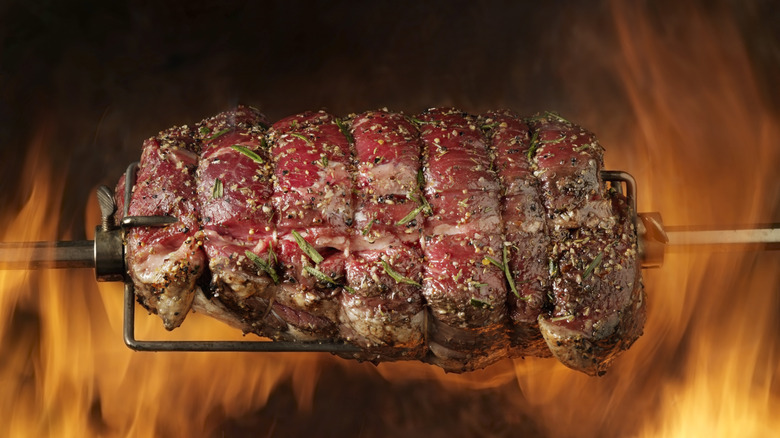
In case you missed it, live-fire cooking is the "hottest" restaurant trend at the moment. Though it's how humans have cooked food since the dawn of time, adopting the practice at home can seem a little intimidating, whether you're concerned about temperature control or just wary of handling a flame.
Because live-fire cooking can do so much to enhance the flavor of a food — especially when it comes to steak — we decided to chat with Curtis Stone, owner and head chef at Gwen, a live-fire restaurant in Los Angeles, to get his tips on cooking steak over a flame. Stone emphasized the accessibility of live-fire cooking, saying that you don't need an expensive kitchen or fancy equipment to execute it well. Want to cook a perfect steak the way your earliest ancestors did? Stone was full of tips — check out his advice below.
Temper your steak before cooking it over a live fire
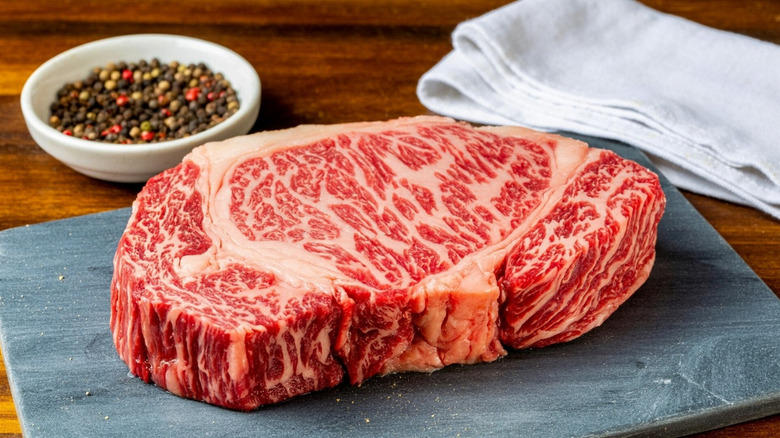
When we asked Curtis Stone for his tips on cooking steak over live fire, as well as common mistakes home chefs should avoid making, his first answer was immediate: "You have to temper your meat, so it can't come straight from the fridge." Letting that steak come close to room temperature is crucial to achieving an even cook all the way through.
There isn't really a one-size-fits-all formula to follow, as ambient kitchen temperatures can vary widely, but Stone offered a couple of pieces of advice. He was careful to note that thicker cuts of meat will take a longer time to come up to room temperature, so home cooks should plan accordingly. Additionally, he recommended using a wire rack when tempering your steak, so it's exposed to ambient temperature on all sides. Once the steak is about room temperature, pat it dry, and you're ready to go.
Season your steak before cooking it
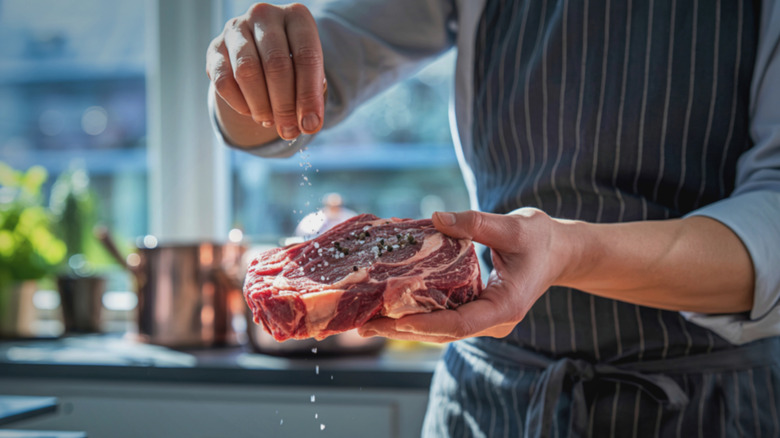
This is a general rule that applies to many proteins, but we'd be remiss not to mention it here: Season your steak before it hits the grill. This is integral to achieving a fuller flavor in your end product; as Curtis Stone told us, "You want that seasoning to dissolve."
As far as how to season your steak, refrain from going overboard. Remember, a big advantage to cooking over live fire is the flavor the method imparts to your protein. You don't need to worry about adding much additional flavor to your steak, and you won't want to risk spices burning over the flame. Stone keeps it simple, and seasons the meat only with salt. He even said, "I don't season with pepper when I cook on a grill." This is a classic case of "less is more," and following this protocol will give you a flavorful steak full of the signature smoky flavor that live fire gives a protein.
Use high heat and rest the steak between sears
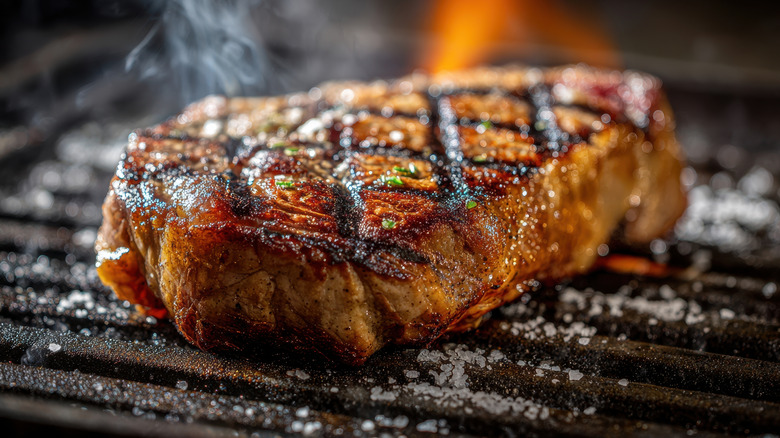
Once your meat is tempered and seasoned, it's grill time! Curtis Stone shared a couple of tips that help him get the perfect cook on a steak every time, and the first will likely already be common practice for home chefs: Make sure you start with a hot grill. "You want that Maillard reaction, you want that caramelization, so you've got to have your grill stoked nice and hot," he said.
Because you'll be working with a hot grill, Stone's next tip was all about how to cook your steak through without burning the outside. "We take [the steak] from the grill onto a rack, and we'll let it rest for five minutes in between searing." He explained that this allows the heat to transfer through the steak slowly without compromising that exterior caramelization, and he recommends doing this cook-rest process a few times as you're grilling your steak.
Don't let the fire flare on the meat
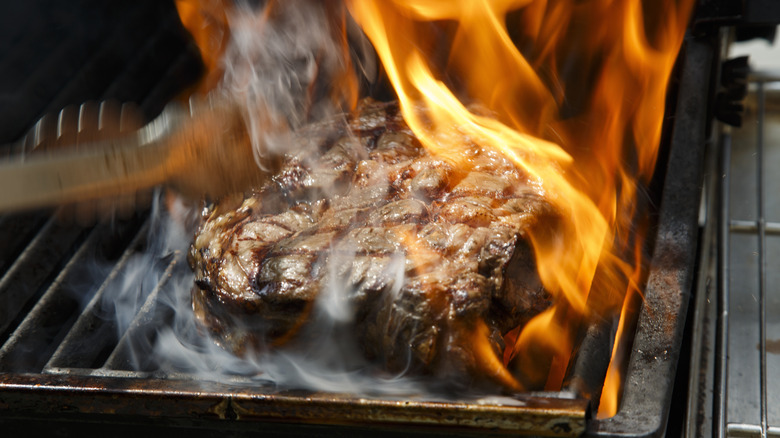
While you definitely want your grill to be hot, you don't want the flames to come in direct contact with your steak — Curtis Stone explained that this "will sort of singe the meat and you'll get bitterness from it." Flames are more likely to flare when you're cooking a steak high in fat, as the fat renders and drips onto your heat source, so you'll especially want to watch out for this if you're cooking a fatty cut.
So, what should you do when a flame inevitably does flare? Stone has a couple of recommendations. First, he said it's wise to have a squirt bottle filled with water available; you can use it to put the flame out when it flares. Another option is to continually move your steak around the grill. "Let it flare up at the back and then bring it to the front, and once it flares there, you move it again," he said. If your grill isn't overcrowded, this is a pretty easy way to keep your steak from over-charring.
Don't rush the process
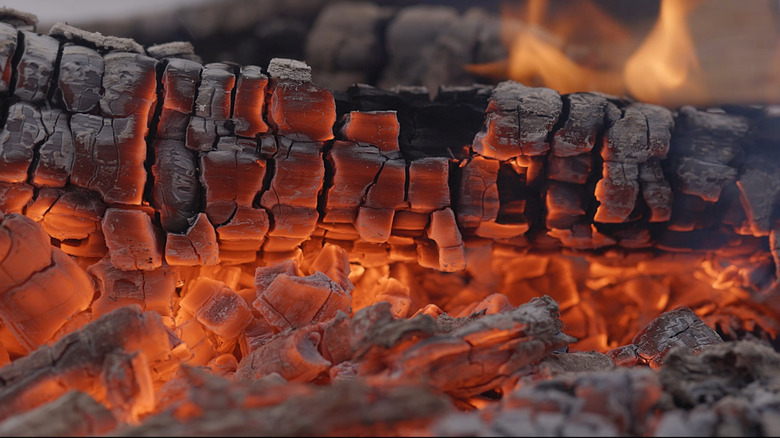
If you don't have much experience cooking over live fire, keep in mind that it takes longer than other cooking methods. Curtis Stone said that it's easy to underestimate the amount of prep time it takes to cook over live fire — first you have to burn the coals, then you have to let them die down. "Even that process alone ... could be an hour," Stone said.
Assuming you want the best possible results from your cut of steak, it's crucial that you don't rush this process, partially because of the common faux pas that we just talked about: letting the fire flare directly onto the meat. If you don't give your coals time to burn down after flaring, you risk singeing your steak. And if you try to put your steak on before the grill has flared at all, you won't get that caramelization from the Maillard reaction. All of which is to say, maybe don't plan to grill on a busy day — leave yourself enough time to heat up the grill properly and manage any hiccups you may encounter along the way.
Pair it with vegetables that char well
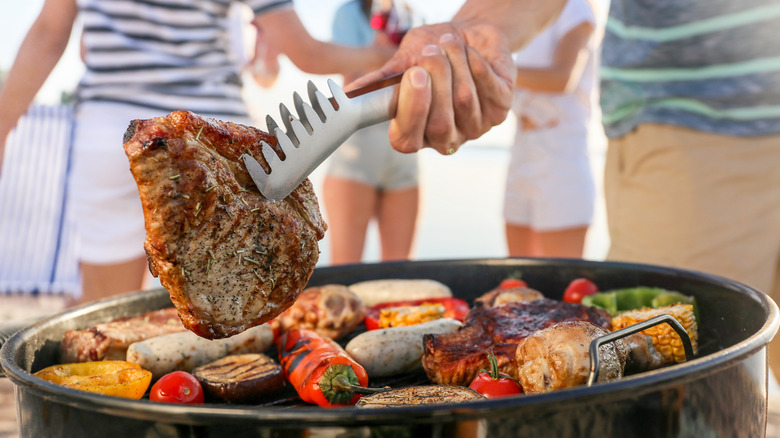
Last but certainly not least, don't serve your steak solo — you've just spent all that time heating up the grill, so it's wise to get as much use out of it as you can! Pair your steak with vegetables. You're not very limited here; Curtis Stone says, "Anything that chars well will be delicious over a live fire," and he particularly mentioned asparagus, zucchini, and broccoli.
Stone also said that there's some more room for creativity when it comes to using live fire to cook vegetables. If you're dealing with smaller vegetables, he recommends buying a wire mesh basket, so they don't fall through the grill grates. But he also had some fun tidbits of advice for cooking certain vegetables: "You can even wrap a cabbage and nestle it into the coals. You can cook peppers directly on the coal." How you cook your veggies is up to you, but the char they can get from a grill will make them a gorgeous pairing for your perfectly-cooked steak.