

Persimmons Vs Apples: Which Fruit Is Higher In Fiber And Protein?
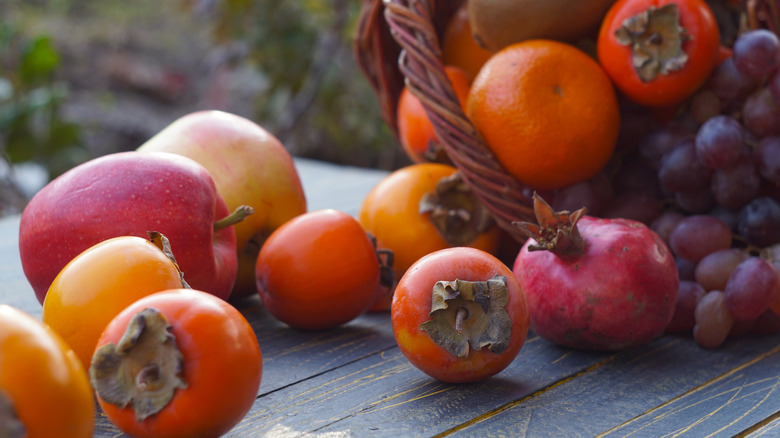
Every autumn, apples get their annual turn in the spotlight, piled high at farmers markets, baked and cidered and candied. But another cool-weather fruit — the glossy, sunset-orange persimmon — deserves some attention. Honey sweet at peak ripeness and either custardy or crunchy in texture, depending on the variety, persimmons have a nutritional advantage over their more familiar orchard companions: They contain both more fiber and more protein than apples.
What is the nutrient profile of a persimmon? According to USDA nutritional data, 100 grams of raw Japanese persimmon contains approximately 3.6 grams of dietary fiber, and 0.58 grams of protein. An equivalent weight of raw apple, skin on, contains 2.4 grams of fiber and 0.26 grams of protein. That means the persimmon gives over twice as much protein, although that distinction needs a little perspective; a single whole egg contains 6 grams of protein, so neither fruit is a significant source of protein, and the actual difference amounts to less than a third of a gram per 100-gram serving.
Fiber is where persimmons really shine. Fiber supports healthy digestion, helps promote feelings of fullness, and can slow the absorption of sugars during digestion. A medium-sized Japanese persimmon provides approximately 6 grams of fiber, a respectable contribution toward the daily recommended intake of 14 grams per 1,000 calories consumed. While apples have their own nutritional merits, persimmons offer an appealing way to introduce another fiber-rich fruit into your diet.
Fuyu for thought
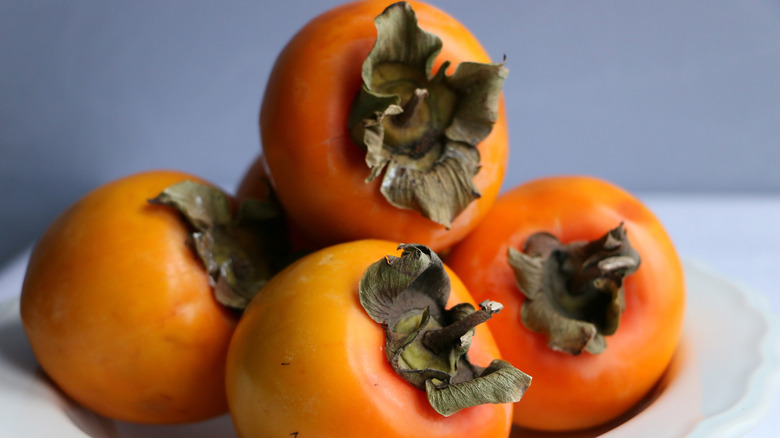
Part of the pleasure of persimmons is learning how to know when a persimmon is ripe enough to eat, because their texture changes dramatically depending on the variety and stage of ripeness. The two Japanese varieties most commonly found in American markets are Fuyu and Hachiya, each with its own charms. Fuyus are squat, almost tomato-shaped fruits that can be eaten while firm, with a nice crunch reminiscent of an apple, and a mellow, honeyed sweetness. Left to soften, their flesh becomes increasingly silky. They're excellent sliced into winter salads with bitter chicories and salty cheese, or simply eaten out of hand.
Hachiyas, meanwhile, are elongated and acorn-shaped, with a temperament that requires more patience. Their high tannin content makes them inedibly astringent until completely ripe, when the flesh is soft enough to scoop with a spoon. At that stage, their sweetness develops notes reminiscent of apricot, or like an apple that's been baked with cinnamon and brown sugar. They're wonderful, and well suited for panna cotta, cakes, and adding flavorful depth to other autumnal desserts. Pureed, they can even bring seasonal elegance to bourbon cocktails. The difference is important in choosing a persimmon for a recipe: a firm Fuyu will hold its shape sliced or bruised, while a fully ripe Hachiya is better incorporated into batters and purees.
Their relatively brief season makes fresh persimmons something to look forward to as autumn progresses. If you've never tried one, start with the firm Fuyu, slice it like you would an apple, and enjoy discovering why this fruit deserves a place in your fall harvest basket.