

The Traditional Amish Apple Pie Variation Worth Seeking Out
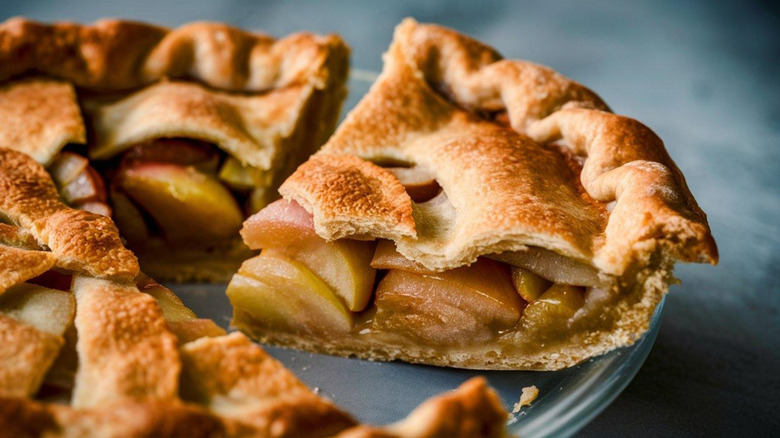
Something about a chill in the air and leaves on the ground signals that it's apple pie time, and that siren call only gets stronger as we near the holidays and want a crowd-pleasing pie to put out for guests. This year, if you want to try an unforgettably delicious apple pie variation — and who wouldn't? — seek out something called snitz pie. Especially if you're in the vicinity of an Amish community.
Snitz pie is one of the Amish baked goods everyone should try once, though we're willing to bet anyone who tries it will be coming back for seconds and thirds. It's a favorite among the Amish community, often enjoyed after Sunday services, and it likely originated in Pennsylvania's Lancaster County, the largest Amish region in the U.S. Though it was likely being eaten for years before this, Snitz pie's recipe appeared in the cookbook "Pennsylvania Dutch and Their Cookery" in 1935.
It's also called "schnitz pie"; "schnitz" is the Pennsylvania Dutch term for "dried apples." That's the key difference between snitz pie and the apple pie you're likely familiar with. This one starts with dried apples, which are then rehydrated, milled, and stewed into an almost paste-like consistency. Instead of whole apple pieces, it's more like pecan or pumpkin pie filling. This concentrates the apple flavor, as well as spices used like cinnamon and cloves, and delivers it in a rich, creamy bite. Plus, snitz pie gets a top crust, too, so the apple filling is sandwiched between layers of buttery, crispy, flakiness.
How to make snitz pie
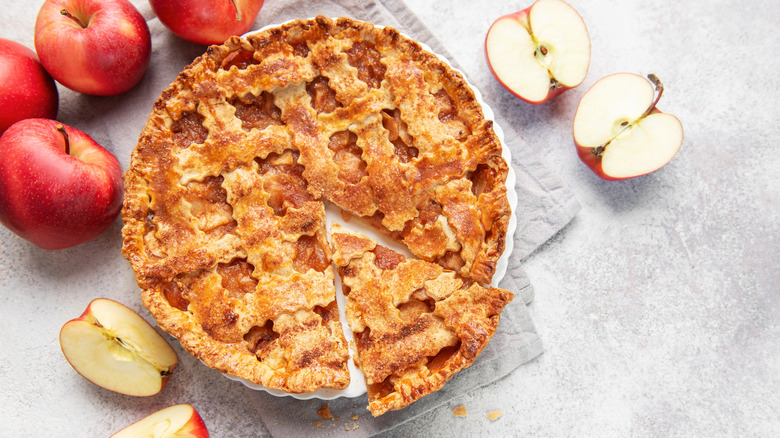
If you're looking for one of the best fall dessert recipes to make for a family gathering or a special weeknight, bake your own snitz pie — especially if you don't happen to live anywhere near where an Amish farm stand or bakery might be.
You can buy dried apples or make your own with a dehydrator, using peeled, thin apple slices. Soak those dehydrated slices in water in a pan for a few hours, then heat on your stovetop for 20 to 30 minutes to stew them. Next, you'll need to mash them, which you can do with a ricer, food processor, or by hand-pressing them through a colander. After you mix this apple paste with sugar and spices such as cinnamon, nutmeg, ginger, allspice, and/or cloves, it gets poured into an unbaked pie crust, topped with another layer of unbaked pie crust, and baked.
You can further upgrade snitz pie by creating a design for the top crust and adding subtle flavors to the filling with vanilla, almond, or lemon extract. Butter, however, is of utmost importance, as it's one of the reasons Amish baked goods taste so good. Amish bakers use compound butters, which you can make, too, by adding in elements for other flavors. For snitz pie, try mixing in a bit of apple or pumpkin butter. With or without these extra steps, you'll have a rich, buttery, tart, and sweet apple-y delight.