

One Cup Of This Cheese Has More Calcium Than A Glass Of Milk
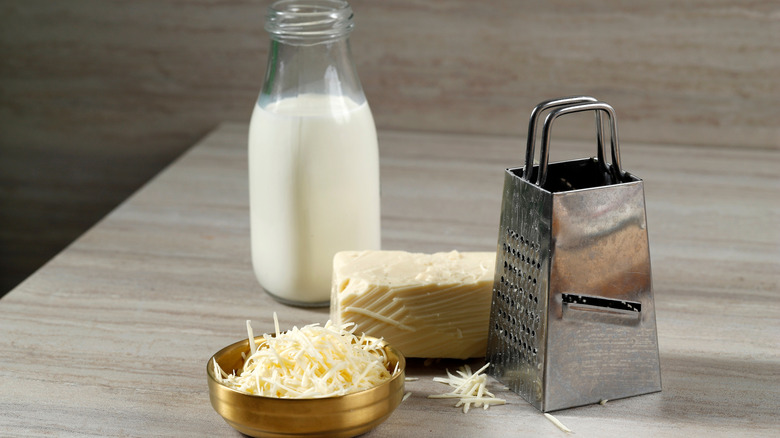
Every '90s celebrity worth their salt nabbed a spot in a Got Milk? ad, and they (plus, you know, doctors) will all tell you the same thing: Calcium is crucial to your health. It keeps bones strong and also supports nerve and muscle function. A glass of milk is a quick way to add more calcium to your diet, but unless you're a toddler, it's probably not your drink of choice. Instead, reach for creamy, stretchy mozzarella, because there is way more calcium in a cup of this cheese than there is in a cup of milk.
The National Institutes of Health recommends that adults aged 19 to 50 get 1,000 milligrams of calcium each day. The NIH also explains that foods with a higher fat content contain less calcium. It reports that a cup of nonfat milk contains 316 milligrams of calcium, while a cup of whole milk (with 3.25% milkfat) contains 276 milligrams. Comparatively, a one-ounce serving of part-skim mozzarella cheese contains 207 milligrams of calcium.
To put that into perspective, let's compare the two cup-for-cup. As measuring ingredients correctly can make a big difference in the kitchen, it's worth noting that a liquid cup of nonfat milk has 299 milligrams of calcium, while a dry cup of part-skim mozzarella cheese has 826 milligrams.
Why does mozzarella cheese have more calcium than milk?
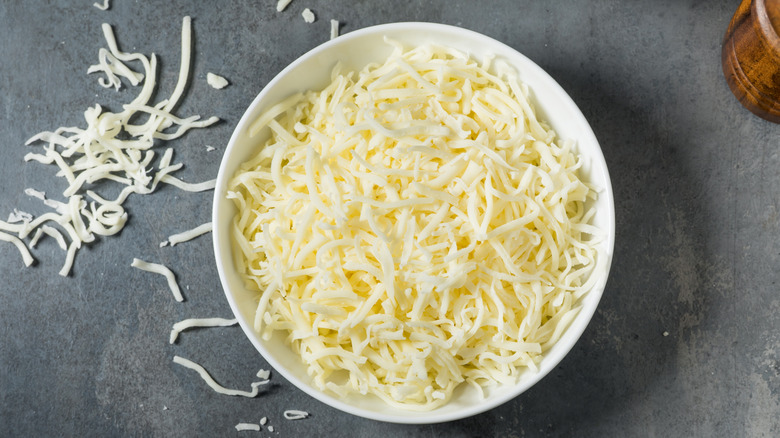
Calcium isn't just important for your bones: It plays a crucial role in turning milk into mozzarella cheese. Calcium enables the cheese curds to be stretchy and giving mozzarella its hallmark texture. The right amount of calcium will give your pizza an epic cheese-pull, while too much calcium means the cheese won't melt as well.
The amount of calcium in a dairy product depends, in part, on how much moisture is included. A hard cheese like parmesan (one of the most nutrient-dense cheeses on all fronts) has 314 milligrams of calcium per one-ounce serving. While a softer and more moist cheese like part-skim mozzarella, takes around 1.5 ounces to get you the same amount of calcium. Eight fluid ounces of milk weighs about 8.6 ounces, so one ounce (by weight) of milk contains 36.7 milligrams of calcium. Removing water from milk in the cheese-making process concentrates the calcium, so the more water you remove, the more concentrated the calcium content becomes.
It's important to note that mozzarella cheese doesn't just have more calcium per serving than milk. Skim milk has 4.9 milligrams of cholesterol and 129.85 milligrams of sodium per 8 ounce serving, while part-skim mozzarella has 15.31 milligrams of cholesterol and 149.69 milligrams of sodium per one-ounce serving. It is also worth noting that nutrition labels measure total calcium, and don't take bioavailability into account. Dairy foods like milk and cheese have a calcium bioavailability of around 30%, which means that of the 300 milligrams of calcium in a serving, the body absorbs only about 100 milligrams.