

Not Poaching, Not Boiling: The Secret To Ina Garten's Popular Chicken Salad Uses The Most Flavorful Cooking Method

Chicken salad is a humble dish with an impressive capacity for reinvention, and Ina Garten has a firm opinion about how the chicken should be cooked. Not boiled, not poached, but roasted in the oven. Garten swears by roasting chicken breasts for her Chicken Salad Contessa, a favorite at the specialty-food shop she operated in the Hamptons. With sweet grapes, toasted nuts, and fresh tarragon folded into a creamy dressing, it's a rather luxurious interpretation of a lunch counter staple where the chicken is the star.
Garten has explained her preference for roasting over boiling, citing both the ease of the method and its superior flavor. In an interview with Epicurious, Garten says that years of refining her recipes had taught her to prioritize flavor while simplifying the cooking process. Boiling chicken, she found, pulls the flavor out of the meat and into the cooking water, whereas roasting simply produces better tasting meat with less fuss.
There's some useful chemistry behind that technique. As chicken cooks in the dry heat of an oven, its surface undergoes the Maillard reaction, in which amino acids and sugars react to create the savory aromas we know and love in roast meat. Poaching chicken, meanwhile, surrounds the meat in hot water; poached chicken can be beautifully tender, but it won't develop that deliciously flavorful roasted character.
The breast of both worlds
Garten uses bone-in, skin-on chicken breasts, which need a little longer to cook than their boneless counterparts, but it's worth it. The skin provides a layer of insulation that slows moisture loss from the lean breast meat, preventing the chicken meat from getting dry, and the bones can impart a subtle depth of flavor. She seasons before roasting at 350 degrees Fahrenheit, then removes the skin and bones after cooking, leaving behind tender, flavorful meat. It's a sensible foundation for a salad whose other ingredients will provide plenty of moisture and freshness.
Garten's salad owes some of its appeal to the interplay between roasted chicken and the ingredients historically associated with elaborate luncheon salads. Grapes and nuts in the creamy dressing nod to the Waldorf salad, and Garten uses both toasted walnuts and pecans. Tarragon gives a faintly licorice-y fragrance, and sour cream adds a pleasant tang to the mayonnaise base. Texturally, instead of the usual celery, the nuts supply the crunch and grapes offer sweet, juicy little bursts.
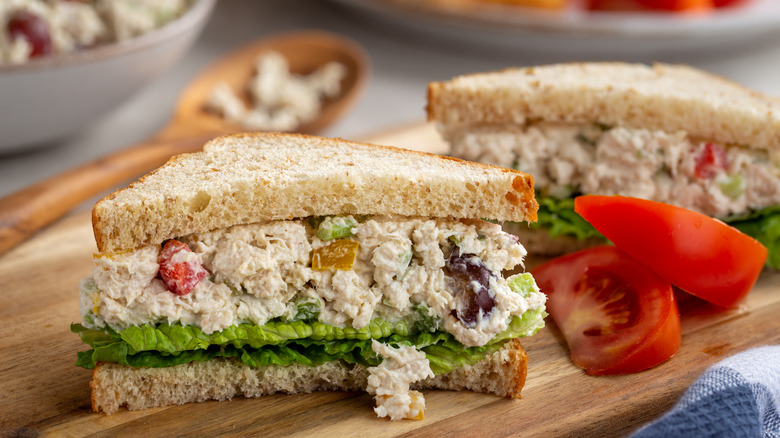
Roasting is also an excellent excuse to make more chicken than dinner requires, since the leftover breasts or thighs can be repurposed for this chicken salad. Garten serves her Chicken Salad Contessa on lettuce leaves, but it would be just as good between slices of toasted bread, or tucked into a croissant. Garten dices cooled chicken into substantial ¾ inch pieces, but smaller pieces or shredded meat would work well for sandwiches, creating more surface area and allowing the dressing to coat the chicken more thoroughly.