

8 Foods That Belong On The Ofrenda Ahead Of Dia De Los Muertos
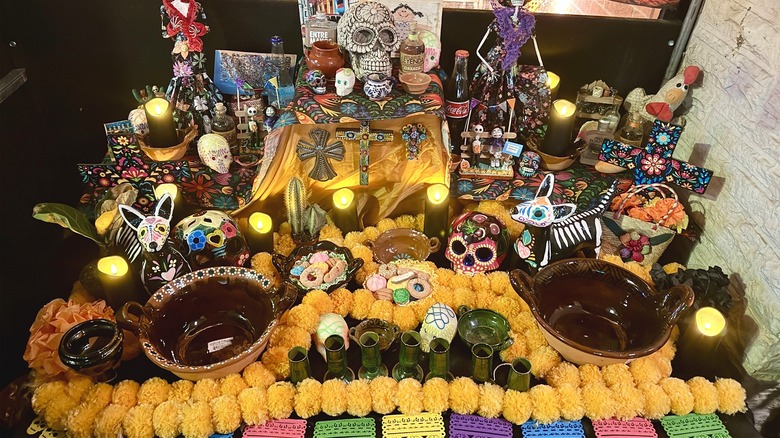
Día de los Muertos, or the Day of the Dead, is a special holiday in Mexican culture. Celebrated on November 1 and 2, the holiday is a chance to honor deceased loved ones rather than mourn them. Part of this honoring is building an ofrenda, an altar or place of offering that is decorated with photographs, flowers, heirlooms, and, importantly, food.
I spoke with expert Diego Iturbide, chief experience officer at Mexico City's Churrería El Moro, who said, "The main idea is to symbolically welcome [our loved ones] back on these days. We believe that their souls come back here to this earth." This sentiment was shared by our other experts, chef Fermín Teco and co-owner Leticia Viveros of Park Slope's Alma Negra.
"We are [one of the] only cultures that celebrate death," said Leticia Viveros. Chef Fermín Teco added that as the days get closer, he is already starting to remember his loved ones and plan for the food he will put out for them. Food has a special place on the ofrenda, as sharing meals and cooking are core parts of Mexican culture. On Día de los Muertos, people celebrate in part by placing food on the ofrenda that their family members loved. In addition, the experts shared with us some foods with a deep history in Mexican culture that are traditionally placed on ofrendas.
Sugar skulls
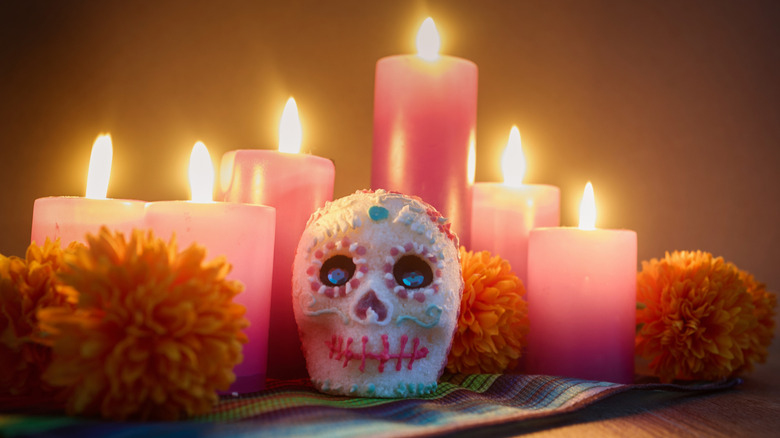
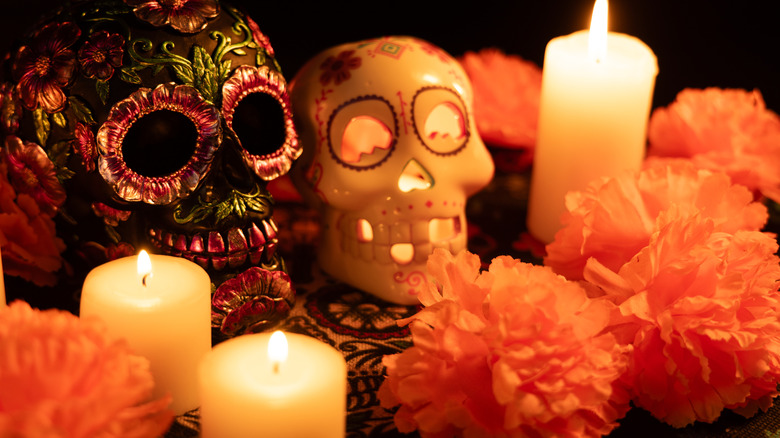
According to Diego Iturbide of Churrería El Moro, sugar skulls are a staple on ofrendas, along with raw sugar cane. "This tradition [of sugar skulls] blends Indigenous roots with the Catholic roots," said Iturbide. "It's been here forever." This is what makes sugar skulls one of the most easily recognizable parts of the Day of the Dead.
As Iturbide notes, the skull is a key example of how Spanish colonization impacted Mexican culture. The Spanish brought over moldable sugar paste, and Indigenous communities used this to form the sugar skulls. In fact, the Day of the Dead is very rooted in a combination of Mesoamerican and Spanish Catholic culture, and many of the foods that are commonly displayed on the ofrenda are representative of this.
Though seemingly morbid, the skulls are a way to acknowledge that death is a natural part of life. Often, they are even made beautiful, with people painting them and having them adorned with bright colors or murals. The skulls are made of sugar, meringue powder, and water, so the ingredients are simple, but the decoration is what tends to make them more intricate. According to Iturbide, the goal of beautiful sugar skulls landing on the ofrenda is to embrace your dead family members and simultaneously celebrate life.
Orange blossom flavor
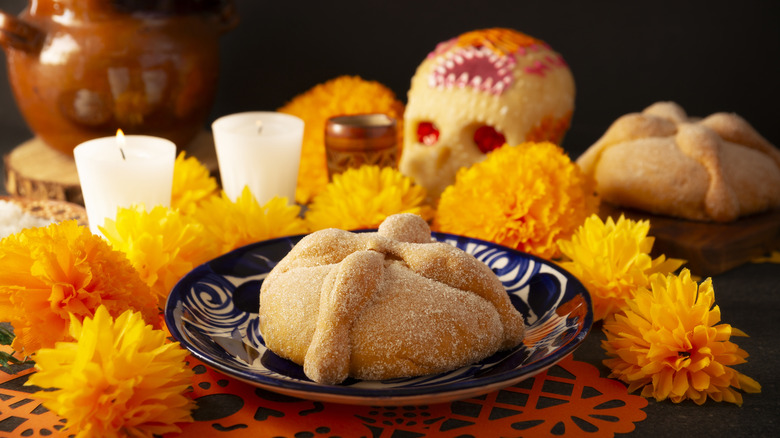
Orange, as both a color and a flavor, is integral to the celebration of Día de los Muertos. Often, on the ofrenda, you see marigolds — in Spanish, cempasúchil — which are puffy orange flowers. According to Diego Iturbide, the other way orange is brought into the holiday is through pan de muerto, or Mexican sweet bread.
Traditionally made for the ofrenda to pay homage to the dead, the bread is baked with a ball in the center and crisscross shapes around it. This design is meant to represent a skull and bones. As for the ingredients for pan de muerto, you need flour, butter, eggs, milk, sugar, orange zest, and orange blossom water. In Mexican culture, the latter is believed to attract the souls that visit the altar, said Iturbide. In a way, it guides them home.
Many establishments honor this tradition by featuring orange blossom or pan de muerto flavors on their menus. At Churrería El Moro, the menu features a pan de muerto milkshake and a churro de muerto, which is coated in sugar and orange blossom flavoring. According to chef Fermín Teco, people also make atole with flor de cempasúchil, a warm drink made with marigolds. As some parts of marigolds are edible — in fact, marigolds are used to decorate tortillas — people use this flower to infuse their atole and make a beverage that perfectly represents Día de los Muertos.
Tejocote
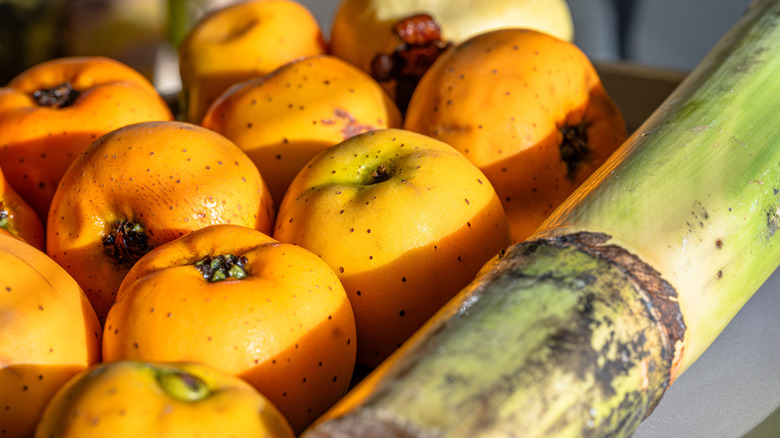
Both Diego Iturbide and chef Fermín Teco mentioned that tejocotes play an important role on an ofrenda. In Iturbide's family, they make a punch out of it. Tejocote is a small fruit, similar to an apple, that is sweet and tart. As such, many people tend to make candied tejocotes for the ofrendas, similar to how people might eat candied apples on Halloween.
Another representation of ancient Mexican culture blended with modern Catholicism, these fruits are thought to represent the earth, giving the fruit a clear through-line to representing the dead. By connecting fruit to the earth, Mexicans who celebrate the Day of the Dead recognize the human connection to nature in a visceral way; fruits come from the earth, and we eventually end up in the earth.
Tejocote is prepped in various ways. Beyond punches, some people make jams to put on bread, and others pair them with raw cane sugar — like with the sugar skulls — to make a dessert to put on their ofrenda. As we already know, the Spanish brought the sugar to Mexico, where the tejocote fruit was already growing, so this is another example of how Spanish colonization impacted Mexican culture.
Mole
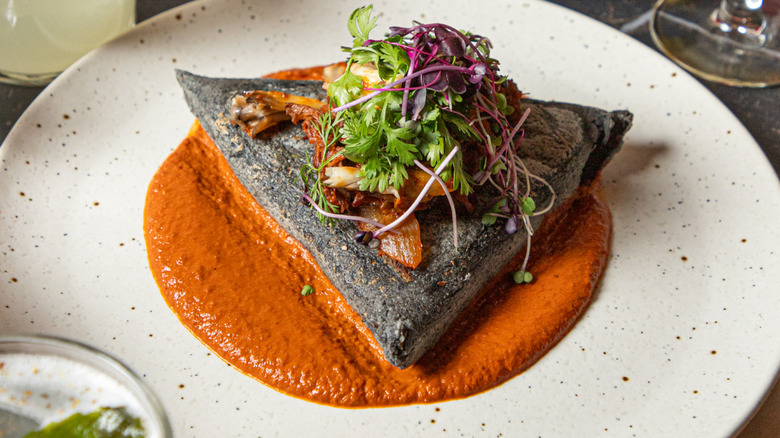
Undoubtedly, mole was the dish mentioned most often in my discussions with experts and in my research. Mole is not just one thing; the term refers to sauces, which is why mole can vary so much between restaurants and families. The ofrenda is all about including dishes that deceased family members loved, and mole comes in so many varieties that it can be unique to each person.
Mole is a labor of love, as it includes so many ingredients: garlic, tomatoes, peppers, and sometimes even chocolate. Various techniques are used to make it, such as crushing peanuts into a powder or grilling the chiles and tomatoes until charred. It takes a long time to prepare the mole, and that is the point. On Día de los Muertos, taking the time to prepare mole proves that you cared for and loved the people that you are honoring.
On the ofrenda, mole is usually served in a clay pot, which retains heat well for a long time, making it perfect for allowing the dead to take their time returning. Alongside the mole, according to Diego Iturbide, are red rice, tortillas, and the aforementioned pan de muerto. In chef Fermín Teco's kitchen at Alma Negra, the mole they make around the Day of the Dead — called mole manchamanteles — uses seasonal ingredients. "Seasonal [ingredients are] important, but we also try to change the way we use that mole [for the holiday]," said Teco. The mole manchamanteles is sweet and spicy.
Water and non-alcoholic beverages
At first, Leticia Viveros of Alma Negra did not understand why water was put on the ofrenda. "When I was very little ... I asked one of my aunts, and she gave me a little example. When [people] pass, they always have a dry mouth, so it is to give them the hydration they need. And maybe it's something with the universe, but when I put the water out [on the ofrenda], the water gets dry in the glass."
As Viveros and her family note, asking for water is often the final request people have before they pass away. On the ofrenda, that request is honored. For Viveros, the water drying in the glass was a symbol that the loved ones she was honoring needed it and were grateful that she put it out for them. The water can also represent a break for loved ones after their long journey: the journey of the dead spirits returning to their families' homes.
Water is not the only non-alcoholic beverage placed on the ofrenda, either. In addition to water, families sometimes place a loved one's favorite drink. Viveros had a story about this, too. When she was a child, her grandmother would often ask her to go buy a can of Coca-Cola. "And she always left a little leftover," said Viveros. "She liked to see, between my brother and I, we would fight for that little amount. So, I put the full can of Coca-Cola [on the ofrenda] for Lolita, my grandmother."
Liquor
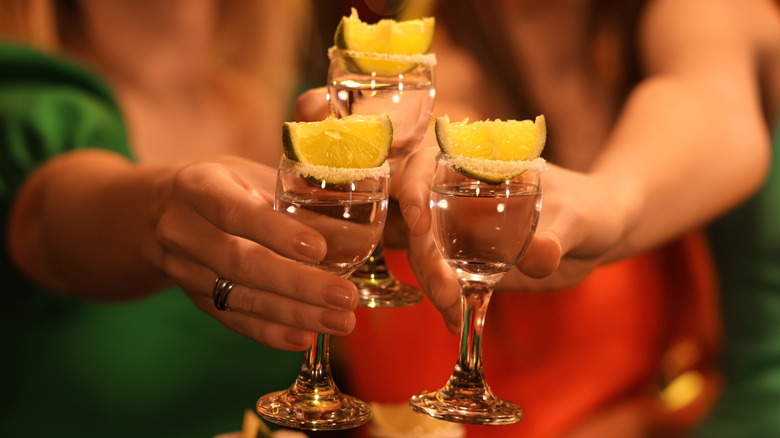
One of the first things chef Fermín Teco said about food and drink on the ofrenda was: "If I die, I hope someone puts, for me, a Michelada." Diego Iturbide said something similar, too. "My dad liked tequila, so we put a shot of tequila [on the ofrenda]." In many Hispanic cultures, liquor and alcohol are considered celebratory and are consumed at family gatherings and in intimate moments. Adding a small shot of liquor to the ofrenda allows the spirits of passed loved ones to find their way home through the memories, according to chef Teco.
The importance of tequila on the ofrenda is significant because it is a symbol of immense national pride for Mexicans. Featuring tequila on the ofrenda pays tribute to hard work and heritage. The same is true for mezcal.
When placed on the ofrenda, people pour tequila, mezcal, or any other liquor into a copita — a small shot glass. This way, the open container allows the aroma to carry beyond the ofrenda. According to Iturbide, the belief is that the aroma will guide the spirits back home, just like the pan de muerto.
Tamales
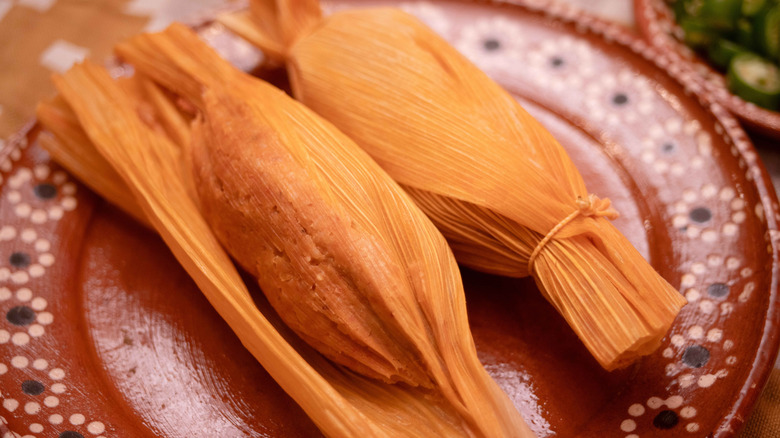
Tamales are among the most widely known and loved aspects of Mexican culture and cuisine. The history of tamales dates back to 8000 BCE and spans Indigenous cultures, colonization, and wars, yet the core tenets that make a tamale important remain today. Part of the reason they are said to belong on the ofrenda is that they were once used in religious ceremonies as offerings to the gods. It makes sense, then, that they would be used on the ofrenda as offerings to deceased loved ones, asking them to come visit.
Made from corn masa, a tamale is filled with ingredients like protein, cheese, peppers, and more. Tamales are similar to mole in that they require time and effort to make. To prepare them for Día de los Muertos is to demonstrate the love and care you have for your loved ones. Further, Diego Iturbide notes that often, ofrendas go beyond the home.
"We do it in our homes, in our houses, but also in the cemeteries," said Iturbide. "It's beautiful. In each grave, you can see the food." Tamales are thought of as easy to eat on the go, which makes them perfect for families setting up graveside ofrendas or honoring their loved ones at a cemetery.
Chocolate
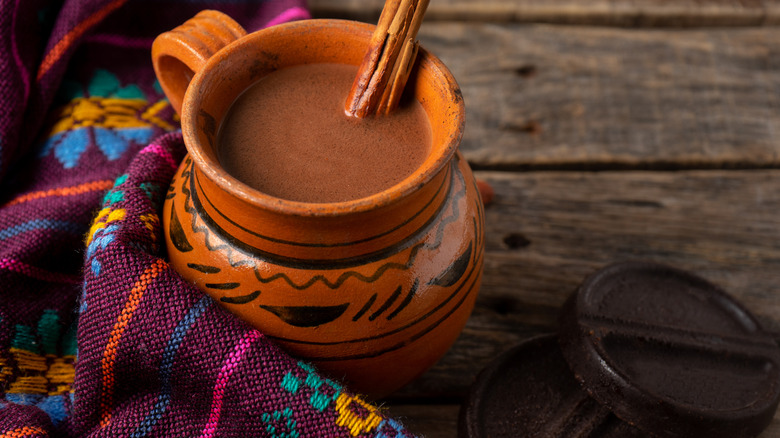
Chocolate is made from cacao, and cacao is an important part of Indigenous culture, which was a key influence on Mexican culture and traditions. Like water, chocolate on the ofrenda is thought to nourish loved ones who are on a journey back to their families. In part, chocolate represents the earth where it grows, which makes it natural and important to tradition. It is part of the land.
Chocolate is also placed on the ofrenda because it is a point of pride for Mexican people. As far back as 1750 BC, people living on land that is now part of Mexico were drinking and eating chocolate, and when the Spanish colonizers, rooted in Catholic tradition, discovered it years later, they debated whether drinking it violated religious fasting rules. Eventually, they made it their own — adding sugar instead of the sweeteners the Mexican people used. But the prominence of chocolate in the world now is a point of pride for Mexican culture. They knew a good thing as soon as they had it, and they honor their loved ones by presenting it as an offering on the ofrenda.
Further, the Aztec people believed in cacao as "heart" and "blood," key elements of life. In this way, adding chocolate to the ofrenda encourages life on a day meant to reconnect the living to the dead.