

Is Gluten-Free Bread Better For You Than Regular Bread?

There's no denying that gluten-free bread has become increasingly mainstream, with a plethora of options ranging from basic sandwich loaves to artisanal offerings lining grocery store shelves. For those who avoid gluten, this has made an enormous impact. However, this has also encouraged the popular gluten-free myth that eating bread with no gluten is inherently healthier than "regular" bread, regardless of the body's actual ability to process gluten.
According to Kelsey Kunik, the registered dietitian behind Graciously Nourished, the answer to whether gluten-free bread is better for you than regular bread depends on the person. "Gluten-free bread is only healthier for people who have celiac disease or gluten sensitivity," she explains. "Just because a bread is gluten-free doesn't tell us what it is actually made from, or what nutrients it has." To understand why, it's helpful to know what exactly gluten is.
In short, gluten is a group of proteins found in certain grains like wheat, barley, and rye. In conventional bread, it forms an elastic network that traps gas during fermentation, helping dough bubble and rise. This gives bread its characteristic bite and chew. Gluten-free manufacturers attempt to recreate that structure using alternative flours, starches, and binding ingredients. Kunik's point illustrates that the resulting products vary in nutritional quality since their gluten-free status alone does not correlate to their fiber, protein, or micronutrient content.
Gluten-free is best for those with gluten sensitivities

For some, gluten-free bread is a medical necessity. "People with celiac disease, an autoimmune disease that causes the body to essentially attack itself when gluten is eaten, need to avoid gluten," Kunik further explains, adding, "A small percentage of people have non-celiac gluten sensitivity, where eating gluten can cause symptoms like digestive upset or inflammation-like symptoms." Although both conditions make gluten-free bread a dietary staple, they involve different physiological processes with varying symptoms.
Celiac disease can produce symptoms that aren't easily connected to a particular meal. Some might experience abdominal pain or diarrhea, while others are beset with fatigue, joint pain, anemia, or skin reactions like eczema or dermatitis herpetiformis. The autoimmune response can harm the small intestine, interfering with nutrient absorption over time. Wheat allergy, meanwhile, is a separate condition involving an immune response to wheat proteins, which can sometimes cause anaphylaxis.
A gluten-free diet that incorporates alternatives can help identify a possible sensitivity. Celiac testing may provide an even more definitive answer, but its accuracy depends on continued gluten consumption. That said, those without gluten-related symptoms should not be worried. "The percentage of people with celiac disease or non-celiac gluten sensitivity is quite small," Kunik notes, "and for the majority of people, gluten is completely harmless."
Gluten-free bread doesn't automatically mean healthier
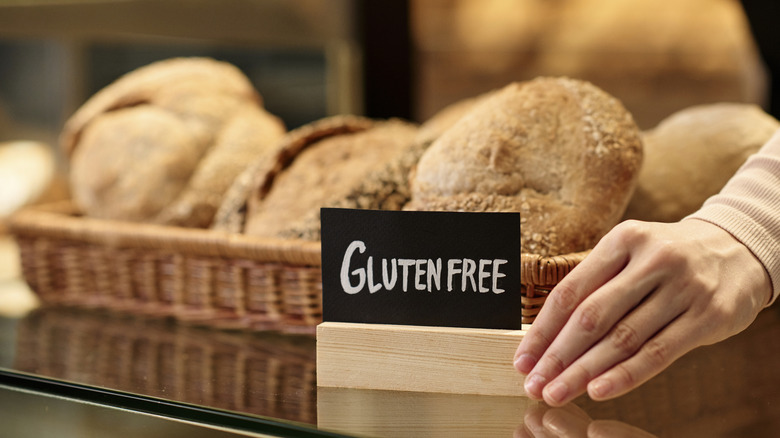
Gluten-free bread can be made from an enormous range of ingredients, and the nutritional differences between loaves can be substantial. Some are made primarily of refined rice flour and potato or tapioca starch, while others incorporate legumes, gluten-free grains, and seeds. Gluten-free products may also differ in the vitamins and minerals added through fortification, since wheat flour is often enriched with nutrients such as iron and folic acid.
This is especially consequential for those with celiac disease, who may already be vulnerable to nutritional deficiencies because of a damaged small intestine. Kunik's advice is to judge bread by its ingredients and nutritional content rather than a gluten-free label. "There's no harm in eating gluten-free bread, even if you can tolerate gluten," she clarifies. "As with any bread, reading the label to look for nutrients like fiber and whole grains is a great way to tell if a bread is nutritious or not, regardless of gluten."
Cost is another consideration, as specialty gluten-free loaves frequently command a substantial premium over conventional bread. For those who can comfortably eat wheat, choosing gluten-free bread is a matter of preference, rather than a nutritional advantage. Keep that in mind when considering any of these store-bought gluten-free breads.