

For The Hands-Down Best Shortbread Cookies, Know The 3:2:1 Rule
We may receive a commission on purchases made from links.
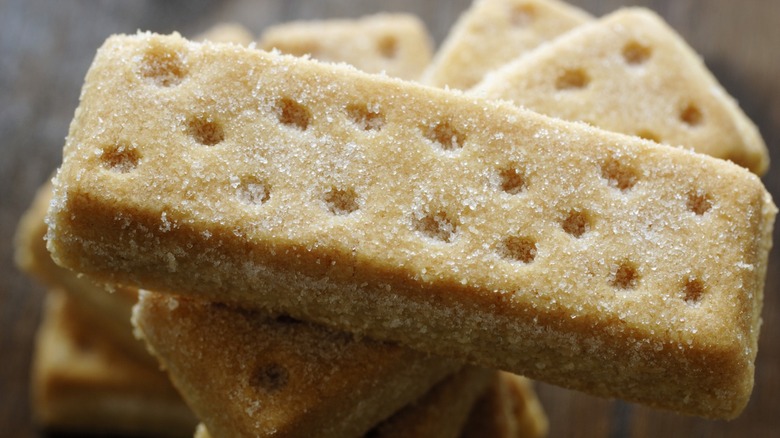
If you want tender shortbread with a buttery flavor and sandy texture, there's no need to memorize a recipe. A little something called the 3:2:1 rule gives you a reliable starting point. The idea is simple: Mix 3 parts flour with 2 parts butter and 1 part sugar, measuring by weight.
This ratio creates the iconic crumbly texture shortbread is known for. The high proportion of butter works to limit the gluten development in the flour, which is technically referred to as "shortening" because the fat quite literally keeps the gluten network short, hence the name of these treats. Shortening the gluten prevents a chewy, bread-like finish. The lower amount of sugar, meanwhile, stops the cookies from spreading and contributes to the crumbly texture of these already low-moisture cookies.
Traditional Scottish shortbread is meant to be neither chewy nor moist. It's supposed to be tender, delicate, and barely held together. This is why shortbread is so easy to bake –- it contains just enough flour, butter, and sugar to bind everything together, add sweetness without too much browning, and, most important, taste delicious.
Using the 3:2:1 rule for shortbread
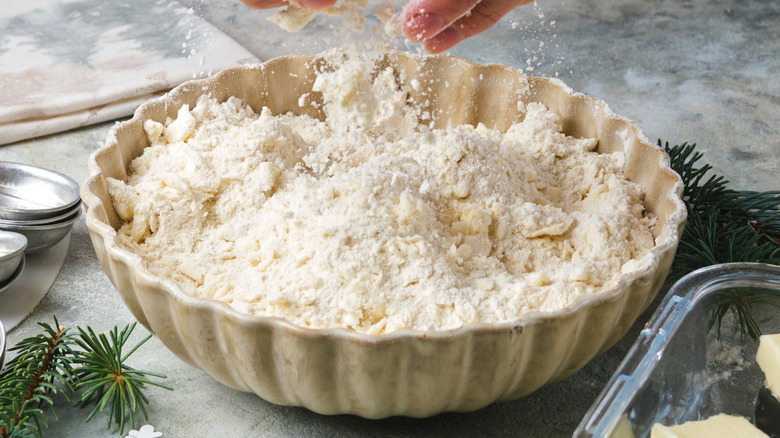
The formula is pretty easy to follow, but you need to make sure you're measuring by weight, not volume. This is because flour, sugar, and butter all have different densities, so a cup of each weighs a different amount. For example, if you used 3 cups of flour, 2 cups of butter, and 1 cup of sugar, the weights would work out to about 360 grams of flour, 452 grams of butter, and 198 grams of sugar, which are the wrong proportions for balanced shortbread.
Instead, try using 300 grams of flour, 200 grams of butter, and 100 grams of sugar. If you don't have a scale, this works out to about 2 ⅓ cups of flour, less than 1 cup of butter, and ½ cup of sugar. But scales are so inexpensive these days, it may be simpler just to get one. Most of the top 10 bestselling digital scales on Amazon (as of this writing) are under $30, including the 11-pound Etekcity battery-powered kitchen scale and the GGQ 33-pound rechargeable kitchen scale.
A lot of people like to swap some of the flour, gram for gram, for cornstarch for a softer crumb. Using a little rice flour instead will lead to a sandier finish. The biggest mistake you can make with shortbread is overmixing the dough, which makes the cookies, or biscuits as they're known in their homeland, very tough, which is exactly what the 3:2:1 method is trying to prevent. Instead, mix the flour into the butter and sugar mixture until just combined. A grater can help you with that. Grating the butter makes it easier to mix it in for better-textured cookies. And once it all comes together, one of the best tips for making high-quality shortbread? Save that kneading for your next batch of bread.