

The Iconic American Cookie That Started As A German Immigrant's Homemade Recipe
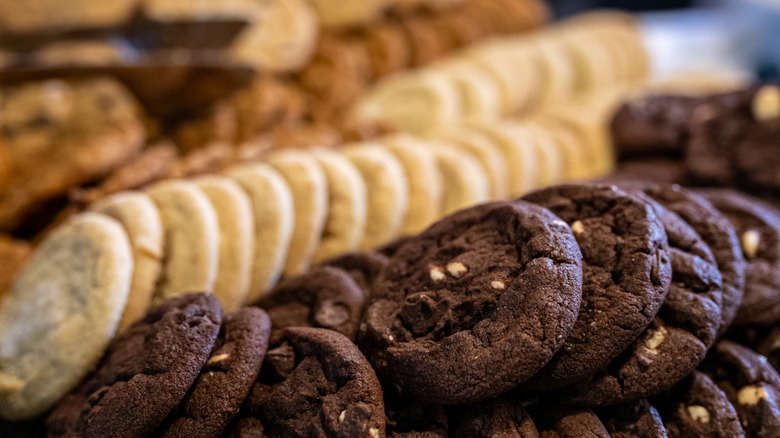
Gustav A. Mayer came to America in 1864 with an innovative pep in his step. Born near Ulm, Germany, Mayer landed in New York City at just 19 years old, ready to make his mark on the newly booming confectionery industry. He designed and patented precision baking equipment that cleverly stamped out a new sweet cookie made to his own recipe. These were baked by Mayer at his Staten Island premises and sold to upscale eateries around New York. Diners at restaurants like Delmonico's in Manhattan loved the simple wafers made from flour, sugar, shortening, eggs, and vanilla, which were the precursor to today's long-running sweet treat, Nilla Wafers.
The National Biscuit Company (later shortened to Nabisco) knew a good thing when it saw it. The company purchased the wafer recipe from Mayer and rolled out the new cookie under the name Vanilla Wafers. That was in 1898 when cookies were getting their groove in America. They'd been lurking in the shadows of fancy parties and among the bougie set who could afford sugar, which was very expensive in the 17th and 18th centuries.
The early 1900s saw an uptick on cookbooks featuring cookie recipes once sugar became more affordable, which makes Mayer's confectionery timing impeccable. His early pioneering earned him a medal in 1876, just over a decade since his first days in America, from the American Institute, which promoted those who were industrious in the areas of science and invention at the time.
How Nilla Wafers became synonymous with banana pudding
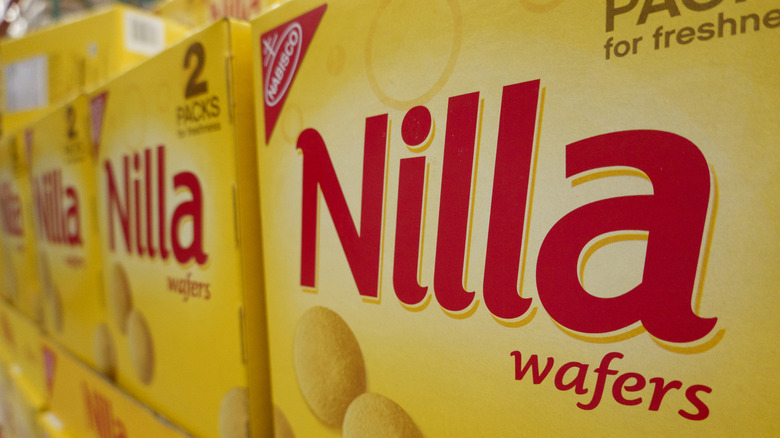
Nabisco rebranded the product to Nilla Wafers in 1967 as a marketing refresh from a shortening of the word vanilla, and it also meant that the company could trademark the name. The Nilla Wafer remains a steadfast, reliable seller, not least because of its ubiquitous association with banana pudding.
Nilla Wafers first became a key ingredient to the classic banana pudding recipe in the early 1920s. Banana pudding was already a Southern staple, but at the time, recipes largely featured an easy sponge cake variation as their base. Without explanation, a 1921 article in an Illinois daily paper listed a banana pudding recipe featuring — you guessed it — vanilla wafers instead of sponge cake. A cookbook from that same year also included vanilla wafers.
By the 1940s, Nabisco began running a banana pudding recipe on the side of their wafer box, which is still featured on Nilla Wafer boxes today. It has certainly helped convince consumers that you cannot compete with the ease of grabbing some cheap but tasty cookies whenever you want the treat of a simple banana pudding.