

Why Your Kitchen Walls Need To Be Cleaned With Vinegar (And It's Not Because Of Smells Or Stains)
Of all the rooms in the house, the kitchen is the drama queen. Between cooking, a myriad of appliances, and its role as a favorite gathering place for many of us foodies, it has plenty going on and needs attention to match. The downside is that there's so much to look after, including the walls. Kitchen walls can be prone to mold growth, which you may notice as discolored spots, peeling paint, or a bad smell. It's tempting to reach for a mold cleaner, but white vinegar is a kitchen cleaning staple that could treat mold for less. It contains acetic acid and has antimicrobial effects that can be effective in treating most types of mold.
If you suspect a small mold problem on your kitchen walls, remember to first take a few precautions. You should put on safety gear, including gloves, goggles, and an N95 respirator, to help protect yourself from airborne mold spores. Then ensure your windows and doors are open for ventilation. Also be aware that some kitchen surfaces and finishes can be damaged by acids. For instance, you should never spray vinegar on granite.
If vinegar is suitable for your kitchen, though, apply it on its own and leave it for 30 to 60 minutes before gently scrubbing and wiping with a clean, damp cloth. Dry the area well afterward, and wash or discard your cleaning supplies. It's important to fix the moisture source to stop the mold from coming back. For more extensive problems, you may want to hire a professional, especially if mold covers more than 10 square feet or there is significant water damage.
Other ways to use vinegar to keep the kitchen clean
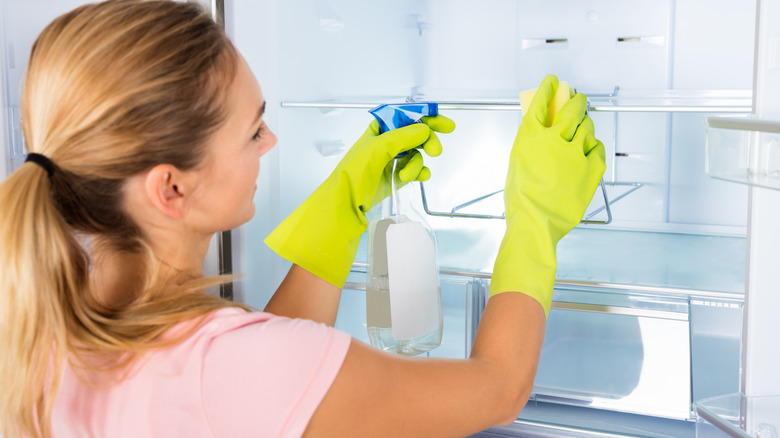
Vinegar is the low-key superhero of your kitchen. Besides helping tackle mold, it's a cost-effective way to help cut through mineral buildup on surfaces, giving it plenty of uses beyond salad dressing. Regular white distilled vinegar is a practical choice for everyday cleaning jobs, but be sure to check the material first, since vinegar can damage marble and other sensitive surfaces.
Its familiar sidekick, baking soda, can also help scrub away stubborn residue from pots, pans, and countertops, if their surfaces can tolerate mild abrasives. Use them separately, though. Vinegar is acidic and baking soda is alkaline, so mixing the two creates an impressive fizz but also neutralizes them, negating their cleaning benefits.
Kitchen windows and glass refrigerator shelves alike can also benefit from a little vinegar-powered sparkle. A mixture of one part distilled white vinegar to 10 parts warm water helps remove cloudy buildup for a transparent view of your garden or last night's leftovers. Just be sure to check care instructions and let cold refrigerator shelves reach room temperature before cleaning them with any water- or vinegar-based solution, to avoid thermal stress that can cause them to crack.