

5 Disadvantages Of Using A Moka Pot Coffee Maker
We may receive a commission on purchases made from links.
Amidst myriad contraptions for making coffee at home, the relatively humble moka pot has a lot going for it. This curious little stovetop coffee maker is compact, uncomplicated compared to programmable machines, and more than capable of delivering rich, concentrated cups of java without the cost or counter space required for espresso machines. It also carries a charming ritualistic aura, similar in ways to rustic campfire coffee. Yet, despite these and other rewards, moka pots definitely aren't for everyone.
They're more hands-on than automatic coffee makers, and it can take some practice getting the grind, heat, and timing just right for moka pot perfection. Cleaning processes add more to the story, and depending on the model and stovetop, compatibility issues may come into play.
None of these things mean you shouldn't own a moka pot. In fact, many of the disadvantages become merely inconveniences once these perky little pots become part of your daily routine. That's especially true if you love bold coffee and the nostalgia of throwback brewing. Knowing the following five disadvantages of a moka pot can help you decide whether it's something worth inviting into your kitchen, and consequently, into your life.
Brewing with a moka pot requires more attention than some coffee makers
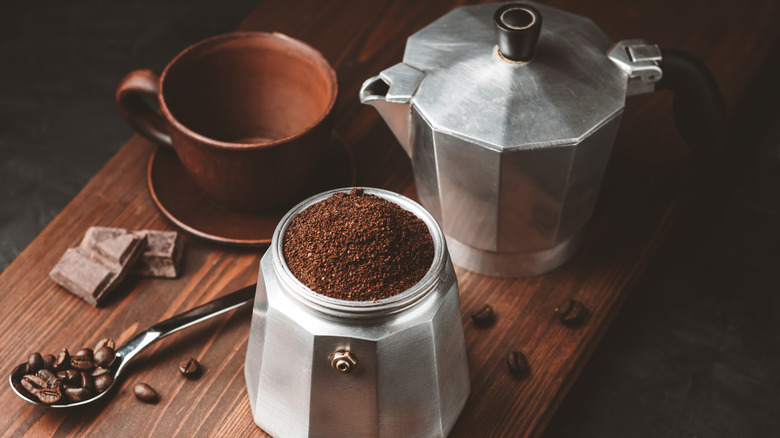
If your ideal coffee maker is one you can load, switch on, and largely ignore until the brew comes sailing out, a moka pot may not be for you. It requires more participation and more monitoring. Brewing begins by filling the bottom chamber with water up to the safety valve, inserting the filter basket, and then loosely adding ground coffee without tamping it (since tamping in a moka pot can lead to poor extraction). You'll then securely attach the upper portion of the pot, place it over the stovetop, and watch carefully as the aromatic elixir rolls into the steely upper chamber.
It feels comforting in an old-school kind of way — until you turn your head for a minute and hear the spitfire sounds of brewed coffee sputtering or spilling onto a sizzling-hot stovetop. Brewing typically completes within three to six minutes, but it can quickly go awry if the heat is too high or it brews too long. So it's crucial to keep a watchful eye and promptly remove the pot once the upper chamber fills.
All those intricacies mean there's a definite learning curve when getting started with moka-pot brewing. Fortunately, the process becomes much more intuitive with repetition, and if you enjoy making coffee as much as drinking it, that extra ritualistic involvement may be right up your alley. If that's your thing, check out this key to perfectly brewed moka pot coffee every time.
It can be easy to make bitter or burnt-tasting coffee
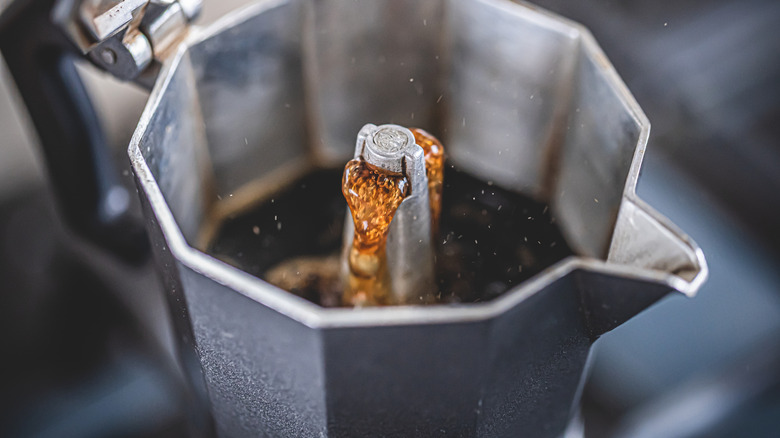
A moka pot typically delivers strong, flavorful cups of coffee, but it can also lean toward harshness if the brewing process gets off track. Since heat is one of the most impactful variables affecting the end result, you'll need to use a low-to-medium burner setting. As noted before, once the upper chamber has filled, the pot needs to be removed from the heat ASAP. But in this case, the concern is about how it impacts the flavor. Allowing the coffee to boil can create a burnt or bitter taste, which can also happen if the heat is turned up too high.
Even overfilling the water chamber can contribute to a bitter taste, because the pot needs some air space above the water for the brewing to work properly. The coffee beans matter as well, particularly the type of grind. Grinding as finely as you would for an espresso machine can lead to over-extraction, and again, to bitterness – so a medium-fine grind generally works best. For some more guidance on grinding, here's an expert tip to extract the perfect amount of coffee in a moka pot.
Compared to machines that automatically control the brewing process, a moka pot feels more like an art form, initially creating inevitable hits and misses. But if you're onboard for the extra time and attention, the process eventually becomes second nature, and the scorched-coffee disadvantage somewhat dissipates.
There's not much flexibility over batch size

With a drip coffeemaker, it's easy to add more or less water depending on how many people are waiting for a fresh cuppa Joe. A moka pot isn't quite so flexible. Each pot is designed for a specific liquid capacity, and the brewing method only works properly when filling water in the lower chamber to that very specific sweet spot directly below the safety valve. So you can't just add more water to get more coffee — you'll need to make a second round.
Alternatively, you can shop around for larger moka-pot sizes, which do exist. For example, current Bialetti Moka Express pots on Amazon come in several sizes, ranging from half a cup to 18 cups. But be aware that the listed serving sizes for moka pots are almost always based on small espresso-style cup servings instead of the larger mugs used by many American coffee drinkers. Since moka pots brew to the intended capacity, there's very little room for flexibility.
In other words, buying a bigger pot doesn't mean you can make a smaller brew on days when you only need coffee for one or two people. Half-filling a pot is very likely to result in failed extraction and distasteful coffee. Brewing in the wrong size pot is, in fact, considered one of the 10 moka pot mistakes to avoid at all costs. You can always buy two separate pots — but at roughly double the cost and storage space.
Cleaning and maintenance takes some extra care
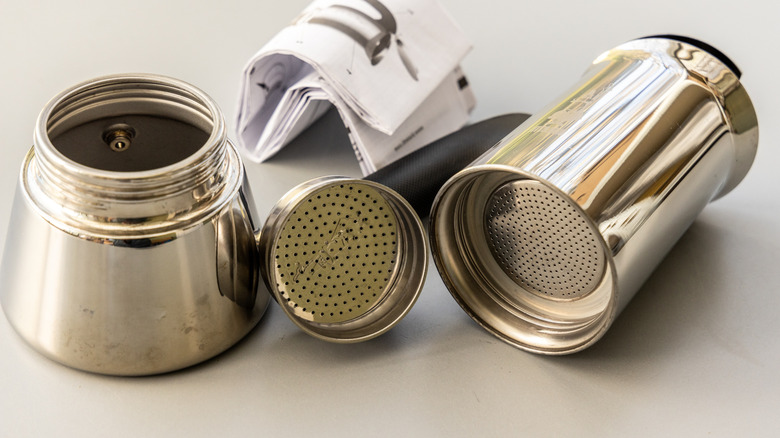
A moka pot may not come with complicated electronics, but it's not completely maintenance-free. In fact, it requires extra care in some ways. After brewing, the pot needs to cool down enough to handle it — and you will indeed be handling it much more than ordinary coffeemakers. A classic aluminum moka pot must be taken apart and hand-washed — not simply tucked inside a dishwasher. To prevent build-up of coffee oils, stray grinds, and other debris, you'll also need to check the internal column in the upper chamber from time to time.
Then there's the gasket, which also demands attention. That small ring creates a seal between the lower and upper pot chambers, ensuring there's enough pressure to move the water through the coffee grounds. It's crucial to replace the gasket at any sign of brittleness or cracking. This is an extra cost, but even more so, an inconvenience in finding the replacement part, often involving ordering from the manufacturer.
None of this is overly demanding, but there's still more involvement compared to tossing out a coffee pod or rinsing a simple pour-over dripper. You have quite a few components to deal with, from the upper and bottom chambers to the filter basket, gasket, and filter plate. Fortunately, regular care goes a long way with these shiny metal stovetop pots.
Some moka pots won't work on induction cooktops
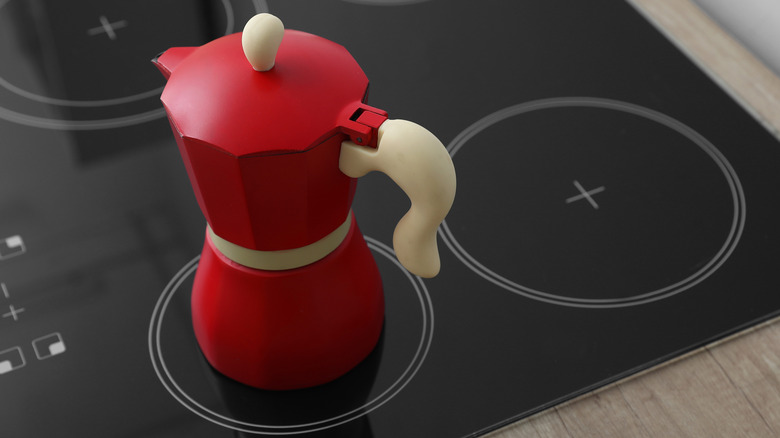
Finally, one of the biggest potential disadvantages of using a moka pot coffee maker lies in your stovetop. If you cook with gas, coiled electric burners, or ceramic cooking surfaces, you're likely golden. But depending on the type of moka pot you have, induction burners can be problematic. The material it's made from is what matters.
Traditional aluminum moka pots are not suitable for many induction cooktops, primarily because those surfaces require pots and pans with magnetic bases — which ordinary aluminum doesn't have. So, instead of choosing a moka coffee maker based on size, color, or appearance, you'll need to make material a deciding factor if you cook on an induction stovetop.
Fortunately, modern moka pots aren't strictly limited to aluminum construction, with manufacturers introducing induction-compatible models made from stainless steel. If you already own and love a classic aluminum version, there's even such a thing as induction adapter plates to keep you moka brewing to your heart's content. Incompatibility is clearly a disadvantage when shopping for a moka pot, as you'll be limited to certain manufacturers and potentially higher prices. Alternatively, you can just buy separate, inexpensive, miniature "hot plate" burners to facilitate your classic, aluminum, moka-pot devotion — albeit with more out-of-pocket costs.