

The Restaurant Red Flag That Could Reveal Whether A Fish Dish Is Fresh Or Not
While the late Anthony Bourdain may have regretted his advice against ordering fish on a Monday, he, like many chefs and experts, consistently stressed the importance of eating seafood at its freshest. Sadly, this isn't always a guarantee, as it can be quite a challenge for restaurants to balance using ingredients with a very short shelf life against tight profit margins.
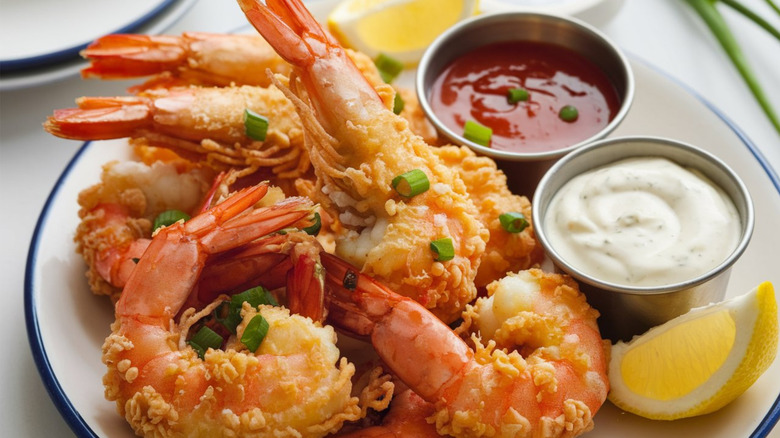
Fred Decker, one of Tasting Table's contributors and a trained chef with plenty of seafood experience, explained at length some of the most common tricks restaurants use to hide fish that's past its prime. One technique to look out for is the heavy use of condiments and sauces to mask flavors. It's no coincidence that so many seafood platters and fish-forward dishes come with dips.
Condiments and sauces that lean too heavily on creamy or fatty ingredients, like mayonnaise and its many relatives, including aioli, tartar sauce, or even cocktail sauce, are a red flag because fat mutes certain flavors by coating our taste buds and creating a buffer against bitter and acidic compounds. This is problematic as our taste buds often rely on detecting bitter flavors to tell us when something is starting to taste off.
How to spot fresh fish
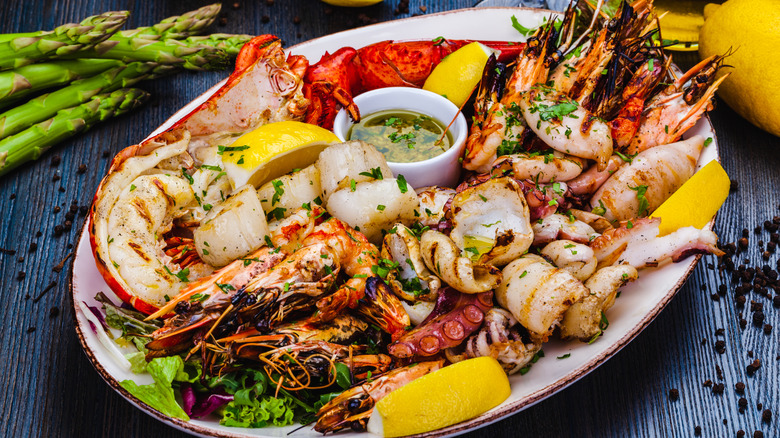
While this tip is meant to keep you on high alert when you're ordering at a restaurant, the presence of a dip does not immediately mean the establishment is trying to hide some fishy business, so it is key to use all your senses to determine whether the tartar sauce on your plate is there for the right reasons or to conceal seafood that is starting to deteriorate. Consider, for example, how much sauce is being used. A little dip here and there is probably much safer than a piece of fish that is completely doused in sauce.
There are some other signs to look out for when ordering seafood at a restaurant that can help indicate the quality of the food. First, there is the overall smell of the restaurant. Odor is one of the clearest indicators of seafood's condition. If the place serving it smells foul, fishy, or stale, the fish there has likely seen better days. Another valuable source of intel is the staff, as they know what's going on behind the scenes. Don't be afraid to ask how the restaurant sources its fish, and be wary of vague answers from waiters and chefs who aren't knowledgeable or forthcoming.
Additionally, it is always good practice to order seafood where it can be sourced locally. If you are inland, that fish has had to travel farther to reach you. Last but not least, the texture of the fish can be just as revealing. It should be firm, not flimsy or mushy, even when cooked. If you take all of these signs into consideration, you'll be better equipped to determine how fresh the prawn cocktail is and whether condiments are being used to enhance, rather than hide, the seafood's flavor.