

Ditch Granite Countertops: The Durable Alternative Bursting With Old-School Charm
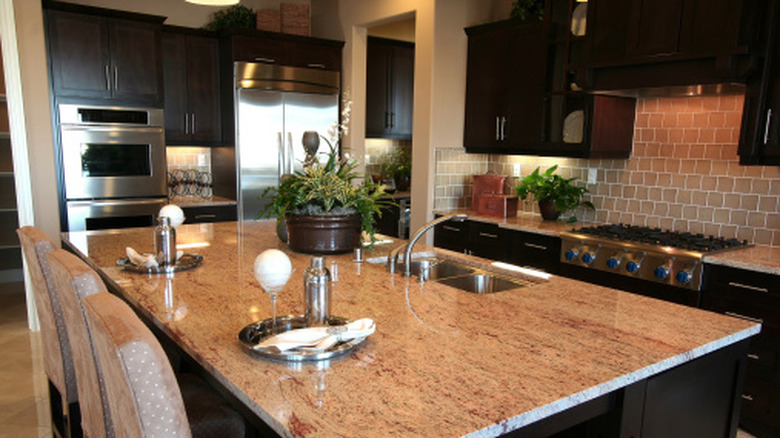
Granite has been the darling of kitchen countertops for decades, but homeowners wanting both durability and a more flexible design have another well-deserving option to consider. Instead of relying on Mother Nature's veining and color variations in a slab of stone, this material can be customized with an array of variables. That granite alternative is terrazzo, a surface with loads of old-school charm, centuries of history, and a penchant for modern creativity.
For a deeper look at this intriguing countertop material, we consulted with Kerrie Kelly, CEO and creative director of Kerrie Kelly Studio. She describes terrazzo as "a composite material made with chips, traditionally marble and sometimes other aggregates," which are embedded in either a cement-based or resin binder before the surfaces are ground and polished. Noting how granite is a natural stone and terrazzo is a designed composite, she points out the personality potential that terrazzo brings to a kitchen. "That makes the aesthetic conversation very different," says Kelly. "Granite celebrates what nature created in a slab, while terrazzo gives the designer much more ability to play with aggregate, scale, color, and pattern."
It's worth mentioning that terrazzo isn't totally a newbie in the world of design. Venetian mosaic workers in 16th-century Italy are known to have repurposed marble remnants for creating terrazzo surfaces, a practice that gained notoriety in American architecture during the 1920s. It even features in Tasting Table's look at kitchens that nail the "old money" aesthetic.
Terrazzo and granite can both last for decades
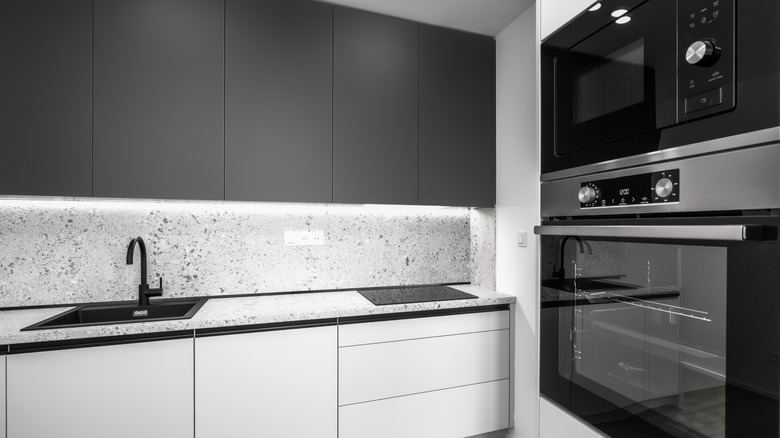
When it comes to durability, Kelly doesn't feel there's a hands-down winner between terrazzo and granite. "I wouldn't declare one universally 'better,'" she says. "The composition of terrazzo matters, as does fabrication, installation, sealing, and use." Those considerations, plus maintenance over time, have a lot to do with durability and longevity.
"With terrazzo, the binder and specific product matter," Kelly explains. "Staining, acids, sealing, and cleaning requirements can all factor into performance, so following the manufacturer's care instructions is important." Cement-based terrazzo generally requires more caution around stains and acidic substances than some resin-based versions, she adds. That said, granite isn't maintenance-free either, because varying levels of porosity mean some granite countertops may need periodic sealing. Investment potential for terrazzo is similar to granite, as well.
"Both properly fabricated and maintained granite and terrazzo can last for decades," Kelly says. "Longevity isn't simply about choosing the material with the biggest number attached to it; select the right material for the way the kitchen will actually be used, and then maintain it according to its composition," she explains. That said, it may really come down to this: If you love the toughness of granite but want something more customizable, terrazzo brings playful colors, patterns — and the aura of yesteryear.
For more insight on the rising popularity of old-school kitchen materials, check out the retro countertop designers expect to see everywhere in 2026 and the 10 outdated kitchen trends making a comeback.