

Cowboys Enjoyed A Fried Meat That Few Are Brave Enough To Touch Now
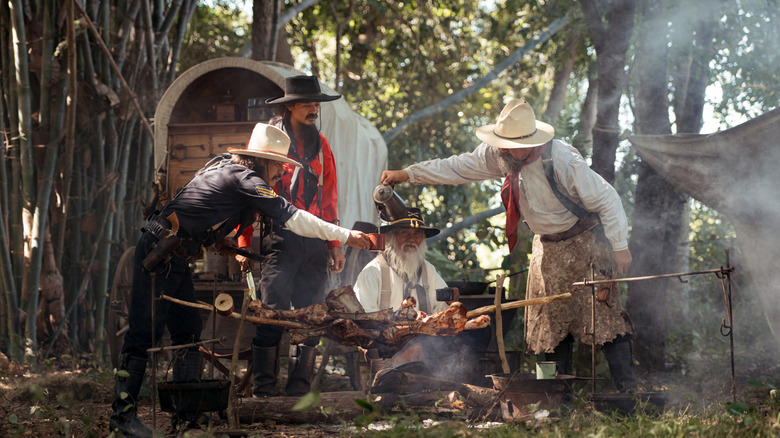
The life of a cowboy wasn't easy. The days were long. The nights were often cold. Or hot. Or rainy. Or worse. The demands of the job were such that you'd spend more time around cattle than you would around people, and living in the saddle (and constantly on the move) meant that good, fresh food was a rarity reserved for special occasions like round-up time. And one of those foods was fried calf testicles.
For those of you not so well-versed in your cowboy lingo, a round-up was when cowboys from different ranches would gather to bring in the herds that'd been turned out into the open plains to graze. The stock would be sorted, and new calves would get branded. It was also a good time to handle the unpleasant job of castrating those calves that weren't going to be used as breeding stock, which resulted in two things: lots of unhappy calves, and twice as many freshly removed testicles, which, in the spirit of never letting anything good go to waste, were immediately tossed onto hot grills or frying pans and turned into "calf fries," now known more commonly as Rocky Mountain oysters.
Though they might sound inedible now, these were considered a delicacy at the time — a party food, rare in that they were only available once or twice a year. Plus, they were the freshest possible protein at a time when jerky, pemmican, and salt pork were much more common, so eating them became as synonymous with the round-ups as whiskey-drinking and rodeo riding.
Believe it or not, Rocky Mountain oysters are still enjoyed today
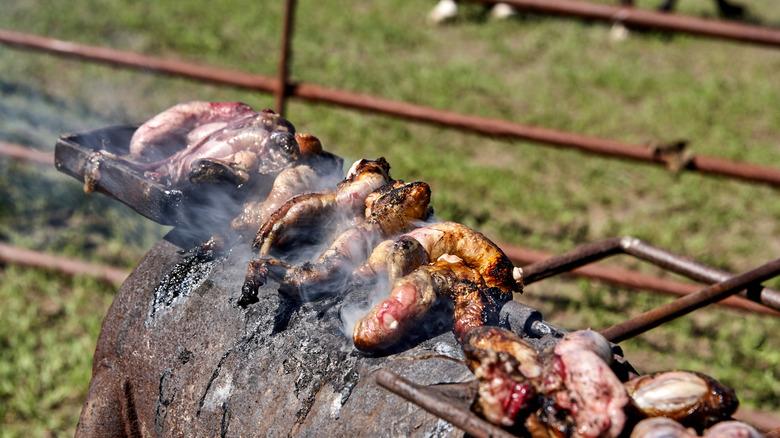
These days, availability, methods of prep and presentation, and the skill in cooking swinging beef have all improved. Chefs get frozen calf or bull testicles shipped to them, which are then cleaned, sliced thin, and then usually battered and deep fried. According to available recipes (and personal experience), calf testicles are preferred because they're more tender, and traditionally, Rocky Mountain oysters are served with a simple horseradish cocktail sauce, sometimes spiked with a little extra hot sauce for an added kick.
And Rocky Mountain oysters are still served regularly in the Midwest and Mountain states. Some restaurants undoubtedly keep them on the menu just for shock value, but there are plenty of places where this cowboy favorite is still celebrated. At the Buckhorn Exchange in Denver (which is the city's oldest restaurant, opened in 1893), Rocky Mountain oysters are the very first item on a menu that also includes buffalo sausage and alligator tail. In Mount Sterling, Illinois, there's an annual "Testicle Festival" at the Sportsman's Tavern scheduled around the spring calf castration. And in Virginia City, Nevada, there's been an annual "Rocky Mountain Oyster Fry" that's been going on for more than 30 years — held on St. Patrick's Day every year. (And yes, it is precisely the kind of sedate, respectful and dignified event you're imagining.)