

10 South Carolina BBQ Sides And Sauces You Have To Try At Least Once
We may receive a commission on purchases made from links.
Barbecue in South Carolina is as iconic as the beach in California. The tradition of whole-hog smoking is woven into the fabric of the Palmetto State over centuries of practice — but no plate is complete without its accompaniments. The barbecue sauces and side dishes South Carolina is known for tend to vary by region and come with their own stories and recipes. It's the only state in the nation that's known for serving four different types of barbecue sauces and has a few side dishes unique to the area as well.
To explore all of the sides and sauces you need to try in South Carolina's barbecue scene, we've interviewed four experts from the area to share their favorites. Bringing a historian's perspective, David S. Shields is a distinguished professor emeritus at the University of South Carolina. Nathan Spainhour is the author of a new book, "The South Carolina BBQ Project." Jon Buck is the executive chef of Soby's New South Cuisine in Greenville, South Carolina, and Robbie Robinson is the pitmaster and owner of City Limits Barbeque in West Columbia, South Carolina.
Eating food may be necessary for survival, but it can also be a way of connecting the past with the present. Spainhour put it well: "South Carolina's barbecue flavors reflect a rich cultural heritage, expressed through the state's cuisine and regional diversity. Each flavor tells a different story about our history and how we became who we are. I think it's one of our great cultural treasures."
Vinegar pepper sauce
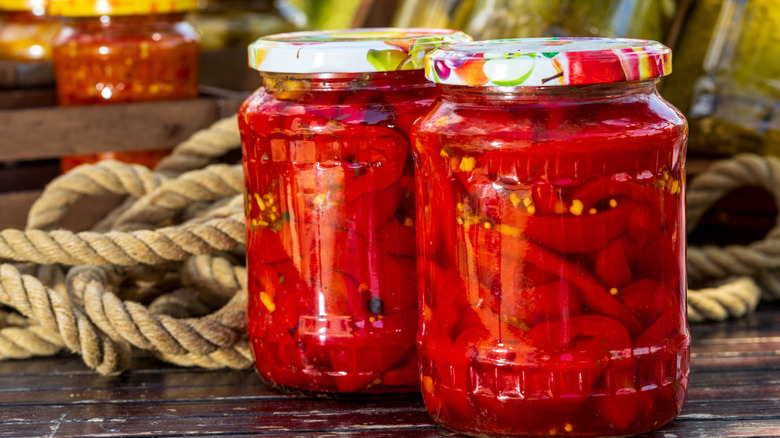
To understand South Carolina's whole-hog barbecue, you first have to understand the importance of the vinegar-and-pepper barbecue sauce. Nathan Spainhour says, "In the Pee Dee region of South Carolina, vinegar and pepper are the primary sauce ingredients for whole‑hog barbecue, and the same is true in eastern North Carolina."
The sauce tends to taste much like it sounds — tangy with vinegar and fragrant with spices. Recipes can vary depending on the pitmaster, sometimes using white sugar rather than brown sugar, adding lemon juice into the equation, or using different spices. Spainhour adds that between North and South Carolina, "The main difference is that the South Carolina Pee Dee region is known to be a bit spicier."
Of all the barbecue sauces, not just in South Carolina but around the world, this one is among the oldest. David S. Shields says, "[It's an] ancient sauce that was used in the West Indies, the oldest known barbecue sauce." He also notes that a literal mop is used to apply the sauce to the hog as it smokes. "[The sauce] is wetter, so it actually has the advantage of keeping the meat from getting too hot."
Light tomato sauce
One of the four barbecue sauces commonly served in South Carolina, light tomato sauce, is also popular in North Carolina, where it's known as Piedmont sauce, named for the region where it originated. Nathan Spainhour says, "It is essentially the vinegar pepper sauce from eastern North Carolina and the Pee Dee region of South Carolina, with a small amount of tomato added. I would imagine we avoid the term 'Piedmont' to distinguish it from our northern neighbor."
Jon Buck of Soby's New South Cuisine says, "It shares some of the same ingredients as the vinegar pepper sauce: apple cider vinegar, onion powder, garlic powder, and brown sugar, but the addition of tomato, or sometimes even a little ketchup, changes the consistency and flavor profile." Adding tomato or ketchup makes this sauce slightly sweeter, thicker, and bolder than the vinegar pepper version. Its balanced combination of tangy vinegar and mellow tomato creates a flavor that complements smoked pork without overpowering the meat. It's a subtle difference, but one well worth experiencing on your next visit to a South Carolina barbecue joint.
Heavy tomato sauce
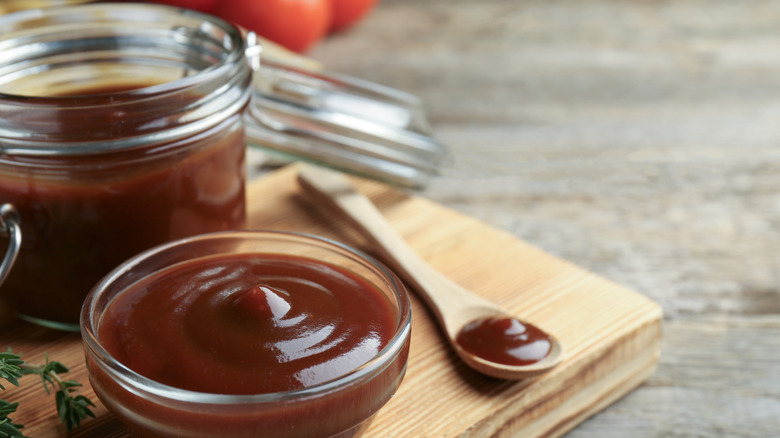
Heavy tomato sauce is exactly what it sounds like. A thicker, sweeter version of its light tomato counterpart, it's also associated with barbecue traditions in Memphis and Kansas City. Nathan Spainhour, author of "The South Carolina BBQ Project," says, "The original sauce map [of South Carolina] referred to the heavy tomato portion as just plain old ketchup. That's always made me laugh."
While you could draw a comparison between South Carolina's heavy tomato sauce and a bottle of ketchup, the flavor of the former is a bit more complex. Jon Buck says, "It's typically a combination of cooked-down tomatoes, onions, garlic, apple cider vinegar, and brown sugar." While some recipes do use ketchup as a base, the sauce is bolstered with flavorful ingredients like molasses, mustard, and liquid smoke. The result: a thick sauce that balances sweetness, tanginess, and smokiness and pairs especially well with smoked pork.
Mustard sauce
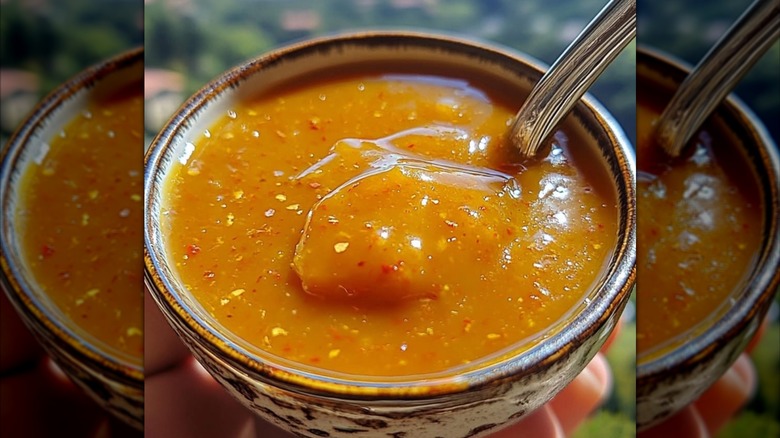
Also called Carolina Gold, the mustard-based barbecue sauce is the style for which South Carolina is best known. It's typically made with a mixture of honey, brown sugar, apple cider vinegar, a blend of spices, and, of course, mustard.
Per Nathan Spainhour, "The light tomato, heavy tomato, and vinegar pepper sauce areas all share borders with North Carolina and Georgia," he explains. "It's one of the things we're famous for."
German settlers in the Midlands region of South Carolina (located in the center of the state) contributed to the popularity of the sauce, although it was one Joe Bessinger who was credited with establishing the sauce in the state's barbecue culture. Spainhour says, "Mustard sauce gained popularity in the Midlands thanks to the Bessinger family. German cuisine often includes pork-based sausage, which is commonly paired with mustard. It makes logical sense that pulled pork would be paired with mustard as well."
Hash
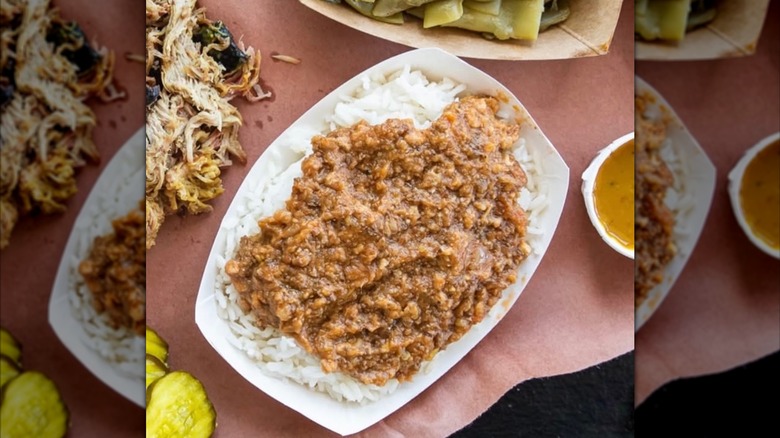
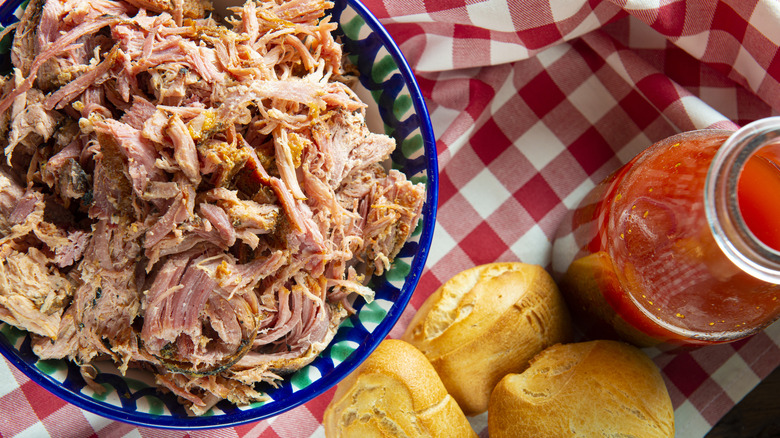
There is one popular barbecue side served in South Carolina that you're unlikely to find outside the state's borders: hash and rice. Like many dishes in the United States, hash has roots in the resourceful cooking traditions of enslaved people. Robbie Robinson says, "The parts of the pig that [the plantation owners] were not willing to use were given to the slaves. The slaves figured out how to basically make a meat soup." This economical approach to cooking, which makes use of the whole animal, was born of necessity, but the dish has endured as a beloved South Carolina tradition.
For Nathan Spainhour, the use of offal and less-prized cuts of pork in this dish should not be a deterrent to eating it. "Hash is the most underrated side dish, most definitely. It's served over rice, and sometimes can be gray-brownish in color. While it may not look great, it very much makes up for that in flavor."
Recipes for hash vary across the state. For instance, at City Limits Barbeque, where Robinson is the pitmaster, he opts not to use any "gross parts" in his recipe, although some Carolinians have expressed disappointment at the lack of liver flavor. The sauce, however, is the biggest variable. Robinson says, "If you are in a red sauce part of South Carolina, you'll get red hash. If you're in a yellow sauce part of South Carolina, you will get yellow hash. If you're in a vinegar sauce part of South Carolina, you get vinegar hash."
The Holy Trinity
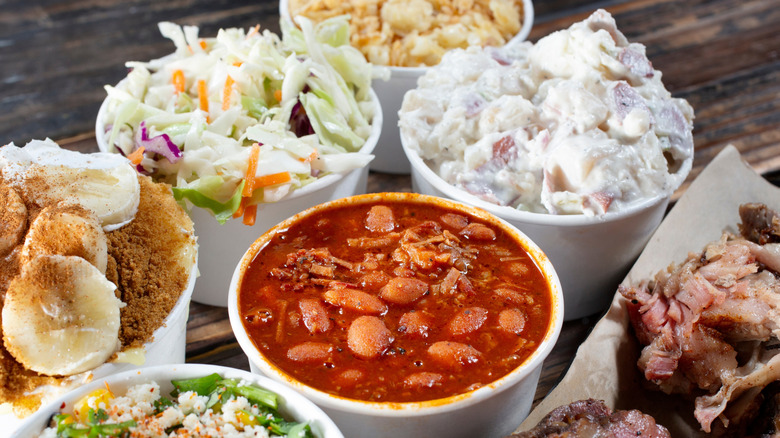
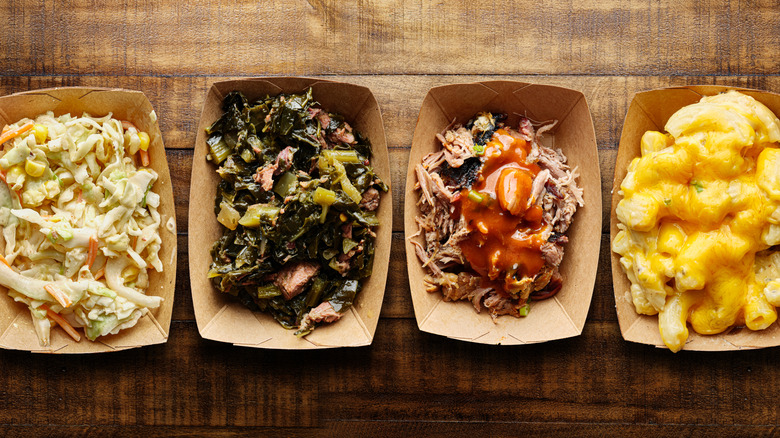
Coleslaw, potato salad, and baked beans are staples of Southern barbecue, but in South Carolina they take on a nickname that underscores their significance. Nathan Spainhour says, "Typically, the sides that come with South Carolina barbecue are known as the Holy Trinity: potato salad, coleslaw, and baked beans."
The beans are typically dressed with ingredients associated with South Carolina barbecue, including ketchup, cider vinegar, and mustard. They are sweetened with sugar, as is expected of barbecued beans, and rounded out with a few spices. The potato salad similarly uses mustard and vinegar to bolster the flavor of its dressing, but otherwise resembles potato salads you would find on the side of your barbecue plate throughout the South.
This Holy Trinity of sides may not taste anomalous when compared to other states (although the coleslaw discussed in the next section may be an exception), but you can expect them to be plentiful and widely available.
Coleslaw
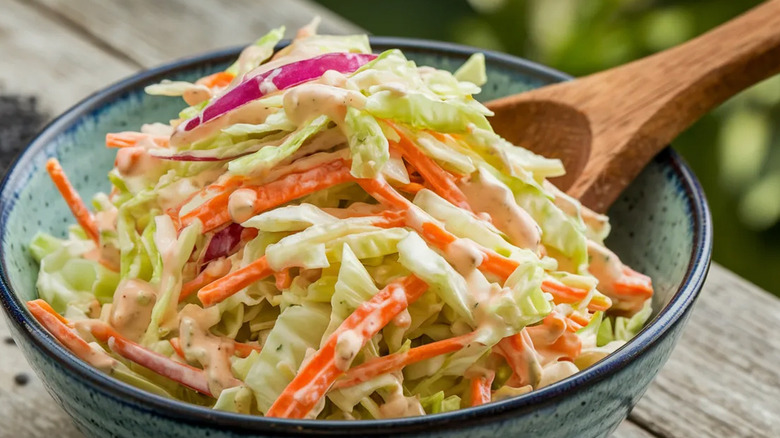
Coleslaw can be reinvented in countless ways with unexpected ingredients and creative dressings, but at its core, it's all about the cabbage. A simple side dish served alongside many styles of barbecue, it had its start in South Carolina when a certain variety of cabbage was successfully mass-produced. David S. Shields says, "The Charleston Wakefield cabbage [took] hold in the very beginning of the 20th century, and that's when the super-coleslaw boom [began] in South Carolina."
Like hash, the dressing used for coleslaw in South Carolina can change depending on the region it's served in. Shields says, "[Vinegar slaws] were the original way slaws were made. You have mustard slaws, which you'll find in more German-leaning things. Mayo slaws are more American, and those really only take off in South Carolina after the creation of Duke's mayonnaise in the First World War." Nathan Spainhour adds, "Another regional version I've seen is called barbecue slaw or red slaw. It's another vinegar-based slaw, but has ketchup as an ingredient, causing it to have a red tint."
Collard greens
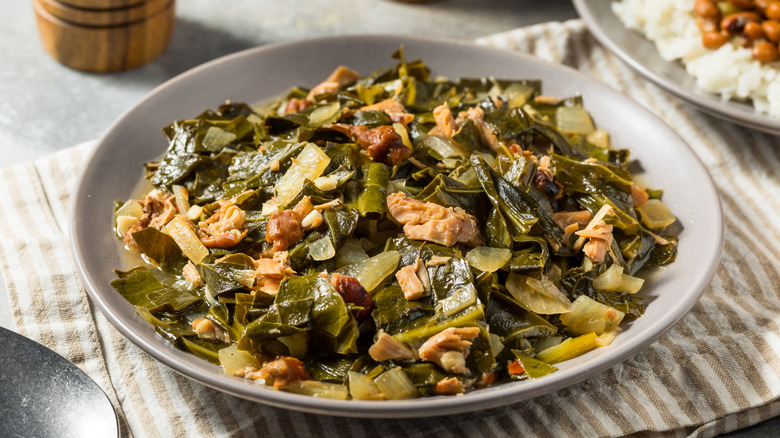
In South Carolina, collard greens have a distinctive place in the barbecue tradition, and the crop itself has an interesting history. David S. Shields explains, "They discovered that collards are salt extractors. So if you have saltwater inundation in your rice fields, one way to mitigate it is to plant collards in profusion in the field." This practice may help explain the crop's historical significance in the region. There are many creative ways to use these leafy greens, but stewing them with flavorful cuts of pork and enjoying them as a light side to barbecue is by far the most traditional.
Pork is an important part of the recipe for collard greens in South Carolina. At City Limits, Robbie Robinson says, "I'm very proud of the collard greens. We make our own pork stock every week, and we use [it] throughout the entire side's cooking [process]."
When it comes time to eat, many South Carolinians have strong opinions on how collard greens should be served. Nathan Spainhour says, "Putting vinegar and pepper on collards is, in my opinion, the only way to enjoy [them]." The type of vinegar may vary, but that tangy finish is an important part of enjoying this side in the Palmetto State. Jon Buck adds, "I've always used some sort of acid with my collards, usually apple cider vinegar, though pepper vinegar and malt vinegar are also common." If you see a bottle of pepper vinegar on the table, add a few dashes to your greens, and you'll fit right in.
Mac and cheese
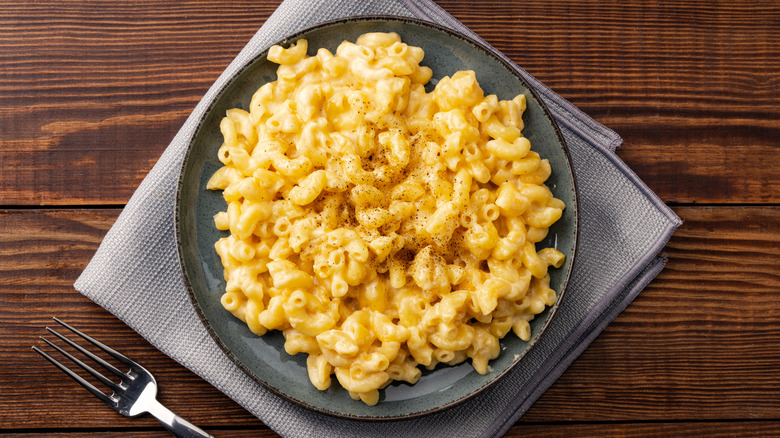
Mac and cheese is an essential barbecue side at restaurants, in parks, and at potlucks across the country, and South Carolina is no exception. The origins of the dish go all the way back to the 14th century, but it may have arrived in South Carolina in the late 1700s with an Italian immigrant named Angelo Santi. In an article on his Substack, David S. Shields traces Santi's history and explains how he began selling pasta noodles from his shop in Charleston. Shields says, "He was attempting to import a high-end pasta dish into the local world."
Shields, chairman of the board for the Carolina Gold Rice Foundation, also describes the dish's local history: "There [are] interesting local traditions like mac and cheese. [The pasta] was not the elbow macaroni we [have now]. It was sort of straight, and it was broken up by hand."
Today, South Carolina restaurants offer plenty of places to enjoy this barbecue staple. In our roundup of the best mac and cheese in every state, Crave Kitchen and Cocktail in Mount Pleasant, South Carolina, took the top spot with its signature dish featuring 10-year-aged cheddar.
Red horse bread/hushpuppies
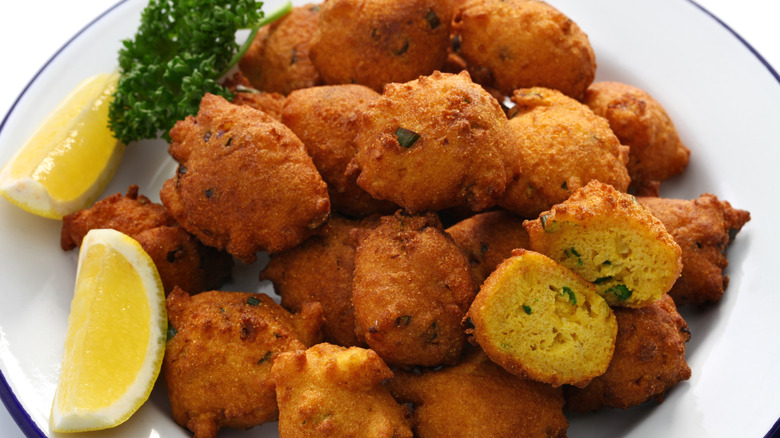
Hushpuppies go by a different name in South Carolina, one that harkens back to how they may have originated. The history of hush puppies, like many foods we know and love, is hotly debated. Many people want to claim the title of originator, but the truth is, we just don't know for sure where the first hushpuppy was ever made.
David S. Shields says, "Cornmeal fritters existed up and down the East Coast from the 18th century on. In South Carolina, those cornmeal fritters are called red horse bread, red horse [being] a type of catfish." The story goes that a cook at a fish fry would use the same cornmeal coating the catfish to form a ball of fryable batter. "And that," says Shields, "is how hush puppies arrive." This historic version of the hushpuppy looks a little different from the ones commonly served in restaurants now. Shields had the opportunity to try red horse bread prepared the traditional way, and describes them as "lumpier, crispier, and I think a shade saltier as well. They had chopped onion in them and used white cornmeal instead of yellow. It was great."
Hushpuppies are a delicious side to try when exploring the state's many beloved barbecue restaurants, although you may find that it's worth seeking out restaurants that make their batter from scratch. Shields adds, "The most pernicious thing that is happening in the world of barbecue now is that the sides are increasingly pre-prepared by processing companies."