

5 Disadvantages Of Using Aluminum Foil For Baking
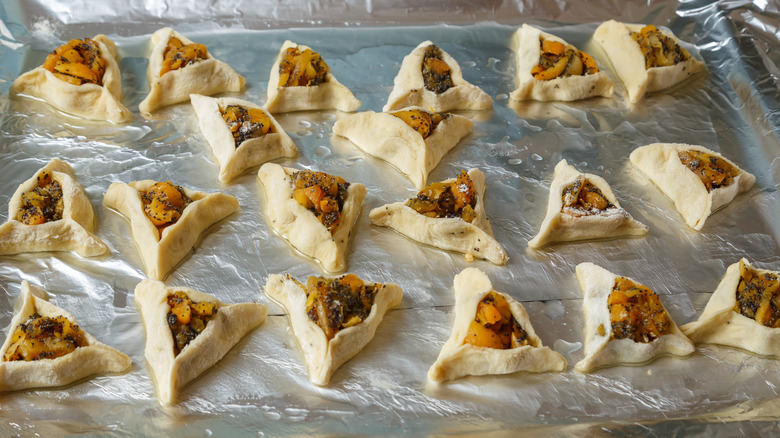
Baking with aluminum foil is super easy, and many home chefs do it without a second thought. The flexi metallic sheeting has been a household kitchen staple for many decades, serving multiple functions ranging from covering food to lining pans for easier cleanup. It can handle high oven temperatures while helping retain moisture in food, and is great at distributing heat evenly and keeping pie crusts from burning. However, convenience often comes with drawbacks, and foil has several worth exploring.
The surface you put beneath food can affect how it cooks, and foil behaves differently than parchment paper, silicone mats, or even the pan itself. Cookies may spread differently, delicate foods can stick, and wrapping food too tightly potentially affects browning, crisping, and overall texture. Then there's the issue of certain acidic or salty ingredients interacting with the metal to impact flavor, plus the concern over aluminum leaching into foods.
None of this means that aluminum foil should totally disappear from your kitchen. It's highly useful for many purposes, and when used with awareness, can remain a true cooking companion. With that in mind, here's a deeper look at five disadvantages of baking with aluminum foil.
Aluminum foil can change how food browns and cooks
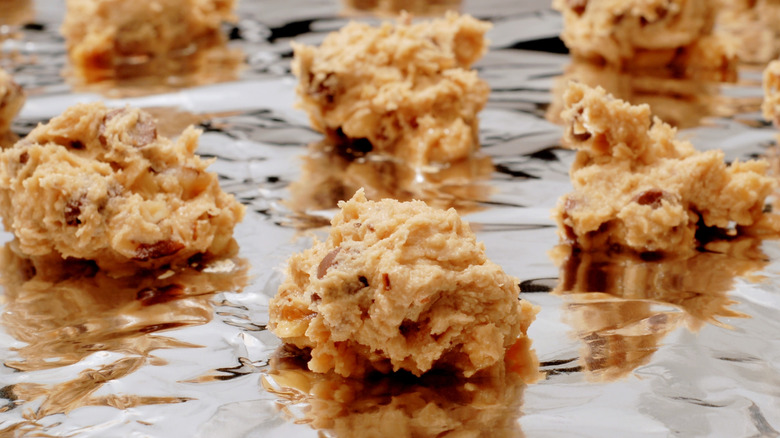
When lining a baking pan with foil, you're creating a barrier between the food, the pan, and searing oven heat. That's all good, but during the baking process, that foil can noticeably impact the final result. It's especially evident when baking cookies. After placing cookie dough on ungreased aluminum foil, it tends to spread more as it cooks, compared to parchment paper or a silicone baking mat. Instead of a thick, chewy center, you're more likely to get a thin and crispy cookie, and possibly one with little cling-on pieces of foil.
Foil can affect other baked foods as well, depending on how it's used. Wrapping foil too tightly traps moisture and steam, which may be exactly what you want with some foods, but not so much with others. For any dish that benefits from deep browning or crispy edges, moisture accumulating under the foil is a disadvantage. Baked breads are a good example, as are casseroles with crunchy toppings, or desserts such as apple crumbles or fluted pie crusts. Steaming is the last thing you want in those cases.
If you wish to continue using foil when baking these types of foods, consider creating a loose tent effect with the foil, allowing heat to enter and circulate enough to dry out some of the excess moisture, while still browning the exposed areas.
Food can stick to aluminum foil
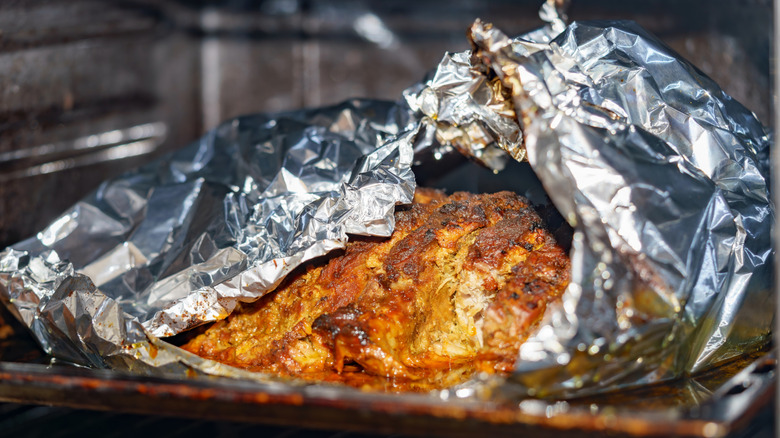
Another drawback arises when dinner or dessert has finished baking yet refuses to release from the foil. Ordinary aluminum foil doesn't come with a nonstick surface, so certain foods can stick to it, including anything with sugars, sticky marinades, cheeses, or delicate baked surfaces such as quick breads and cream toppings. Cookies, again, are a good example, since many a chocolate chip or snickerdoodle treat have emerged from hot ovens with shiny little cling-ons.
That can be more than a minor inconvenience; pulling stuck food from foil can tear the bottom of cookies and tarts, remove breading from baked chicken dishes, or leave behind bits of aluminum that are very difficult to remove. The last thing you want is mangled foods — or worse, aluminum foil sliding down throats and continuing on hazardous inbound journeys.
There are a few ways around this problem. You can grease ordinary foil but only if it's appropriate for the recipe. In some cases, the oil or whatever greasing element you're using could affect the flavor — not so bad for meats, but distasteful in desserts. It's also possible to find foil specifically manufactured with a nonstick surface, though it's costlier and, similar to some nonstick pans, typically uses a PTFE-based coating. It's generally considered safe for cooking but can break down with punctures and tears, or when exposed to high oven heats over 400 degrees Fahrenheit.
Acidic and salty foods potentially react with the foil
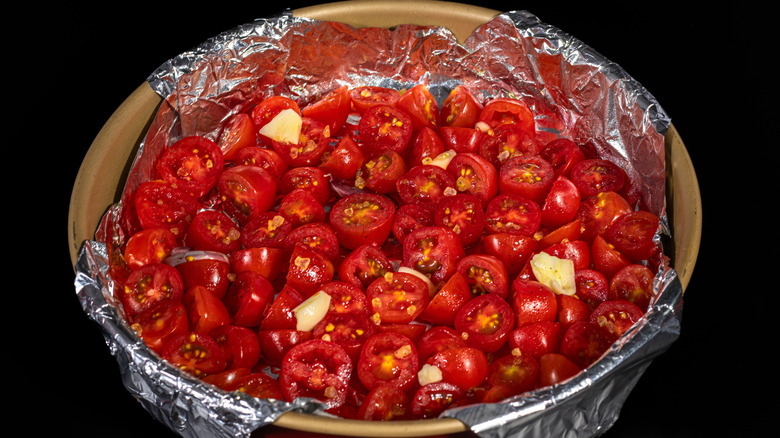
Foil becomes a more questionable baking choice when certain ingredients enter the picture. Acidic, citrusy, or heavily seasoned foods tend to react with aluminum, especially when heat and moisture are involved — which is a given inside a hot oven. Among the ingredients more likely to interact negatively are tomatoes, wine-or vinegar-based sauces, citrus fruits, and salty, brined, or cured meats and vegetables.
That reaction can impart an unsavory metallic flavor to food, potentially ruining an otherwise tasty recipe. But that's not all: The interaction could also physically affect the foil. Acidic or salty foods can wear down the protective oxide layer on aluminum, leading to corrosion and leeching into your food. In fact, aluminum foil can actually melt in your oven, and here's what to do if that happens.
So for recipes with a lot of tomatoes or tomato sauce, lime or lemon juice, vinegar, wine, or salt, it's advisable to keep the food from directly touching bare foil. Parchment paper can serve as an extra barrier in some cases, while simply using glass or ceramic bakeware instead of aluminum foil eliminates the issue altogether.
Some aluminum can transfer from the foil into food
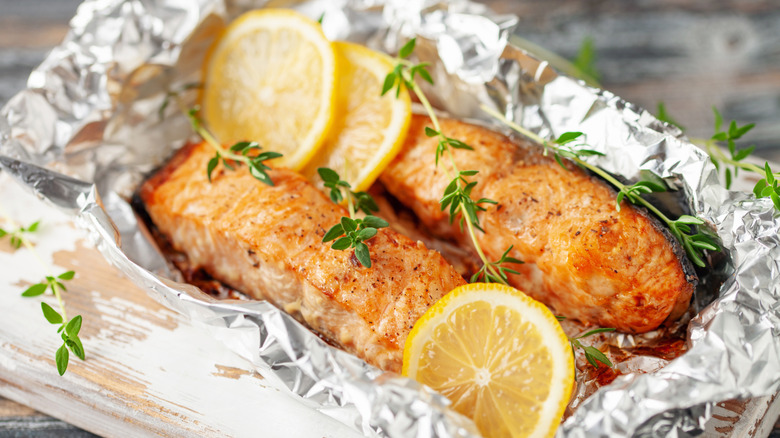
Baking in aluminum foil can increase the amount of aluminum transferring into the food – but that doesn't mean an occasional foil-wrapped dinner is always dangerous. In a study published by the National Library of Medicine, researchers tested 11 different foods baked in aluminum foil, including fish, poultry, pork, cheese, tomatoes, and peppers. They found measurable increases in aluminum in a number of the cooked samples, especially in some marinated foods. At the same time, they noted that aluminum transfer didn't occur at the same levels with every food.
Temperature also seems to matter. The research discusses prior findings showing that aluminum migrates less at baking temps below about 320 Fahrenheit, and increases more when cooking at 428 degrees Fahrenheit and higher. The type of food, acidity, salt, skin or lack of skin, and the amount of time that food stays in the foil can all influence the result as well.
Despite these concerns, aluminum foil needn't be completely avoided. The researchers described the aluminum levels measured as not generally alarming, even though some foods did show notable aluminum increases. However, an important takeaway is that aluminum exposure could cause more impact on younger or small children, as well as in people with certain medical conditions.
Using foil as an oven liner can interfere with baking performance, or worse
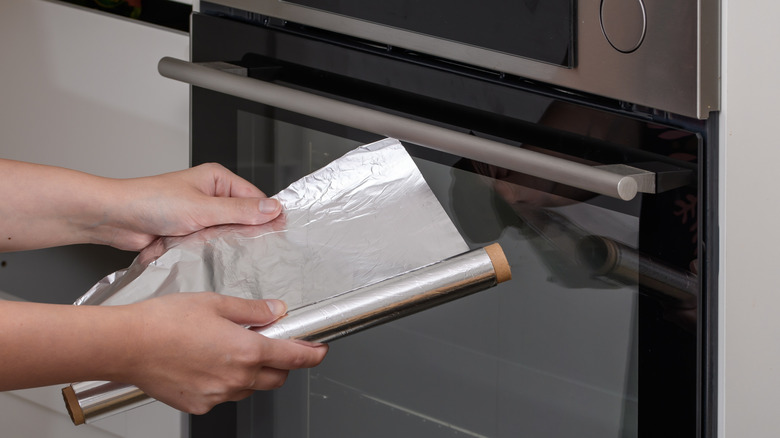
Lining the bottom of an oven with foil has long been a touted shortcut for keeping ovens clean. Anything that drips from your homemade casserole, or bubbles out of a pie, lands on the foil instead the hot oven floor, making cleanup a breeze — just let it cool, then roll and toss. Unfortunately, there are certain reasons to stop lining your oven with aluminum foil.
Covering large parts of an oven with foil, even it it's just an oven rack, can interfere with air circulation. That's more crucial than it may sound, since consistent air flow matters for even heating and browning. Foil can also impact heat distribution and reflection, causing some foods to cook unevenly. Even more problematic, it can present safety hazards, depending on the type of stove. In gas ovens, it can block ventilation paths, potentially leading to the build up of carbon monoxide. In electric stoves, the reflection from foil can send excessive heat toward the oven's heating elements, causing them to malfunction.
Most folks love the benefits of baking with the shiny stuff, which explains how aluminum foil became a kitchen staple. But there are other ways to use it as a catchall for spills, such as placing a baking tray on a rack beneath the dish you're making. Or just tuck a small piece of foil directly under your pie, casserole, or lasagna pan.