

Why You Should Be Using A Toothbrush When Cleaning Your Stovetop
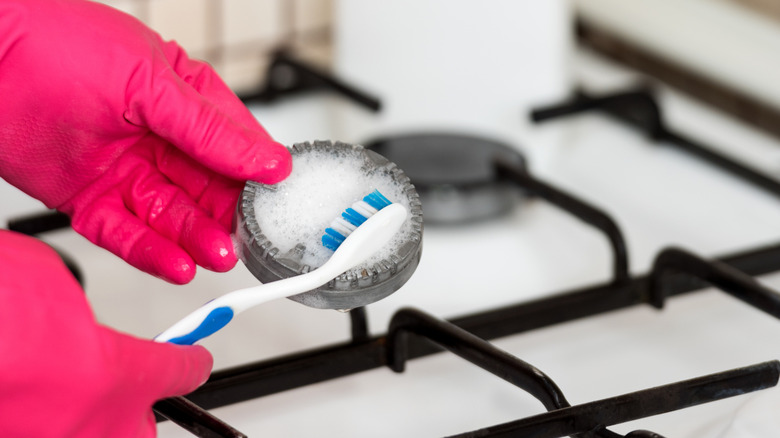
A toothbrush can be useful for a lot more than keeping your dental hygiene in check. It's actually a secret weapon for cleaning a variety of items, like shoes, tile grout, knobs, and small appliances. This is because a toothbrush is not only gentle but effective, since it's the perfect size for hard-to-reach places. It's even worth keeping a spare on hand for bigger jobs, like cleaning stovetops.
Tasting Table spoke to Ashley Matuska Kidder, founder and CEO of Denver's Dashing Maids, who recommends using a toothbrush to scrub the stovetop. "A toothbrush and no-scratch sponge are great for cleaning up dried-on food," she says in our exclusive chat. The trick works especially well for electric coil stovetops and it's also part of how you should really clean a gas stove burner.
For coils, first unplug the stovetop and make sure it's cool. Then lightly brush with a dry toothbrush to remove the grime. It can be helpful to lay the coils over newspaper, aluminum foil, or parchment paper to collect the dirt. When you're finished, wipe with a damp cloth. If that doesn't work, Kidder has a tip for tougher jobs. "Pre-soak the area first to help make removal easy," she advises. "Products like baking soda and Dawn dish soap work effectively to remove grease and grime buildup." If you're finally ready to banish burnt-on grime from your stovetop, this is a great place to start.
Other toothbrush cleaning tips for your stovetop
If the residue is particularly stubborn, try applying baking soda and vinegar for a few minutes before going in with a toothbrush. You can also use the toothbrush to wash your drip pans or the caps and grates of a gas burner. The process for the latter is similar, but unlike with electric coils, you can soak the caps and grates in warm water to help loosen the dirt. Wipe the rest of the stovetop down with a no-scratch sponge or a microfiber cloth, utilizing the baking soda solution again if necessary.
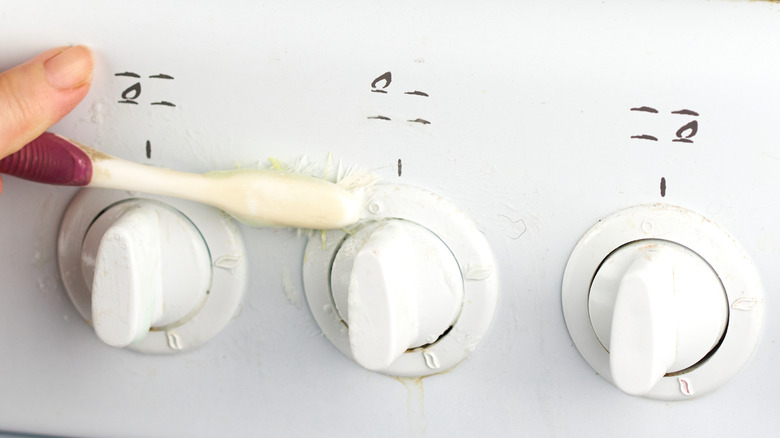
Feel free to use the toothbrush on the entire surface, wiping in circular motions along the way. This works particularly well on glass-top electric or induction stoves. The toothbrush can also help get under dials that need a refresh. If there are any difficult spots, employ a scraping tool — but be careful with harsh objects like paper clips. Ashley Matuska Kidder tells us exclusively, "... I generally do not recommend using a paper clip to clean stove nooks and crannies. While it can reach into tight spots, it poses a risk of scratching delicate surfaces or damaging the stove components if the metal is too abrasive or if the clip slips."
A plastic scraper is recommended instead. "It functions similarly to a razor blade but reduces the risk of scratching dramatically," Kidder adds. Be sure to check out the other mistakes to avoid when cleaning stove burners to help you avoid similar issues.