

The Hibachi Table Rule Chefs Know That Diners Often Miss
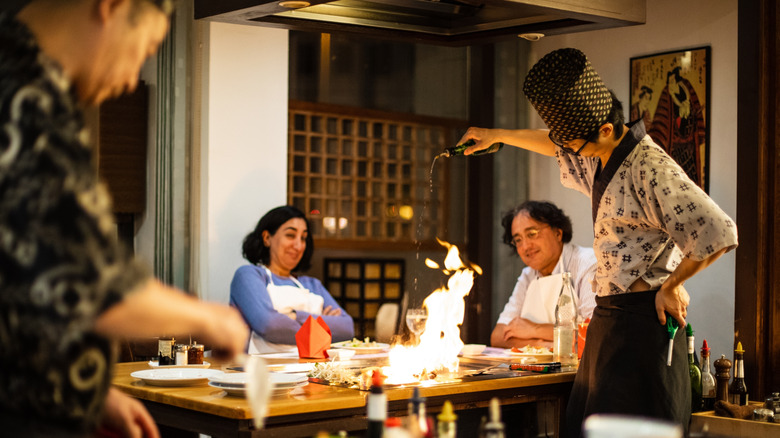
A fun aspect of dining at Hibachi restaurants is often sharing the table with others, whether they're in your party or complete strangers. But where should everybody sit? Is it better to take up as little space as possible so the chef can focus their attention in one direction? Or is it best to put some elbow room between each guest and fan out? To enlighten us on this matter and share nine other unspoken rules of dining at a hibachi restaurant, we got some front-row insight from Sam Chan, general manager of the teppanyaki-style restaurant, Shogun. "There aren't strict rules," says Chan, "We usually seat people so everyone has a clear view of the grill and the table feels balanced. Being flexible helps everything run smoothly."
Like life, hibachi tables are all about balance. That means spreading out so everyone is comfortable, can see, and has an equally enjoyable experience, but also being flexible and ready to shimmy over to accommodate other arrivals of various group sizes. This ability to adapt keeps the vibes high for everyone. If you're moved from up front to around the side, trust the chef to give you the same show as anyone else at the table. If your group's not first to arrive, consider future parties that might be coming. It's not as likely that there'll be a single person joining, so avail more room for couples or bigger groups. Additionally, avoid splitting up your group between other guests so you don't have to talk across them.
You're all in it together
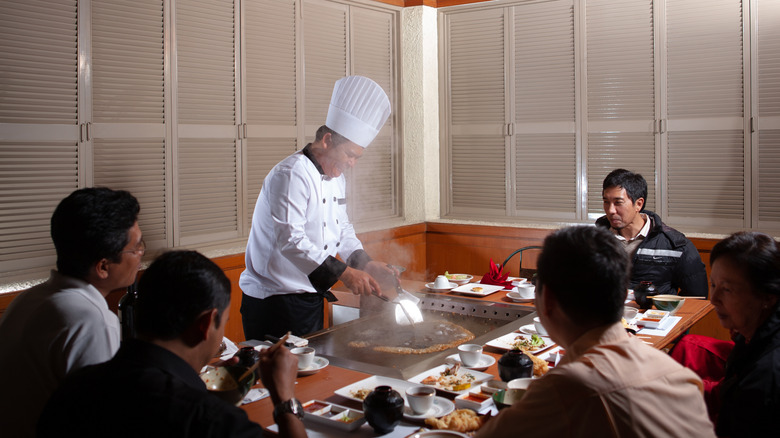
Think of the hibachi table as a concert venue. You wouldn't seat all audience members in a small huddle off to the side. Spread out evenly, consider everyone's line of sight, and make sure the performance can play out fairly to the whole table with minimal distractions. After all, the experience isn't just about having shrimp flicked into your mouth, but about the razzle-dazzle of the show. That way, everyone around the table can be served to, in the restaurant sense, and the tennis sense.
Biding your time before you actually sit can give all attendees a chance to do a quick headcount, assess the makeup of the table, and get the seating right the first time. Arriving 5 to 10 minutes before your reservation also ensures there's an opportunity to manage seating before the big show starts. If you're unsure, you can even ask the chef or the staff if there's a particular arrangement that works best.
Knowing what to expect and how to behave is important, so try not to think of the other guests as obstacles in the way of your perfect hibachi experience. Remember, you're all in this together, and you're all in for a great time — if everybody plays nice. You can start lighthearted conversations and make friends at the hibachi table. Strictly speaking, this may actually be a teppanyaki-style table (true hibachi is different, and refers to an open-coal grilling method) but the two terms are often used interchangeably in the U.S. In any case, balancing these communal tables and respecting fellow diners goes a long way to ensure a better experience for everyone.