

The Hearty Green That Protects Your Soil All Winter And Gives You A New Harvest In The Spring
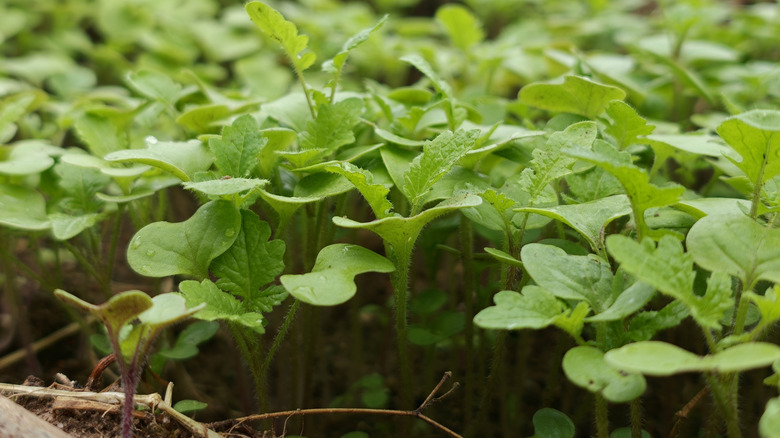
Planting a cover crop in the fall is a good way to nourish your garden plots after harvesting your crops, when the soil will likely be depleted of nutrients. Some gardeners add mulch, like straw or wood chips, and let the garden be dormant until spring, but others choose to refresh the soil by planting cover crops to help the soil recover. Cover crops are usually not grown to be harvested, but certain edible plants that grow during fall and winter, such as kale, can do double-duty.
There are three main types of cover crop plants: legumes, non-legume broadleaf plants, and grasses, each providing a different benefit to a fallow garden plot. Kale, like other brassicas, is a broadleaf that works well as a fall and winter cover crop since it's a fast grower that thrives in cool weather, and you can harvest baby leaves until first frost. Some varieties of kale are hardy enough to survive hard frosts, providing you with fresh greens through the winter months and into the spring.
You can then mow, dig, or till the plants as green manure back into the soil to enrich it with organic matter before planting the spring garden. This is an inexpensive, easy way to add nutrients to the soil, improve its structure and fertility, and prevent weeds from germinating, while enjoying some healthy winter greens. Keep in mind that you should only harvest about a third of any vegetable you use as a cover crop, so the rest can do its job in the garden. Be sure to cut and dig the plants before they go to seed, otherwise they might turn into an unwanted weed.
How to plant kale and other winter edible cover crops
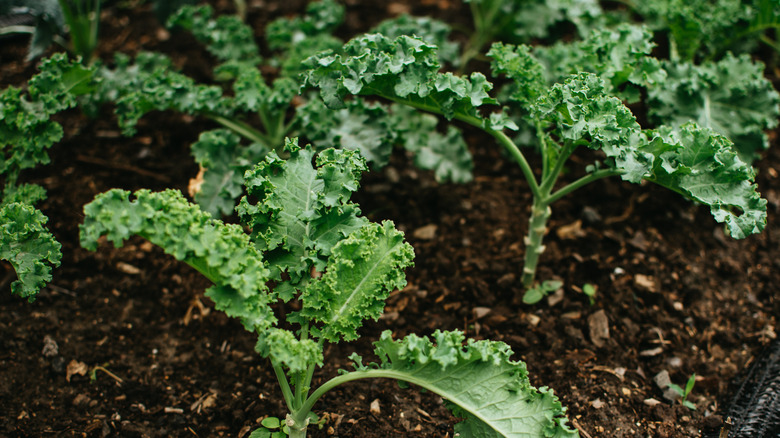
It's very easy to sow kale as a cover crop. Simply clear the area of any leftover plant material (add that to your compost) and lightly rake the soil. Scatter the seed with your hand, using about 1 to 2 ounces of seed per 100 square feet, and cover with soil to the depth indicated in the packet. Keep watering it until the seeds have germinated if rain is scarce. Planting and harvesting dates will depend on your growing region.
If you plant hardy varieties that can withstand hard freezes, they will grow back in the spring. Look for cold-tolerant varieties like Winterbor, Red Russian, Dwarf Siberian, and Tuscan Rainbow, which you can harvest as tender leaves five weeks after planting. Think about this fabulous Tuscan kale and cranberry salad to brighten up the winter table. If you want them to grow to maturity to use in recipes like stews or to make some kale chips, you might need to protect them from frost in cold winter regions.
Mixing different cover crops is recommended for best results, and it's a good way to use up any leftover seeds as unconventional cover crops. You can add cool season greens like mustards, arugula, collards, and cilantro, all of which have edible greens you can harvest, or root veggies like turnips, radishes, carrots, and daikon, as the roots help to break up and aerate compacted soil. Legumes like fava beans and Austrian winter peas are great nitrogen-fixing choices, and you can harvest and eat delicious pea shoots and fava leaves until they flower — the pretty flowers are edible too — before incorporating the plants into the ground.