

Stop Rinsing Canned Beans Before You Make Chili — Here's Why
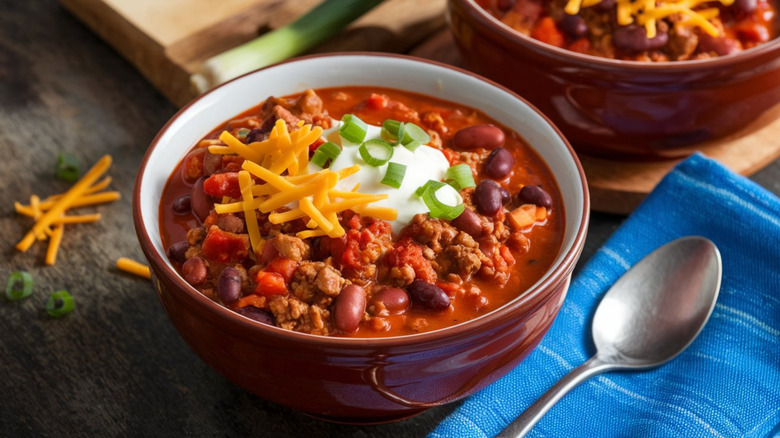
Almost every recipe that includes a can of beans usually lists the ingredient as needing to be both drained and rinsed. Rinsing beans for certain dishes makes sense, like before roasting garbanzo beans until they're crispy in the oven, or if you're making a chilled bean salad that would be hampered by any excess liquid. However, a hearty chili is one instance in which that extra bit of bean liquid can take your homemade chili from basic to outstanding.
Although you might consider draining canned beans for chili, rinsing them is an entirely different matter. Rinsing the beans washes away the last remaining bit of beneficial bean liquid, which contains soluble fiber, along with small amounts of other nutrients like protein and iron that have been gradually absorbed from the beans over time. Additionally, rinsing also introduces more water to your chili if you don't painstakingly dry the beans afterwards.
If you do decide to drain the beans because you want to avoid having extra liquid in your chili, stop there; don't remove the thin layer of starchy liquid on the exterior of the beans with rinsing, as well. Even after draining, there is still both flavor and nutrients coating the legumes, like potassium, magnesium, and folate, and that coating is highly valuable when it comes to chili as it adds richness and depth, while also acting as a natural thickening agent.
How to create the best chili without rinsing the beans
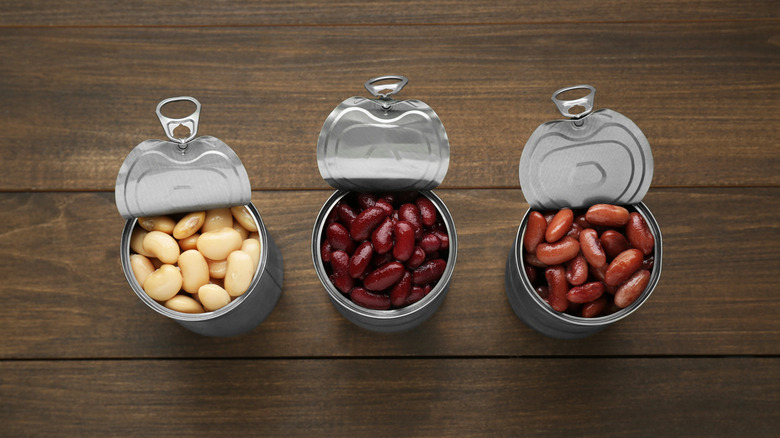
Rinsing the beans won't do your chili any favors — it contains flavor but also starches that can help bring the chili together —and because of that beneficial bean liquid, you might not even want to get rid of the liquid from canned beans through draining. So how does this work in practice? If your chili recipe calls for water, skip that step and replace some or all of that water with your bean liquid, which will negate the need to both drain and rinse. There's nothing more sad than a bland, watery chili, but replacing water with bean liquid will actually thicken your chili as it simmers on the stove thanks to the bean starch, along with adding a depth of flavor.
Health-wise, there may be an argument for draining and rinsing if you're watching your sodium levels, but there are still ways around this. Even if you do need to lessen your sodium intake, you can simply omit salt from other areas of your chili to make up for the slight amount of added sodium from the unrinsed beans. A good example would be using unsalted stock instead of broth.
The next time you make a big batch of chili, like this Southwestern-inspired tomatillo and white bean chili, don't let all that extra flavor and valuable starch go down the drain and use it to your advantage instead.