

The Differences Between Short Ribs And Spare Ribs You Need To Know Before Grilling
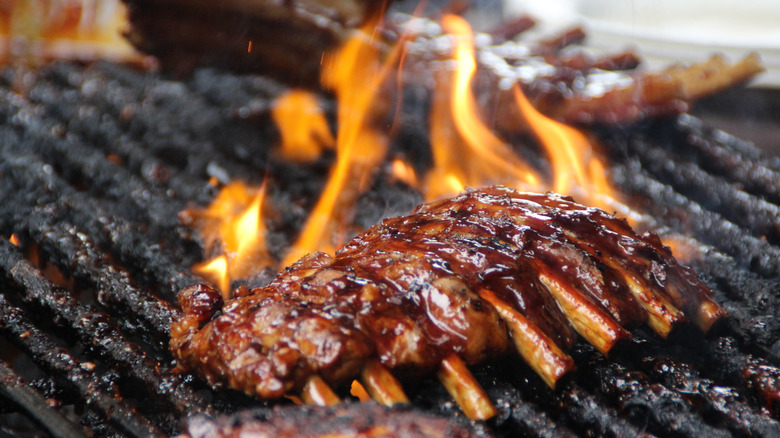
Everyone's an expert during cookout season, complete with strong opinions about rubs, sauce, and whether foil counts as cheating. But not everyone can tell the difference between short ribs and spare ribs. Covering your bases against testy guests aside, it's also conducive to hosting a good grilling party, because, as it turns out, short ribs and spare ribs don't even come from the same animal.
When we say short ribs, we're referring to the cut of beef taken from the lower part of the rib cages of cattle in the chuck or plate. Spare ribs (at least in American butcher shops and barbecue joints) are pork, sourced from the pig's belly or side, and run from the breastbone back, right alongside the cut that gives us bacon — it's because of this that they're particularly rich and fatty in flavor. They're different in size, as well, with a single pork spare rib weighing just 6 ounces. A beef short rib, on the other hand, can easily top a pound or more. Presentation-wise, you'll find spare ribs coming in long, flat racks of 11 or more bones, with short ribs being stubby and thick.
Know which style you're buying before you fire up the grill
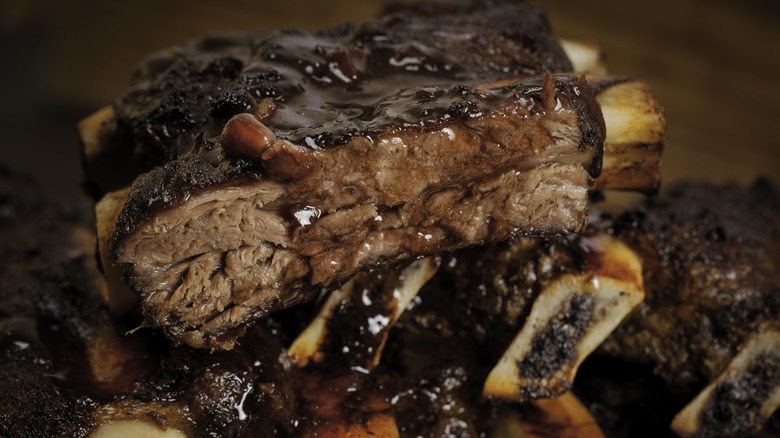
Where ribs come from matters, but how they're cut might matter more. Short ribs come in two styles that cook nothing alike. English-cut short ribs are sliced between the bones, leaving a thick block of beef on a single bone. Grill one like a steak, and you'll be chewing shoe leather. It needs several hours over indirect heat, long enough for the collagen to melt and the meat to slide off the bone. Flanken-cut short ribs go the other way, sliced across the bones into thin strips dotted with small ovals of bone. Unlike English-cut, Flanken-cut short ribs cook fast — marinate them galbi-style in soy sauce, garlic, and a little sugar, then give them two to three minutes per side over medium-high heat.
Spare ribs aren't one-size-fits-all either. Whole racks come with the breastbone, cartilage, and rib tips still hanging on. St. Louis-style ribs are trimmed into a clean rectangle, so they cook more evenly and get to the table faster. Kansas City-style ribs are trimmed less closely. But no matter the version you buy, spare ribs are best cooked using the slow-and-low route. Cook them them at 225 to 275 degrees for anywhere from three to six hours, right up until the rack sags and cracks across the top when you lift it with tongs, and you know it's done.
One thing to watch for at the store: some labels and menus list "beef spare ribs." In most cases, that means beef back ribs, which come from higher up near the prime rib and carry less meat. It's one more reason to know your ribs before you buy.