

The Best Wine Choice For A Classic Beef Bourguignon Dish
We may receive a commission on purchases made from links.
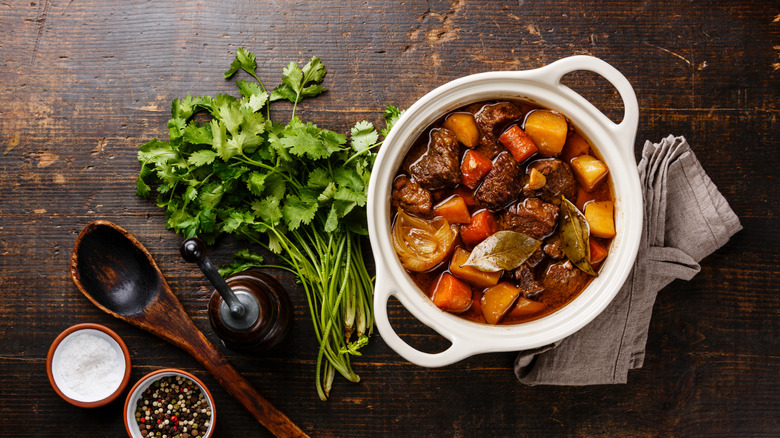
Thinking of making a classic beef bourguignon dish this week, but unsure of what type of red wine to use? Wine pairing advice can feel intimidating, especially when a recipe simply calls for red wine without specifying what kind to use. Well, fret not, because we have an answer for you from an expert. The best wine for this is Burgundy made from pinot noir, according to Mawa McQueen, a James Beard and Michelin-nominated chef, entrepreneur, and author of "Mawa's Way" and "Unstoppable Ambition."
McQueen states, "For beef bourguignon, I recommend a dry red Burgundy made from pinot noir. Really, you should choose a wine that is balanced, earthy, and fruit-forward, and something you would happily drink, but not necessarily an expensive bottle." So, save pricier wines for sipping during celebrations, and instead seek out a well-priced, good-quality bottle of Burgundy at Costco. After all, some Kirkland wines can taste more expensive than they are.
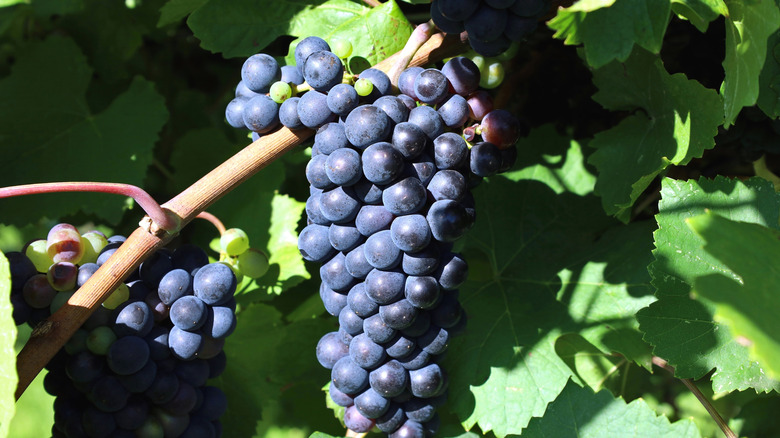
Per McQueen, the bright acidity of pinot noir-based Burgundy not only makes the meat tender, but also cuts through the beef's richness. Additionally, she explains, "Its notes of red berries, herbs, and subtle earthiness complement the mushrooms, onions, and slow-cooked sauce." The wine's balanced profile comes down to the grape itself. Pinot noir grapes have thin skins and develop unique tasting notes based on their environment, picking up earthy and fruity tones depending on the soil and climate where they're grown.
How to incorporate pinot noir Burgundy into beef bourguignon
With a bottle of pinot noir Burgundy in hand, our next question for McQueen was how (and when) to add the red wine to a beef bourguignon recipe. She answers, "The wine should be added after browning the beef. Once the beef is browned, remove it from the pot and add the wine to deglaze the pot, scraping up all those flavorful caramelized bits." Interestingly, it's actually the temperature contrast that does the work here. A common deglazing myth is that acid or alcohol dissolves the fond, but really it's the cool red wine hitting the hot pan, instantly turning to steam, that pulls and releases those flavorful bits stuck to the pan.
Next, McQueen urges you to be patient while cooking the dish. She says, "Let the wine simmer for several minutes to reduce slightly and cook off the alcohol, before adding the beef back in along with the stock." Finally, she leaves us with the best advice: "Give it enough time to reduce so it becomes part of the sauce not simply an added liquid." For those wishing to learn more about this red wine and its uses beyond beef bourguignon, be sure to check out Tasting Table's comprehensive guide to pinot noir.