

The Deglazing Myth That Might Be Causing Kitchen Confusion
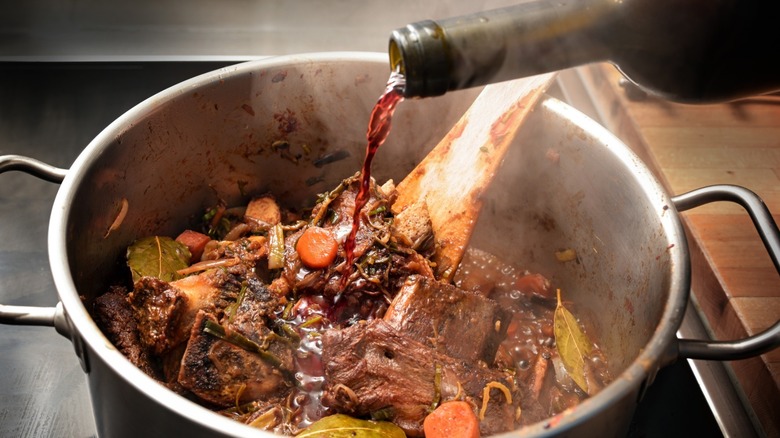
If you've never heard of deglazing a pan or aren't entirely sure how it's done, you're not alone. Turns out, there's a lot of confusion surrounding deglazing. The word itself sounds a bit hoity-toity, but you might be surprised to learn that it's simply a technique used to loosen all those tasty cooked-on bits of food (known as fond) from the bottom of a pan. These little umami bombs are the result of the Maillard reaction, and they're packed with flavor, adding richness to soups, sauces, and gravies. Skip this step when making beef stew, for example, and you'll likely regret it. Yet because of a pervasive kitchen myth, some home cooks avoid this time-honored trick for turning up the flavor in their dishes. That myth? You need alcohol to deglaze your pan.
Alcohol, especially wine, is widely called for in deglazing recipes to enhance the flavor, particularly in French cooking, where the term déglacer originated. Perhaps it's this ubiquity that has helped perpetuate the false belief, leading some people to think the acidity and alcohol work a special kind of magic. At least that's the case with one Redditor, who confessed, "I've been operating under the assumption that the acid and ethanol in alcoholic beverages react with fond and get them off the hot base of pans..."
In reality, it's the temperature contrast that does the trick. When a small amount of liquid is poured into a hot pan, it begins to boil almost immediately before quickly turning to steam. This process, along with some vigorous scraping with a wooden spoon, helps release the fond from the bottom of the pan.
To deglaze or not to deglaze? That's never really the question
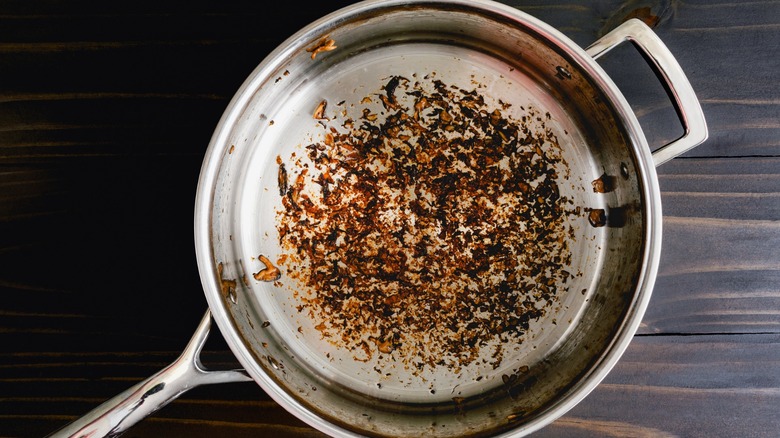
To make sure you don't lose any of that savory goodness, it's worth deglazing your pan whenever the opportunity arises. Freed from the alcohol myth, there's really no reason not to. In fact, there are all sorts of non-alcoholic liquids you can use for deglazing, though there is one type of liquid you should steer clear of (spoiler alert: it's dairy, thanks to the whole curdling thing).
Choosing something that complements your dish is a surefire way to round out the flavor profile. Think stocks and broths, fruit juices (like orange juice), ciders and vinegars, pasta water, and even tea. Plain water will also do the job if you don't have anything else on hand. Whatever liquid you choose, make sure it's at least at room temperature or only slightly cool, as introducing a very cold liquid into a hot pan can cause thermal shock and potentially damage the cookware. Some particularly good pairings include lemon juice for fish dishes, apple cider vinegar with pork, sweet potatoes, and greens, chicken stock for poultry dishes, and beef stock for beef-based recipes.
To deglaze a pan, remove the cooked food along with any excess fat (though leaving a little behind can add flavor). Place the pan over medium heat and add your chosen deglazing liquid. It should begin bubbling almost immediately. Use a wooden spoon or spatula to scrape up the caramelized bits stuck to the bottom of the pan. Once they're loosened, they're ready to be reincorporated into your dish.