

This Hearty French Stew Uses Beef Bones To Maximize Flavor
We may receive a commission on purchases made from links.
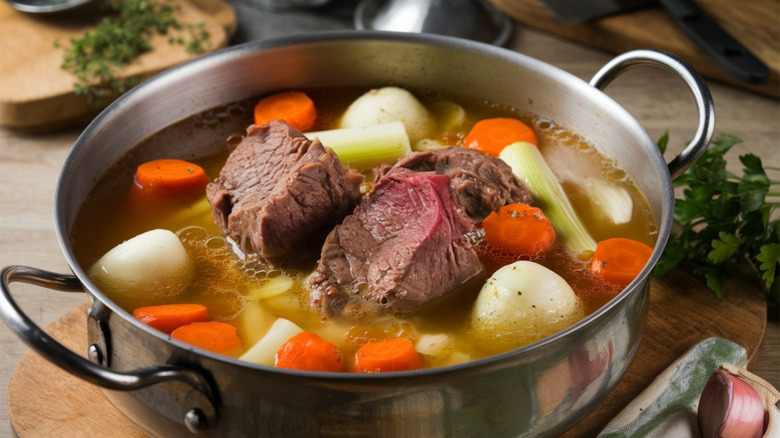
If you think all French dishes are fancy, complicated, and require tons of time to master, you need to familiarize yourself with a classic French stew made with beef. While soufflés and macarons have justified reputations for requiring skill, many popular French dishes are essentially glorified peasant foods — that's not an insult. Using fresh ingredients and simple techniques to extract maximum flavor, these recipes are more about sourcing and patience, producing hearty meals that are just as amazing as haute-cuisine plates. One of the most essential dishes is a beef stew called pot-au-feu (literally "pot on the fire"). But this isn't quite like the American-style stews we know best, so we reached out to Mawa McQueen, a James Beard and Michelin-nominated chef, entrepreneur, and the author of "Mawa's Way" and "Unstoppable Ambition," for her advice on how to prepare it.
McQueen calls pot-au-feu, "one of France's most comforting and traditional dishes," and describes it as a slow-simmered combination of beef with additions like vegetables and marrow bones. She says the beef bones are particularly important to the flavor of pot-au-feu, explaining that "as they gently simmer, they release marrow, collagen and flavor into the broth." This helps give the finished broth incredible depth and richness, along with a silky texture.
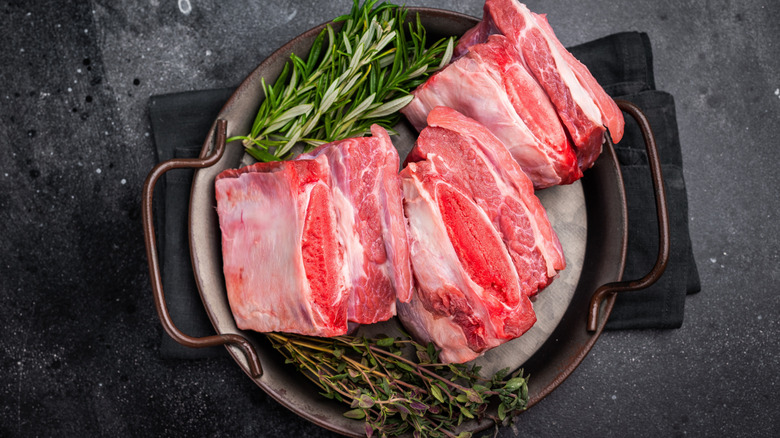
Pot-au-feu, a rustic and crowd-feeding dish, also makes use of different beef cuts, depending on what's available. McQueen tells us, "I like to use a combination of cuts rather than just one: beef shank, chuck, brisket, and short ribs and oxtail are excellent choices." According to the chef, short ribs, chuck, and top round are all common in France, as well.
French pot-au-feu is a simple, slow-cooked stew that includes marrow bones for richness
Explaining what makes pot-au-feu unique compared to other stews beyond the marrow bones, McQueen says that "traditionally, the broth may be served first, followed by the meat and vegetables with Dijon mustard, cornichons, and coarse sea salt," as opposed to being one unified dish served in a bowl. McQueen also notes that the marrow is often fished out of the bones and spread on toasted bread, too. The broth can also be used as a sauce for the ultra-tender, slow-cooked beef and vegetables, alongside other condiments like horseradish.
When it comes to preparing pot-au-feu, McQueen has some tips to get you started. As she shares, "The secret to a beautiful pot-au-feu is patience (long, suffering patience!)." The beef should be started in cold water, and simmered gently to avoid toughening the meat while you skim away impurities from the broth. McQueen reminds us that, when picking the cuts for your beef stew, "mixing lean, fatty and collagen-rich cuts creates a more flavorful and tender result, while also give bold rich flavor to the broth."
The patience required for this recipe doesn't end there. The vegetables should be added by category so they don't get overly mushy, and McQueen also recommends gradual seasoning and tasting as you go. Finally she says, "Allow the finished dish to rest before serving. Honestly, the flavor of pot-au-feu is often even better the next day!" That may seem like a lot of time for a simple dish, but remember that things move a little slower out on a French farm, and that the results will be worth it.